


Acuña Sparks Eight-Run Inning
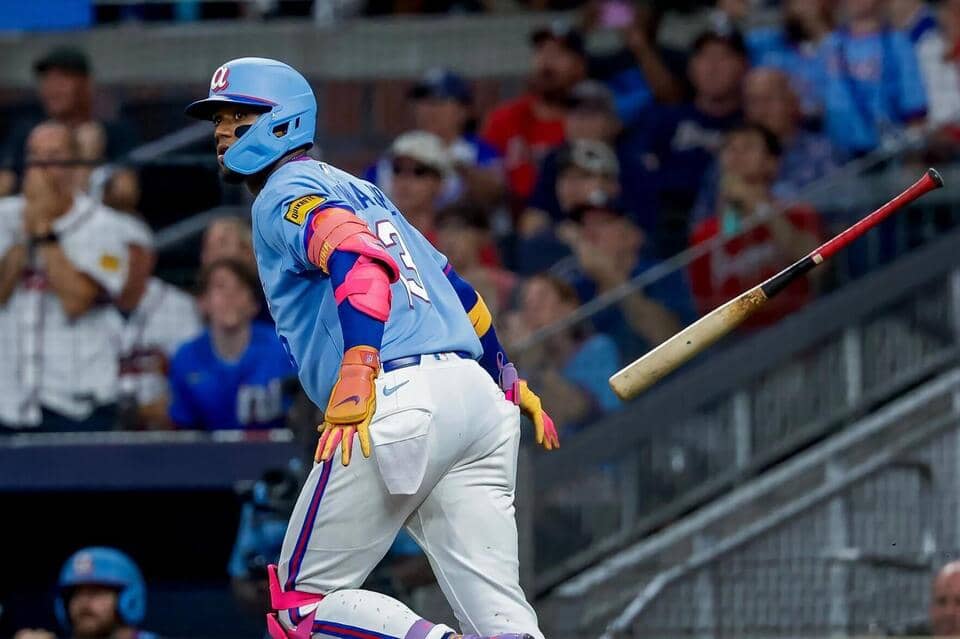
ATLANTA — Ronald Acuña Jr. provided the catalyst for the Atlanta Braves' offensive explosion on Saturday night, hitting a solo home run that helped spark an eight-run fourth inning against the Philadelphia Phillies. The powerful blast served as a pivotal moment, shifting the momentum decisively in favor of the Braves.
The shot, which tied the game at 1-1 in the early stages of the fourth, was Acuña's 17th home run of the season. According to video analysis from MLB.com, the ball traveled to left field with a launch angle of 44 degrees, a trajectory described by commentators as potentially the highest of his career. This towering drive showcased Acuña's raw power and ability to impact the game with a single swing.
Acuña hit the monumental shot that barely cleared the wall in front of the Phillies' bullpen off pitcher Brooks Raley. Raley, whose record fell to 5-7 with the loss, took the defeat for Philadelphia. This marked the second straight night he had absorbed a loss against the formidable Braves lineup, highlighting the challenges faced by the Phillies' pitching staff in the series.
The Fourth Inning Unravels for Philadelphia
Following Acuña's game-tying home run, the Braves' offense continued its relentless assault. What began as a tight contest quickly transformed into a commanding lead as Atlanta's batters capitalized on every opportunity. The eight-run surge in the fourth inning was a comprehensive display of offensive prowess, featuring a mix of power and timely hitting.
The Phillies' relief staff found themselves under immense pressure, struggling to contain the Braves' bats. Despite their efforts, Philadelphia was at one point just one out away from escaping the inning with no further damage after Acuña's initial blast, only for the Braves to extend their rally. The inning continued to unravel, demonstrating the depth of Atlanta's lineup.
Acuña himself was not done contributing to the record-setting inning. After his home run, he later added a run-scoring single, further padding the Braves' lead and underscoring his central role in the team's offensive success on the night. The collective effort turned a precarious situation into a comfortable advantage for Atlanta, setting the tone for the remainder of the game.
Mahle Anchors Braves' Dominance
Tyler Mahle turned in another stellar outing on the mound for Atlanta, providing a crucial anchor for the Braves' defense and complementing the offensive surge with effective pitching. His performance was instrumental in maintaining the significant lead established by the offense, ensuring the Phillies could not mount a comeback.
The victory marked the Braves' second consecutive win over the Phillies, a significant achievement against a top National League East rival. This particular contest proceeded with a remarkable ease compared to the series opener. The team had previously needed to rally three times across 11 grueling innings to secure the first game, a marathon described as anything but easy. Saturday night's game, in stark contrast, was characterized as "a lot easier" for Atlanta, largely due to Mahle's command and the early offensive explosion.
Mahle's strong performance helped to effectively shut down the Phillies' lineup, preventing them from generating consistent offense against Atlanta's pitching staff. His ability to navigate through innings efficiently and limit scoring opportunities allowed the Braves to play with confidence, knowing their lead was well-protected.
Phillies Grapple with Pitching Challenges
Luzardo's Scratch Forces Bullpen Game
The Philadelphia Phillies were forced to alter their game plan significantly before the first pitch due to an unforeseen injury concern. Starting pitcher Jesús Luzardo was scratched from the lineup with a tight shoulder, an unexpected development that threw the team's pitching strategy into disarray.
In response to Luzardo's unavailability, Philadelphia proceeded with a bullpen game for the remainder of the contest. This strategy relies on a succession of relief pitchers to cover the nine innings, rather than a single starter. While sometimes effective, a bullpen game inherently places a greater burden and increased pressure on the relief pitchers, who must be ready to enter the game at a moment's notice and perform under varied circumstances.
The decision to go with a bullpen game meant that pitchers like Brooks Raley were called upon earlier than anticipated, facing a potent Braves lineup without the benefit of a traditional starter to absorb innings. This tactical shift ultimately contributed to the difficulties faced by the Phillies' pitching staff, particularly during the explosive fourth inning.
Consequences of the Mid-Game Adjustment
The reliance on the bullpen proved challenging for the Phillies, especially when confronted with the Braves' aggressive hitting. The relief pitchers, despite their best efforts, struggled to contain the Atlanta offense, leading to the significant run disparity observed in the final score. Grant H, identified as a member of the Phillies' coaching or medical staff, was involved in the decision-making process regarding Luzardo's scratch, though specific details of his role beyond the initial report were not fully detailed.
The final score of 12-2 reflected the considerable disparity in production between the two teams on Saturday night. While the Phillies battled through their pitching challenges, the Braves' offense, ignited by Acuña's home run and sustained by timely hitting from players like Ozzie Albies (who walked after Acuña's blast) and Michael Harris II (who singled), proved too formidable. Acuña's contributions, both with the bat and the momentum he generated throughout the game, were central to the Braves' ability to secure the decisive win and extend their series lead.