


A Critical Assessment of Nigeria's Democratic Journey Since 1999
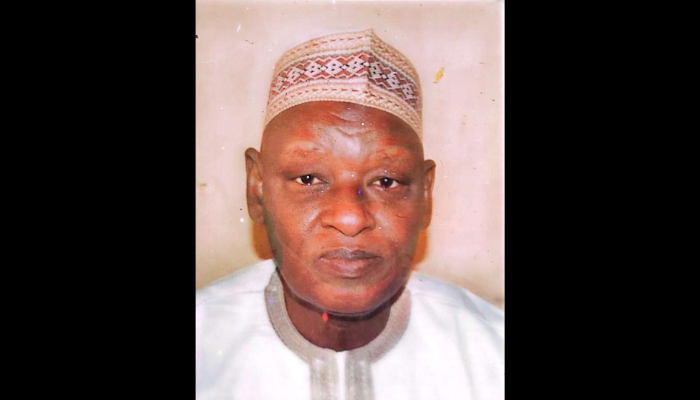
Idris Abdulkadir Yelwa Idris, the senatorial candidate for the African Democratic Congress (ADC) in the Adamawa South senatorial district, has voiced a strong critique of Nigeria's democratic trajectory, asserting that the nation's governance has 'derailed' from its foundational principles since the return to civilian rule in 1999. His statements, made in anticipation of the 2027 general election, highlight a perceived failure of the democratic experiment to deliver on its initial promise of progress and development for all Nigerians.
The transition to democracy in 1999 marked a significant turning point for Nigeria, ending a long period of military rule and ushering in an era of renewed hope for political stability, economic growth, and improved living standards. According to Idris, this initial period was characterized by a clear sense of direction and public optimism. However, in an interview published by BusinessDay Nigeria, he articulated his belief that this momentum has been progressively lost over the subsequent decades, leading to a deviation from the core objectives that underpinned the democratic dispensation.
Idris is positioning his candidacy for the 2027 general election on a platform that scrutinizes the performance of elected officials and the federal government's engagement with local communities. His campaign narrative is deeply rooted in an analysis of the historical efficacy of political representation and the tangible impact, or lack thereof, on infrastructure and development within his constituency and the nation at large.
Deficiencies in Local Representation and Federal Presence
A cornerstone of Idris’s political argument is the assertion that the Adamawa South senatorial district has been consistently underserved by its representatives since the inception of the Fourth Republic in 1999. He specifically criticized what he termed the 'lack of quality representation' provided to his senatorial zone throughout the entire period of democratic rule, implying a failure of elected officials to effectively advocate for the needs of their constituents.
The Adamawa South senatorial district encompasses nine distinct local government areas, representing a significant portion of the state's population and diverse communities. Idris contends that these communities have not received adequate attention or investment from the federal government, particularly concerning infrastructural development. He identified this glaring absence of federal presence in critical physical infrastructure projects as a primary indicator of a profound disconnect between the electorate and those elected to represent their interests.
This perceived lack of quality representation, Idris argued, has directly contributed to the stagnation of vital development projects across the nine local government areas within his district. He framed his candidacy as a direct response to this long-standing neglect, suggesting that the prevailing political class has demonstrably failed to address the fundamental material needs and aspirations of the region's inhabitants. His critique implies that the democratic system, intended to empower local communities through their representatives, has instead left them marginalized and underdeveloped.
Broader Critique of the Ruling Party's Performance
Extending his grievances beyond regional concerns, Idris also directed sharp criticism at the federal government. He explicitly stated that the All Progressives Congress (APC), the current ruling party under President Bola Ahmed Tinubu, has 'failed Nigerians' comprehensively. This assessment places Idris in direct opposition to the ruling party’s narrative concerning national economic progress and governance achievements.
By linking the alleged failures of the APC administration to the specific infrastructural deficits and lack of development in Adamawa South, Idris constructs a broader argument about the systemic ineffectiveness of the current political order. His stance suggests that the 'derailment' of Nigeria's democracy is not merely a regional phenomenon but a national issue, exacerbated by the performance of the incumbent federal leadership.
Anticipating the 2027 Elections: A Call for Change
Idris Abdulkadir Yelwa Idris's comments are strategically timed as part of his broader outreach efforts ahead of the 2027 general elections. As a senatorial candidate for the African Democratic Congress (ADC), he aims to capitalize on what he perceives as widespread public dissatisfaction with the prevailing political status quo. His campaign message is centered on a compelling call for a return to what he describes as the 'original goals of democracy,' contrasting them sharply with the current reality of governance and development outcomes.
While the available excerpts of his statements did not include specific data points regarding infrastructure spending or legislative attendance records, Idris's claims rely on general assessments of governance quality and the tangible development outcomes observed over the 27-year period since Nigeria's return to democracy in 1999. His narrative seeks to resonate with voters who feel that the promises of 1999 have largely gone unfulfilled.
The ADC has officially selected Idris to contest the senatorial seat for Adamawa South, signaling their confidence in his ability to articulate these concerns and mobilize support. His campaign strategy appears to hinge on the powerful argument that the democratic experiment has indeed 'derailed,' necessitating a fundamental change in leadership, not only at the federal level but also within the legislative representation of critical regions like Adamawa South.
Adamawa South's Political Significance
Adamawa South remains one of the pivotal senatorial districts within Adamawa State, a region of significant political and demographic importance. The district's nine local government areas collectively represent a substantial population block, making the issues raised by Idris particularly pertinent to a large segment of the electorate. His concentrated focus on this specific geographic area underscores the localized nature of his critique, even as he connects it to broader national political failures and the performance of the federal government.
Idris’s statements reflect a sentiment increasingly articulated by opposition candidates across Nigeria, who argue that the promises of the 1999 democratic transition have not been equitably realized for all citizens. His candidacy for the ADC represents a direct challenge to the incumbent political structure and its perceived shortcomings, aiming to offer an alternative vision for representation and development in the Adamawa South senatorial district and beyond.