

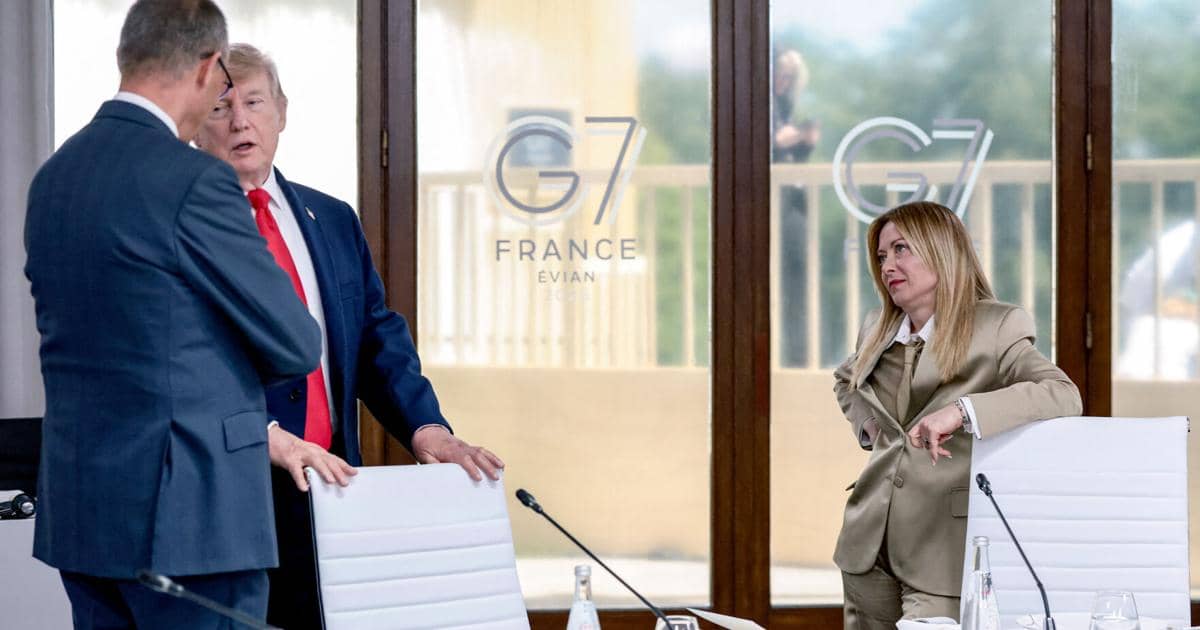

The Predictable Convergence of America First and America Alone
Andreas Kluth has argued that the political doctrine known as "America First" is inevitably leading to the United States becoming isolated on the global stage. In a recent analysis published by The Eagle, Kluth contended that this outcome was not a surprise to observers outside of the "die-hard MAGA scene." He suggested that anyone not deeply embedded in that specific political faction could see that the rhetoric and policies associated with America First would sooner or later amount to America Alone.
Kluth’s assessment frames the current diplomatic posture not as an accidental byproduct of policy, but as a logical conclusion of the administration's stated priorities. By characterizing the shift toward isolation as something "long been clear" to external observers, Kluth implies that the trajectory was visible well before the recent acceleration of these trends. The columnist posits that the gap between the domestic political base and the international community has widened significantly, creating a scenario where the United States stands apart from its traditional allies.
Accelerating Alienation Under President Trump
The column highlights the "accelerating pace" at which President Donald Trump is alienating other nations. According to Kluth, this acceleration is a defining feature of the current administration's foreign policy approach. The writer suggests that these actions are actively contributing to the isolation of the United States within the international community.
Kluth describes the situation with a tone of resignation, noting that despite the predictability of the outcome for those outside the MAGA movement, the speed and intensity of the diplomatic distancing continue to increase. The article implies that this is not a temporary fluctuation in relations but a structural shift in how the United States engages with the world. The phrase "alienating other nations" indicates a breakdown in diplomatic rapport that goes beyond mere policy disagreement, suggesting a deeper estrangement between Washington and its global counterparts.
Exclusion from the MAGA Narrative
A central component of Kluth’s argument is the distinction between those inside and outside the "die-hard MAGA scene." He suggests that understanding the consequences of America First requires stepping outside the ideological bubble of the former president's base. For those within this political circle, the move toward isolation may not be viewed as a negative outcome or even as a distinct policy shift away from traditional diplomacy.
However, Kluth asserts that for anyone observing from the outside, the connection between America First and America Alone was obvious. This perspective positions the columnist and his intended audience as pragmatic observers who can see the long-term implications of current policies more clearly than those entrenched in the political movement driving them. The article does not provide counter-arguments from within the MAGA scene, but it frames the criticism as a matter of external observation rather than partisan disagreement.
The Rejection of Traditional Diplomacy
The title of Kluth’s piece, "No diplomacy please, we’re American," underscores his view that the current administration is actively rejecting traditional diplomatic engagement. The phrasing suggests a deliberate dismissal of the mechanisms typically used to maintain international relationships. By invoking this sentiment, Kluth argues that the United States is prioritizing a form of unilateralism that leaves it increasingly alone on the world stage.
The columnist’s work serves as a critique of the administration's foreign policy direction, linking the rhetorical emphasis on American sovereignty directly to practical diplomatic isolation. He does not offer specific examples of recent treaties or alliances in the provided text, but rather focuses on the broader trend and its inevitable result. The argument rests on the premise that the pace of alienation is increasing, suggesting that the window for reversing this trend may be closing.
Implications for International Relations
Kluth’s analysis implies that the United States is moving toward a state where it operates without the support or cooperation of other nations. This shift represents a fundamental change in the country's role in global affairs. The writer suggests that this isolation is not just a political choice but a consequence of the administration's commitment to an America First ideology that prioritizes domestic concerns over international engagement.
The article concludes by reinforcing the idea that this outcome was foreseeable. Kluth maintains that the disconnect between the administration's actions and the expectations of the broader international community has been evident for some time. The acceleration of these policies, according to the columnist, confirms what external observers have long suspected: that America First is functionally equivalent to America Alone.