


Proposed Overhaul Targets Outdated Property Valuations
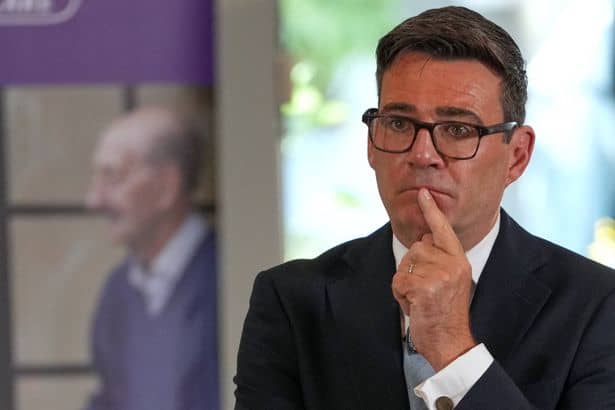
Council tax bills could be set for a major overhaul affecting millions of households across Britain. Andy Burnham, a prominent northern leader, has indicated he may preside over a significant shake-up of what he describes as an outdated and unfair system for many households.
The core of Burnham's concern lies with the foundational data underpinning the current council tax structure. This system relies on property valuations that have not been updated for over three decades for the majority of homes in Britain. Introduced in 1993 to replace the controversial poll tax, council tax was initially based on property values from April 1991. This means that for more than 30 years, the tax bands for most properties have remained fixed to values from a period vastly different from today's economic and housing market realities.
This prolonged freeze in revaluations has led to a significant disconnect between the council tax paid and a property's current market value. As property prices have fluctuated dramatically and unevenly across different regions of the UK since the early 1990s, the original valuation bands no longer accurately reflect the relative worth of homes. For instance, areas that experienced lower property values in 1991 but have seen substantial growth since might still be in lower council tax bands compared to areas that were relatively expensive in 1991 but have seen more modest appreciation. This discrepancy, according to Burnham, contributes directly to the system's perceived unfairness, as households in areas that have seen rapid property value growth may be paying a comparatively lower share of tax relative to their home's current worth, while others might be disproportionately burdened.
Historical Basis of Council Tax Bands
When council tax was established, properties were assigned to one of eight valuation bands (A-H) based on their estimated capital value on 1 April 1991. These bands were set for England and Wales, with similar systems in Scotland. The problem, as highlighted by Burnham, is that these initial valuations have never been comprehensively updated across Britain. While there have been minor adjustments for property improvements or changes in use, a full revaluation of all domestic properties has consistently not occurred. This lack of revaluation means that the relative value of properties, and thus the fairness of the tax burden, has drifted significantly from its original intent over the past three decades.
Burnham Highlights Disparities in Local Taxation
Andy Burnham, as a prominent northern leader, has characterized the existing council tax framework as fundamentally flawed for residents across the United Kingdom. He argues that many households face unfair burdens primarily because the tax base does not accurately reflect current property values or modern economic conditions. This issue is particularly acute given the varied economic trajectories and property market performance seen across different parts of the country over the last three decades.
From Burnham's perspective, the current system disproportionately affects certain regions and demographics. Areas that have experienced slower property value appreciation since 1991 might find their residents paying a higher effective rate of tax relative to their home's current market value, compared to properties in areas that have seen explosive growth. This creates a geographical imbalance in how local services are funded and how the tax burden is distributed. The lack of regular revaluations means that the system fails to account for significant shifts in wealth and property values, which have seen some areas boom while others have lagged.
Impact on Local Government Funding
Burnham's proposal emerges amid broader and ongoing discussions regarding local government finance and the sustainability of funding essential public services. Council tax is a primary source of income for local authorities, funding everything from waste collection and social care to libraries and road maintenance. An outdated valuation system can lead to an uneven distribution of tax revenue potential across different local authorities, potentially exacerbating funding challenges in areas with relatively undervalued properties but high service demands. The method by which these costs are distributed among homeowners, renters, and tenants throughout England and Wales is therefore a critical component of social and economic equity. The proposed changes suggest a significant departure from the long-standing methodologies that have been in place since the introduction of council taxes in 1993, aiming to establish a more equitable and up-to-date system that better reflects contemporary economic realities.
Potential Repercussions for Property Owners and Tenants
The potential changes outlined by Andy Burnham could have profound implications for millions of households across Britain if implemented. A comprehensive revaluation of properties, which is the implicit core of Burnham's proposal, would undoubtedly lead to significant shifts in council tax bills. Some households, particularly those in areas where property values have stagnated or declined relative to the 1991 baseline, might see their tax burden decrease. Conversely, properties that have experienced significant appreciation, often in more affluent or rapidly developing areas, could face increased council tax demands. This rebalancing would aim to ensure that the amount of council tax paid is more closely aligned with a property's current market value, fostering a greater sense of fairness in the system.
The scope of such a transformation is broad enough to affect diverse housing types and income levels. For homeowners, the direct impact would be felt through their annual bills, potentially altering their disposable income. For renters and tenants, while not directly paying council tax, changes could indirectly affect their housing costs if landlords adjust rents in response to altered property taxation. This interplay highlights the complex web of financial relationships that would be disturbed and potentially rebalanced by a comprehensive overhaul, affecting everyone from first-time buyers to long-term residents.
Challenges of Implementing a New System
Officials have not yet confirmed specific timelines or the legislative mechanisms required to enact such a far-reaching transformation. Any move to revalue properties and restructure council tax bands would necessitate a monumental administrative undertaking, including a nationwide valuation exercise and potentially complex transitional arrangements to mitigate sudden, steep increases for some households. Such a reform would require significant political will to navigate potential public opposition from those who might face higher bills, alongside careful legislative drafting to ensure equity and efficiency. However, the very discussion initiated by Burnham underscores a growing recognition that the current system's longevity without fundamental updates has rendered it increasingly unfit for purpose in modern Britain, prompting calls for a system that more accurately reflects contemporary economic realities and principles of fairness.