

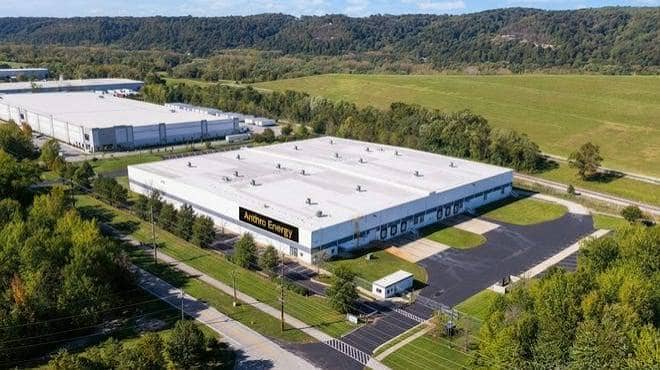

Groundbreaking for Domestic Electrolyte Production
Anthro Energy, a startup focused on battery materials, has officially commenced construction on a new manufacturing facility in Louisville, Kentucky. The project marks the beginning of development for a specialized electrolyte factory designed to support the growing domestic electric vehicle sector.
The company announced that the facility is engineered to produce 25 gigawatt-hours (GWh) of electrolytes annually. According to company statements, this production capacity would be sufficient to power more than 300,000 electric vehicles. The Louisville plant represents a significant physical investment in the United States battery supply chain.
Anthro Energy described the facility as critical for diversifying supply chains by providing "China-free" materials. The company stated that the strategic investment underscores a pivot toward securing domestic manufacturing for essential battery components. This move is intended to reduce reliance on international suppliers for key electrolyte materials used in battery production.
Timeline and Technological Focus
The Louisville facility is slated to begin production in 2028. The company indicated that the plant will advance solid-state battery technology, a specific area of battery development distinct from traditional lithium-ion chemistries. Anthro Energy stated that the facility aims to secure domestic US battery supply, positioning itself within the broader effort to localize critical energy storage infrastructure.
As a US-based startup, Anthro Energy is focusing its operations on battery materials rather than complete cell assembly. The company’s public communications highlight the facility's role in accelerating solid-state battery technology adoption. The 25 GWh annual output target suggests a large-scale industrial operation intended to serve multiple automotive or energy storage manufacturers.
Supply Chain Diversification Goals
The decision to build in Louisville aligns with broader industry efforts to establish independent supply networks. Anthro Energy explicitly cited the goal of providing "China-free" materials as a core benefit of the new factory. This designation refers to the origin of the materials and the manufacturing process, which the company claims will not involve Chinese supply chains.
The company noted that this diversification is particularly relevant at a time when battery manufacturers globally are addressing complex supply chain challenges. By establishing a domestic source for electrolytes, Anthro Energy aims to mitigate potential disruptions associated with international logistics and geopolitical tensions affecting raw material availability.
Industry Context and Strategic Positioning
The construction of the Louisville plant occurs during a period of increased activity in the US battery manufacturing sector. Companies are investing heavily in domestic production capabilities to support national electric vehicle adoption goals. Anthro Energy’s entry into electrolyte manufacturing adds a new layer to this domestic infrastructure development.
The company’s focus on solid-state technology distinguishes its product offering from conventional liquid electrolyte producers. Solid-state batteries utilize solid electrolytes, which can offer different performance characteristics compared to traditional designs. Anthro Energy stated that the facility is designed to support this specific technological frontier.
Production targets for 2028 indicate a multi-year development phase for the Louisville site. The company has not disclosed the total financial investment required for the project or specific details regarding land acquisition and construction contracts. Public information remains limited to the announced capacity, location, and intended market application.
Impact on Electric Vehicle Manufacturing
If the facility reaches its projected capacity, it will supply enough electrolyte to power over 300,000 electric vehicles annually. This volume represents a substantial portion of the current US electric vehicle market. The company’s materials would be integrated into the battery packs used by automotive manufacturers.
Anthro Energy has not specified which automakers or battery cell producers will utilize its electrolytes. The company’s strategy appears to focus on becoming a supplier within the existing domestic supply chain rather than manufacturing complete batteries. The Louisville facility is positioned as a component supplier for larger battery assembly operations.
Regulatory and Economic Implications
The project aligns with federal incentives designed to boost domestic clean energy manufacturing. While Anthro Energy has not detailed its eligibility for specific government grants or tax credits, the facility’s classification as a domestic supply chain investment may qualify it for existing support programs.
The emphasis on "China-free" materials reflects ongoing regulatory and economic pressures within the US battery industry. Legislation such as the Inflation Reduction Act includes provisions that penalize reliance on foreign entities of concern, particularly China, for critical mineral processing. Anthro Energy’s stated mission to provide alternative sourcing options addresses these regulatory requirements.
The company has not provided independent verification of its "China-free" claims or detailed the specific origins of its raw materials. The assertion remains a statement of intent and corporate positioning rather than a verified supply chain audit result. Industry observers note that electrolyte production involves complex chemical processing that requires careful sourcing of precursor materials.
Future Production Capabilities
The 25 GWh capacity target sets a clear benchmark for the facility’s output. This metric refers to the energy storage capacity that the produced electrolytes can support in final battery applications, rather than the volume of liquid or solid material itself. The company’s ability to meet this target will depend on construction timelines, equipment installation, and chemical synthesis efficiency.
Anthro Energy has not disclosed plans for expansion beyond the initial Louisville facility. The company’s current public focus remains on the successful completion and operation of this single site. Any future developments would require additional capital investment and regulatory approvals not currently in the public record.