

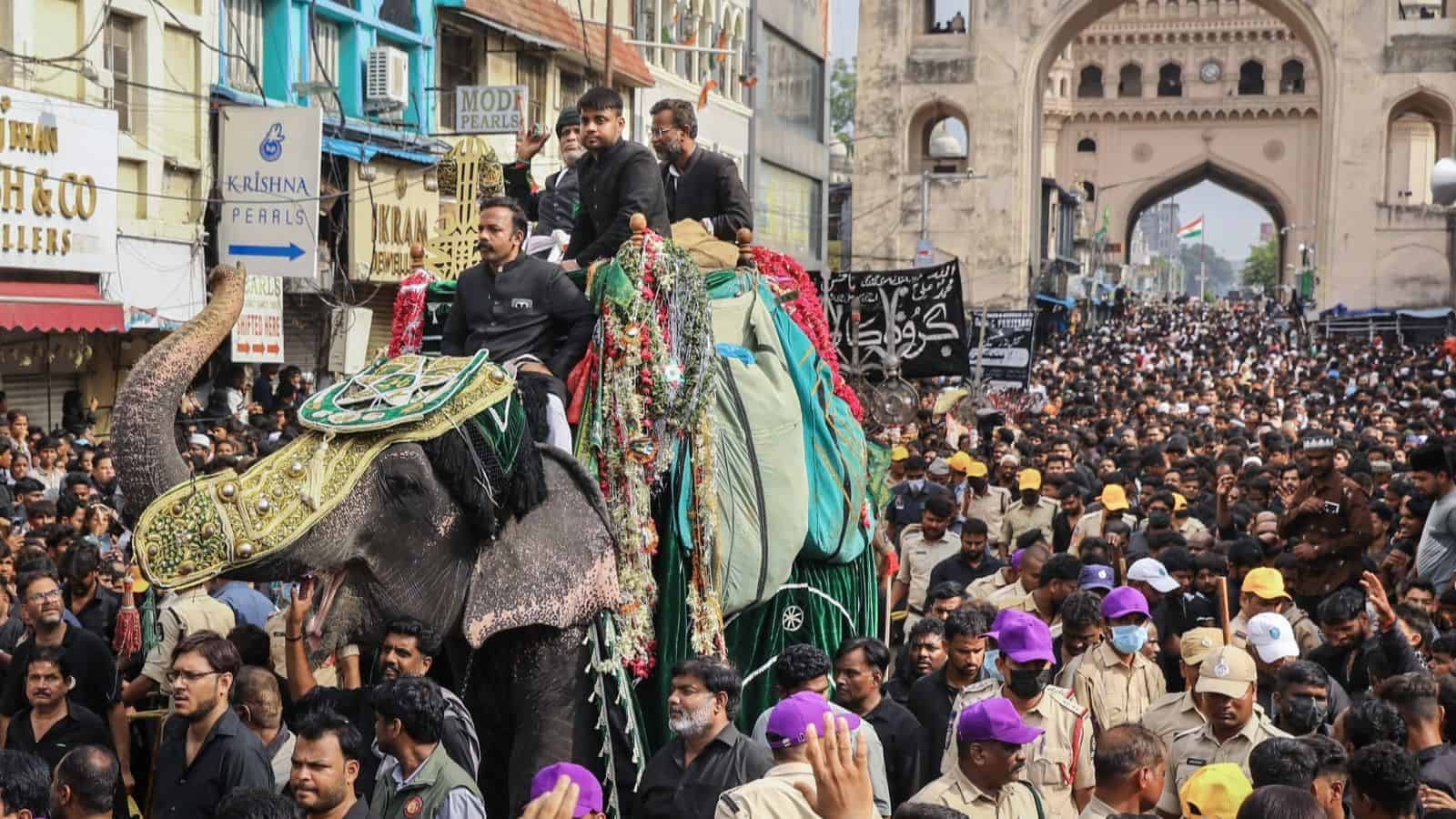

A Major Religious Gathering in Hyderabad
The Bibi Ka Alam procession stands as one of the largest religious gatherings in Hyderabad’s Old City. According to reports, the event draws significant crowds and holds a prominent place in the city’s public memory. The procession is essentially a Shia Muslim gathering, yet it is characterized by broad participation from other communities. Reports indicate that Sunni Muslims and Hindus also take part in the event, reflecting a history of cultural assimilation within the region.
Historical Roots in the Qutb Shahi Era
The tradition of the Bibi Ka Alam procession dates back to the 17th century. This period coincides with the rule of the Qutb Shahi dynasty, also known as the Golconda dynasty, which governed the region from 1518 to 1687. The founder of this founding dynasty of Hyderabad was from Iran. This historical connection contributed to the event's place in Hyderabad’s religious ethos, as the Qutb Shahis were essentially Shia Muslims.
Participation of the Nizams
The importance of the procession is underscored by its continuity through subsequent eras. In public memory, the Nizams of Hyderabad participated in the Bibi Ka Alam procession every year. Their annual involvement set the tone for the event's significance and status within the city. The tradition persisted even after the Qutb Shahi rule, maintaining its prominence under later rulers.
Religious Observance on Ashura
The Bibi Ka Alam procession is one of many processions carried out on the 10th day of Muharram. This date corresponds to Ashura, which is the 10th day of Muharram, the first month of the Islamic calendar. The procession is conducted to observe the martyrdom of Imam Hussain.
The Martyrdom of Imam Hussain
Imam Hussain was one of the sons of Imam Ali, who was the son-in-law and cousin of the Prophet Muhammed. Historical accounts state that Imam Hussain was killed in Karbala on the day of Ashura. The procession serves as a commemoration of this event, linking contemporary religious practices in Hyderabad to historical narratives from the 7th century.
Cultural and Religious Significance
While the core of the Bibi Ka Alam procession is Shia Muslim observance, its execution involves wider community engagement. The participation of Sunni Muslims and Hindus is cited as evidence of cultural assimilation in Hyderabad. This aspect of the event distinguishes it as a significant part of the city's religious landscape.
The Identity of 'Bibi'
Despite the procession's scale and historical depth, questions regarding the identity of 'Bibi' are often overlooked by the general public. The name Bibi Ka Alam is central to the event, yet specific details about who 'Bibi' refers to are not always addressed in general discussions of the procession.
Continuity of Tradition
The endurance of the Bibi Ka Alam procession from the 17th century to the present day highlights its role in Hyderabad’s religious ethos. The influence of the city's founding dynasty, with its Iranian origins and Shia affiliation, remains a key factor in understanding the event's character. The annual participation of the Nizams further cemented its status as a major civic and religious occasion.