

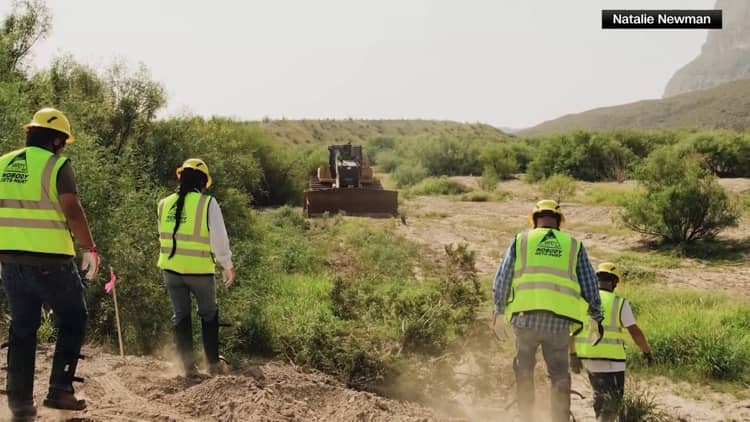

Continued Destruction Draws Sharp Criticism
Demolition work at Big Bend is moving forward, even as public anger over the project intensifies. The ongoing bulldozing has drawn sharp rebuke from critics who argue that the initiative involves a significant amount of destruction for what they describe as minimal impact. Concerns about the financial burden of the project have also surfaced prominently in the growing debate.
At the center of the criticism is a former park superintendent, who voiced strong disapproval of the current trajectory of the construction efforts. The former official characterized the scope of the work with stark language, highlighting the disparity between the resources being spent and the results achieved.
Questions of Cost and Efficacy
The former park superintendent did not mince words in describing the project's value proposition. According to reports, the official stated, "It’s an absurd amount of money for a massive amount of destruction for a very, very little bit of impact." This assessment underscores a broader sentiment among opponents who feel the project is poorly justified.
The phrase "absurd amount of money" suggests that critics view the financial expenditure as disproportionate to the benefits. By linking the high cost directly to the "massive amount of destruction," the former superintendent’s comment frames the demolition not as a necessary improvement, but as an excessive and perhaps wasteful endeavor.
Despite these vocal objections, the physical work at Big Bend has not halted. The continuation of bulldozing operations indicates that authorities or contractors responsible for the site are proceeding with their plans regardless of the mounting public outcry. This disconnect between public sentiment and on-the-ground activity highlights the tension surrounding the project.
Public Outrage Grows as Work Advances
The phrase "growing outrage" used in reports about the situation points to an escalating level of dissatisfaction among the community. While specific numbers of protesters or detailed timelines of demonstrations were not provided in the available context, the description of the anger as "growing" implies a trend rather than a static state of opposition.
The juxtaposition of this rising anger with the continued progress of the bulldozing creates a narrative of conflict between the public and the entities managing the demolition. Critics are using strong descriptors such as "massive amount of destruction" to emphasize the scale of the physical changes occurring at Big Bend.
There is no information in the current reports regarding official responses from project managers or government officials defending the expenditure or the timeline. The available facts focus primarily on the actions of the demolition crews and the critical reactions from observers, specifically the former park superintendent.
The Scope of the Controversy
The controversy appears to be rooted in two main areas: the financial cost and the environmental or structural impact. By describing the destruction as "massive" but the impact as "very, very little," the criticism suggests that the project fails its own justification. If the goal was to achieve a specific outcome, critics argue that the method used is inefficient and overly destructive.
The lack of detailed technical specifications in the public reports leaves the exact nature of the "impact" open to interpretation by the public. However, the former superintendent’s characterization provides a clear lens through which many residents are viewing the project: as an unnecessary expenditure of public funds for negligible gain.
As the bulldozing continues, the gap between the proponents of the project and its detractors seems to be widening. The former park superintendent’s comments serve as a focal point for this opposition, encapsulating the frustration felt by those who believe the resources could have been better utilized or that the destruction is unwarranted.
Implications for Big Bend
The situation at Big Bend remains fluid, with the physical reality of demolition contrasting sharply with the verbal resistance from the public. The continued operation suggests that logistical or contractual obligations may be driving the pace of work, independent of the changing political or social climate.
Critics continue to point to the financial aspect as a key issue. The description of the cost as "absurd" indicates that taxpayers or observers feel the price tag is unjustifiable. This financial criticism is tied directly to the physical outcome, with the argument being that the destruction does not yield commensurate benefits.
Without additional statements from project officials or new data on the specific impacts of the demolition, the narrative remains focused on the contrast between the ongoing work and the escalating criticism. The former park superintendent’s strong language provides a clear summary of the opposition’s stance, but it does not halt the machinery of construction.
Looking Ahead
The future of the Big Bend project depends on whether the public anger translates into political pressure or legal challenges. For now, the bulldozing proceeds, and the criticism remains voiced by figures such as the former park superintendent. The situation serves as a case study in the potential for community opposition to clash with established infrastructure or development plans.
As the demolition continues, the focus remains on the tangible destruction occurring at the site and the intangible rise in public dissatisfaction. The core of the dispute lies in the perceived imbalance between cost, destruction, and impact, a balance that critics argue is fundamentally flawed.
The absence of counter-arguments from project supporters in the current reports leaves the critical perspective as the dominant voice in the available narrative. However, the continuation of work suggests that decision-makers are prioritizing the execution of the plan over immediate public relations concerns.