

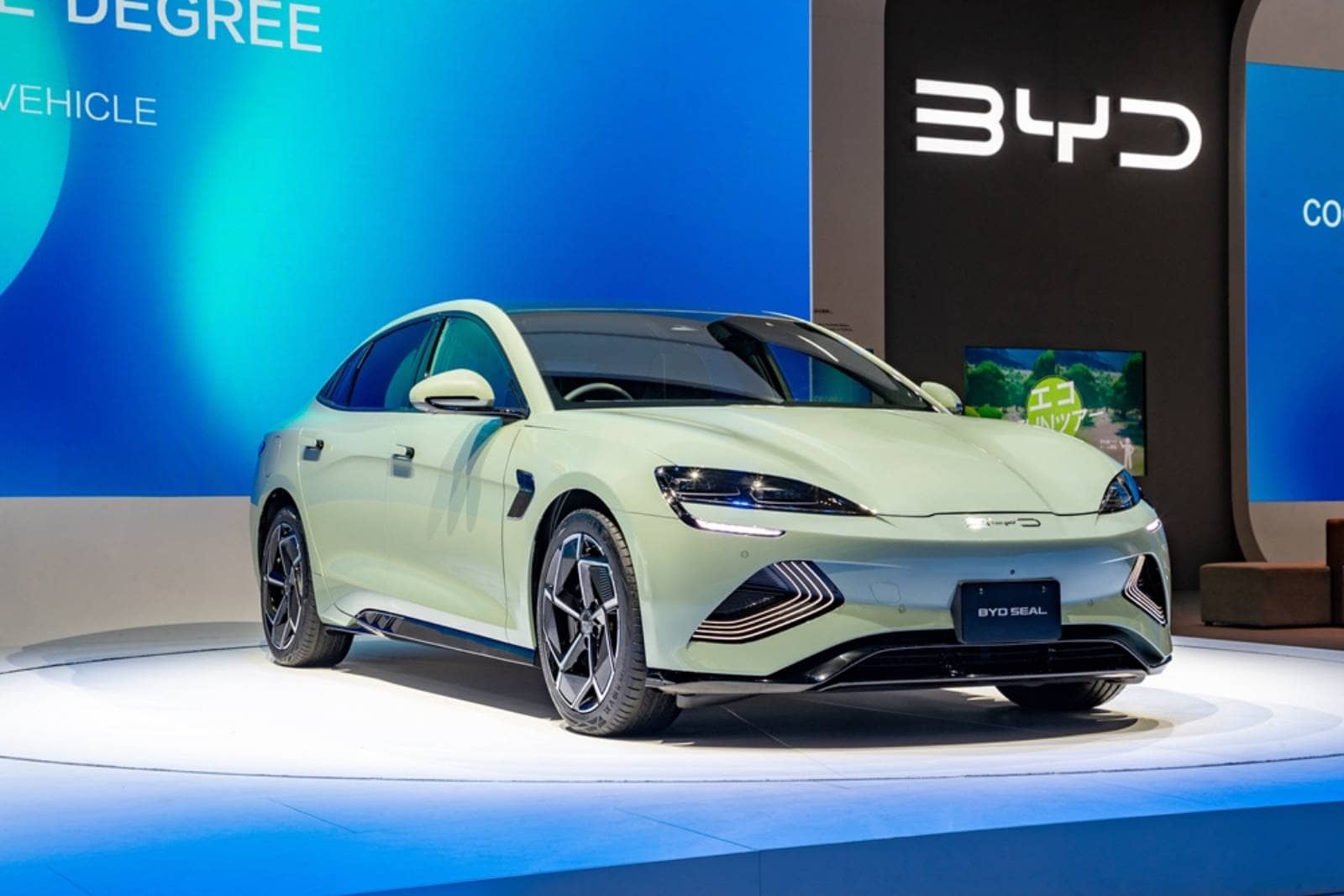

Geopolitical Headwinds Define BYD’s Global Strategy
Stella Li, BYD’s executive vice-president, has identified geopolitical tensions as the primary obstacle to the company's international expansion, overshadowing traditional business challenges such as market demand or technological limitations. Speaking at the Milken Institute Asia Summit in Singapore on Thursday, Li emphasized that political uncertainty creates an environment lacking the certainty and visibility necessary for long-term investment decisions.
According to reports from The Star, which cited comments originally shared with Reuters, Li argued that the current global landscape prevents companies from making confident capital allocations. This assessment marks a significant shift in how BYD, one of the world’s largest electric vehicle manufacturers, perceives its growth trajectory outside of China.
Strategic Withdrawal from the US Market
In a direct consequence of these geopolitical pressures, Li confirmed that BYD has made the strategic decision not to sell passenger cars in the United States for the foreseeable future. Citing Free Malaysia Today, she described the American market as "complicated," noting that it lacks the clarity, visibility, and stability required for successful entry.
This retreat from the US consumer market stands in stark contrast to BYD’s aggressive expansion elsewhere. While competitors navigate complex trade barriers and tariffs, Li indicated that the company prefers to focus on regions where political risk does not dictate commercial viability. The decision underscores the extent to which diplomatic friction between Beijing and Washington has reshaped corporate strategies for Chinese tech and automotive firms.
Operational Independence and Labor Constraints
Despite its global ambitions, BYD is maintaining a distinct operational posture regarding partnerships. Li stated that the company has no plans to collaborate with other Chinese enterprises in key sectors such as storage and solar panels. She attributed this independence to BYD’s existing leadership position in these technologies, suggesting that joint ventures are unnecessary given their internal capabilities.
However, the company faces significant domestic challenges. Li noted that it has become increasingly difficult to hire sufficient personnel within China. To address this labor constraint, she revealed that BYD intends to rely more heavily on industrial robots in the future, signaling a pivot toward automation to sustain production levels amid workforce shortages.
Technology Partnerships and Market Valuation
On the technology front, Li confirmed that Nvidia remains a "very strong" chip partner for BYD. This relationship highlights the company’s reliance on established global tech ecosystems for its advanced driver-assistance systems and computing infrastructure, even as it navigates broader geopolitical tensions.
Investors may find reassurance in Li’s assessment of BYD’s financial standing. Describing the firm’s Hong Kong-listed stock as "super undervalued" compared to US counterparts, she pointed to BYD’s identity as a comprehensive engineering entity rather than merely an automotive manufacturer. This valuation gap, according to Finimize, reflects Li’s confidence in the company’s diversified portfolio and engineering prowess.
Ultimately, Li’s remarks at the Singapore summit serve as a clear indicator of how geopolitical forces are rewriting the rules of global commerce for Chinese industry leaders. With political uncertainty cited as the number one challenge, BYD’s strategy appears to be one of cautious consolidation and technological self-reliance, rather than rapid geographic expansion into politically volatile regions.