

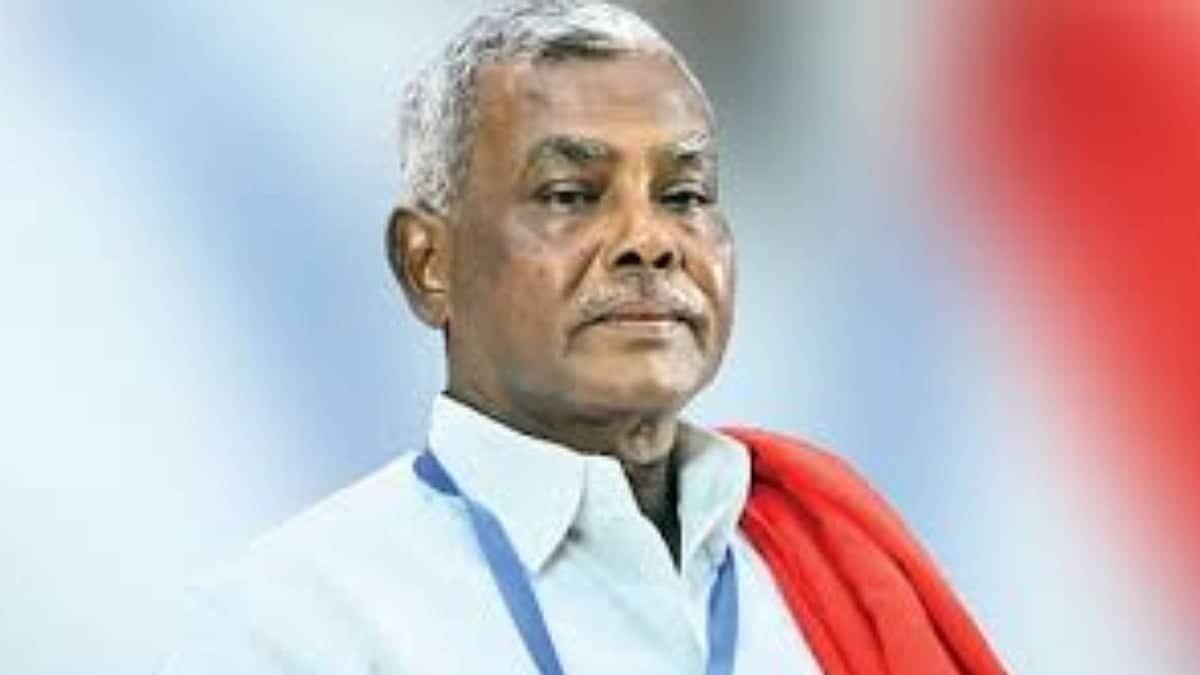

Criticism From CPM Leadership Regarding Alleged Defections
CPM state secretary P Shanmugam has publicly accused the Dravida Munnetra Kazhagam (DMK) of attempting to destabilize the Tamil Nadu government through what he termed "horse trading." The accusation was made during an address to the media in Coimbatore on Thursday. According to reports from Dt Next, which published the statement under the headline "DMK trying to topple TVK govt through horse-trading, says CPM leader P Shanmugam," Shanmugam stated that recent remarks by DMK president MK Stalin predicting an early change of government have now become clear.
In his address, Shanmugam linked these political predictions directly to a specific police case involving an alleged attempt to bribe a legislator from the Tamil Nadu Vaigai Koodal (TVK) party. He asserted that the intention behind Stalin's comments was revealed by this ongoing legal matter.
Shanmugam suggested that the DMK is finding it difficult to accept being out of power and has consequently resorted to unethical methods to overthrow the government. "The DMK had found it difficult to reconcile with being out of power and was therefore attempting to bring down the government through unethical means," Shanmugam said, according to the source text.
The criticism focuses on a specific instance where money is allegedly offered to secure defection from one party to another. Shanmugam distinguished this alleged offer of crores of rupees as unacceptable conduct in politics. He argued that while legislators voluntarily switching parties was not uncommon in Indian politics, attempting to purchase an elected representative with large sums of money crosses a line.
"While legislators voluntarily switching parties was not uncommon in Indian politics, offering money to secure defections was unacceptable," Shanmugam stated during the media interaction. He emphasized that if an MLA joins another party voluntarily, that is one matter; however, attempting to buy their loyalty with financial incentives represents a different and more serious issue.
Defense of Voter Mandate Against Political Engineering
A central point in Shanmugam's argument involves the interpretation of the recent Assembly election results. He asserted that voters had chosen an alternative political option to both the DMK and the All India Anna Dravida Munnetra Kazhagam (AIADMK). According to his statement, these elected representatives were given a mandate by the electorate.
Shanmugam criticized attempts to engineer defections as actions that disregard this voter mandate. "People had voted for an alternative to both the DMK and the AIADMK in the Assembly elections," he said. He added, "Instead of respecting the mandate, attempts are being made to engineer political defections through horse-trading."
This stance positions the alleged bribery attempt not merely as a procedural issue but as an affront to the democratic choice expressed by the voters. The CPM leader framed the situation as one where established norms were being violated for strategic gain.
Context of Recent Political Statements
The remarks made by DMK president MK Stalin regarding an impending change in government serve as a focal point for Shanmugam's accusations. By predicting that the current administration would not last long, Stalin allegedly signaled intent to facilitate political shifts.
In light of this prediction and the subsequent police case involving bribery allegations against individuals associated with the TVK party, Shanmugam claims the DMK’s strategy has become transparent. The connection drawn by the CPM leader is that the financial inducements offered to legislators are a direct mechanism for realizing the political goal of toppling the current government.
Shanmugam's comments were delivered in Coimbatore, where he addressed reporters and elaborated on his party’s position. The incident highlights the tension between voluntary party switching, which is a recognized phenomenon in Indian politics, and what Shanmugam describes as coercive or financial manipulation of legislators.
The source text notes that Dt Next published these details with an update timestamped at 8:29 am on July 02, 2026. The article categorizes the event under Tamil Nadu news, specifically focusing on the political dynamics between the DMK and TVK factions within the state assembly.
Shanmugam’s narrative suggests that the current government faces a challenge from internal or external forces willing to use financial resources to alter legislative composition. He maintains that such actions undermine the stability of the elected government and disrespect the will of the voters who selected these representatives against the major traditional parties.
The distinction made by Shanmugam relies heavily on the concept of agency: a legislator choosing to switch is an exercise of personal or party autonomy, whereas accepting money for defection implies complicity in destabilizing efforts. This framing allows him to separate legitimate political maneuvering from what he considers unethical interference.
By bringing these allegations into the public sphere through media addresses, Shanmugam aims to clarify his party’s stance on governance integrity and voter rights. The specific mention of "crores of rupees" underscores the scale of financial involvement alleged in the case, which he claims is unprecedented or at least highly problematic compared to standard political transitions.
The ongoing police investigation provides a factual backdrop for these accusations. While Shanmugam speaks of an “alleged attempt” and uses attribution language consistent with reporting on unproven charges, the severity of his condemnation indicates he views this as more than mere speculation.
His comments reflect a broader debate within Tamil Nadu politics regarding the role of money in legislative defections. The CPM leader positions himself as a defender of electoral mandates against what he perceives as predatory tactics by rival parties seeking to exploit legal ambiguities surrounding party switching and financial settlements between politicians.