

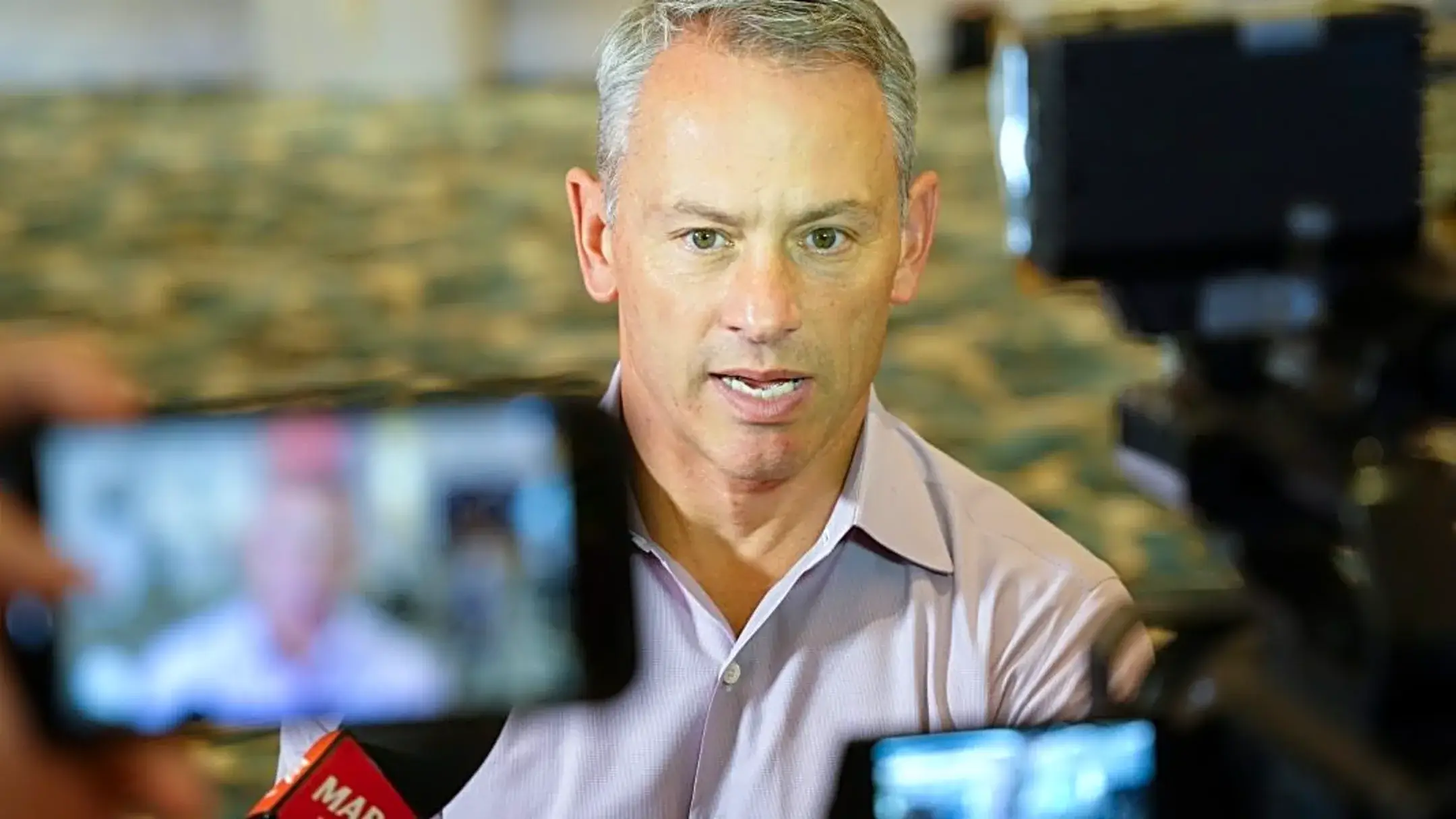

Hoyer Identifies Defensive Limitations as Critical Flaw
Chicago Cubs president of baseball operations Jed Hoyer explicitly identified the team's defensive limitations as a primary factor in their recent struggles, specifically regarding their inability to track fly balls. The admission underscores a fundamental mismatch in the roster's construction, where elite fielding could not compensate for a lack of power protection.
"We’re leaning on our defense too heavily…we can’t catch homers," Hoyer stated, according to Yardbarker. He reiterated this point multiple times throughout the season, noting, "I think I said hundreds of times during the course of the year, we can’t catch homers." The repetition of this sentiment highlights how persistent and visible the issue was for front office leadership.
The admission highlights a specific statistical weakness that contributed to the team's performance issues. Yardbarker reported that the Cubs gave up the most home runs in the National League last season. The organization struggled significantly with allowing opposing teams to score via the long ball, a problem that persisted throughout the campaign and ultimately defined their offensive output.
Playoff Exit Marked by Early Offensive Surge
The defensive and pitching deficiencies were on full display during Chicago's postseason exit against the San Diego Padres. Yardbarker reported that a pair of first-inning home runs from Fernando Tatis Jr. and Manny Machado in Game 1 of the Wild Card series marked the beginning of the end for the Cubs' playoff hopes.
Those early hits underscored the vulnerability Hoyer described, as the team's defensive alignment failed to track the balls effectively, leading to immediate scoring opportunities for San Diego. The inability to contain such explosive offensive starts in critical moments reflected the broader statistical trends observed throughout the regular season.
Pitching Infrastructure Requires Overhaul
Hoyer outlined a clear strategic direction for the upcoming offseason, stating that "the great majority of our focus [this winter] is going to be on pitching acquisition." His goal is to elevate the team's pitching infrastructure to match the quality of their position-player group.
"Our position-playing group was the best in baseball," Hoyer told reporters. In contrast, he described the pitching staff as "a struggle from the get go." This disparity between elite defense and inconsistent pitching has become a defining characteristic of the roster's construction, necessitating a shift in resource allocation.
Free Agency Threats to Rotation and Bullpen
The need for pitching reinforcement is urgent given the status of several key arms. Yardbarker reported that starting pitchers Matthew Boyd, Shota Imanaga, Kevin Gausman, Clay Holmes, and David Peterson may leave via free agency.
The bullpen faces similar uncertainty. Relievers Caleb Thielbar, Hunter Harvey, Aaron Civale, and Trent Thornton are also expected to depart as free agents, according to the report. The potential loss of this volume of arms intensifies the pressure on Hoyer's stated priority.
Additionally, Yardbarker noted that the Cubs hold club options on Colin Rea and Jacob Webb. The organization must decide whether to retain these players or seek external solutions to address the pitching gaps identified by Hoyer. With so many contributors entering free agency, the front office faces a significant challenge in rebuilding the infrastructure required to support their position-player core.