Full story
Congress Asserts Position in Pre-Election Alliances
The Indian National Congress party has signaled a growing sense of confidence as it prepares for the upcoming Uttar Pradesh state election. This increased assertiveness comes as the party seeks to define its role within the broader opposition coalition, particularly in negotiations with its key ally, the Samajwadi Party (SP).
Rajendra Pal Gautam, the newly appointed All India Congress Committee (AICC) in-charge for Uttar Pradesh, addressed the media at his first press conference following his appointment. During this event, Gautam declared that the party would approach the upcoming Assembly election with a stance of "equality and respect." This specific phrasing has been interpreted by political analysts as an indication that the Congress is engaging in hard bargaining regarding seat-sharing arrangements for the 2027 state election.
The remark added to existing speculation that the Congress is not willing to adopt a defensive posture during discussions with the Samajwadi Party. The party’s leadership appears determined to secure a favorable position within the alliance framework before the polls commence.
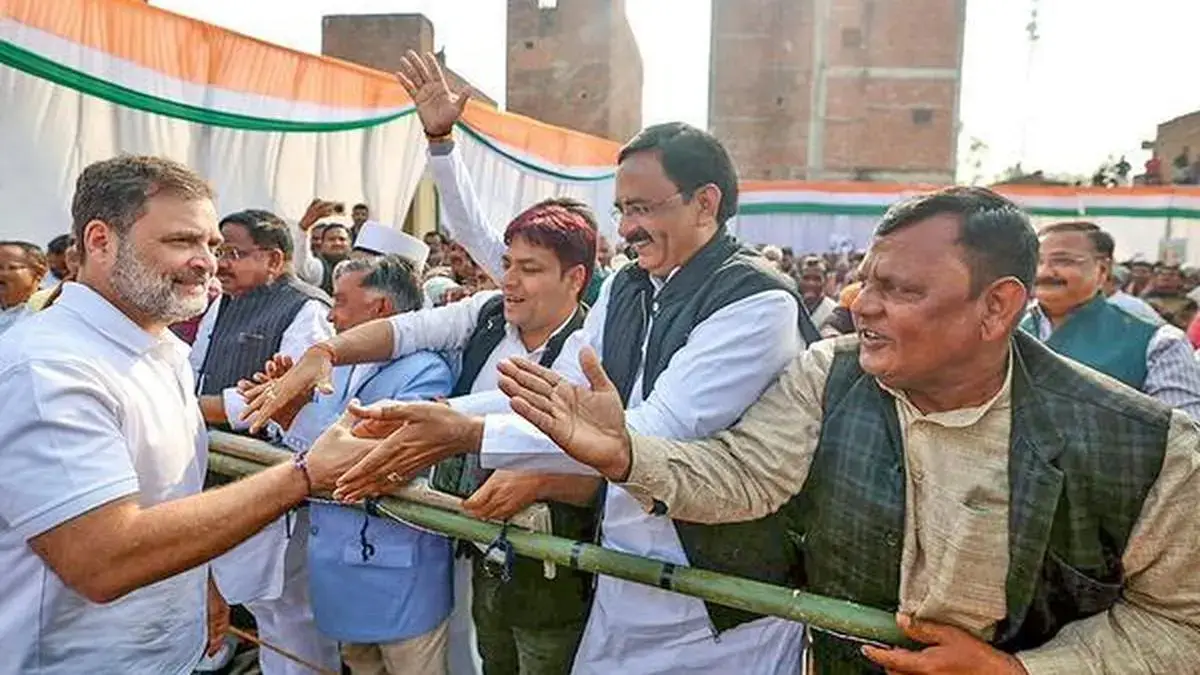
To support this political positioning, the Congress has been actively organizing rallies, protests, and outreach programs across Uttar Pradesh. These activities are designed to strengthen the party's grassroots presence and demonstrate its operational readiness for the electoral contest.
However, political observers note that the Congress must strike a careful balance between this demonstrated bullishness and pragmatism. There is a recognized need for the party to guard against actions or statements that could alienate its allies, particularly the Samajwadi Party, which remains a critical component of the opposition front in the state.
Dalit Voting Patterns Undergo Structural Shift
Beyond alliance dynamics, significant changes are occurring within the electorate itself. Dalit politics has emerged as a major factor reshaping voting trends in Uttar Pradesh. The traditional voting behaviors of this demographic are being influenced by a complex interplay of welfare schemes, security perceptions, and demands for political representation.
According to reports on the ground, welfare provisions remain a primary element influencing Dalit voting patterns. Access to social safety nets and economic support systems continues to drive electoral choices for many voters within this community.
Simultaneously, security concerns are playing an increasingly prominent role in shaping political alignments. The perception of physical safety and protection from violence is becoming a decisive factor for Dalit voters as they evaluate the performance and promises of various political entities.
Representation is another critical component driving these shifts. Voters are increasingly prioritizing candidates and parties that offer tangible political representation, seeking to ensure that their interests are directly addressed in legislative bodies.
The convergence of these three factors—welfare, security, and representation—is creating a fluid electoral environment. This fluidity presents both opportunities and challenges for the Congress party as it attempts to consolidate support among Dalit voters while maintaining its alliance with the Samajwadi Party.
Navigating Coalition Constraints
The interplay between alliance negotiations and demographic shifts creates a difficult political landscape for the Congress. The party’s insistence on "equality and respect" in seat-sharing talks must be weighed against the need to maintain coalition unity.
Any perceived imbalance in the distribution of seats could potentially strain relations with the Samajwadi Party. Such tensions could undermine the collective strength of the opposition alliance, particularly if it affects voter consolidation among key demographics like the Dalit community.
The Congress’s outreach programs and rallies are thus not merely about individual party growth but are also part of a broader strategy to establish leverage within the coalition. By demonstrating organizational strength and voter connectivity, the party aims to secure a stronger bargaining position.
At the same time, the party must navigate the specific concerns of Dalit voters who are evaluating political options based on welfare delivery, security guarantees, and representative politics. The ability to address these concerns effectively while managing alliance sensitivities will be a defining feature of the Congress’s campaign strategy in Uttar Pradesh.