

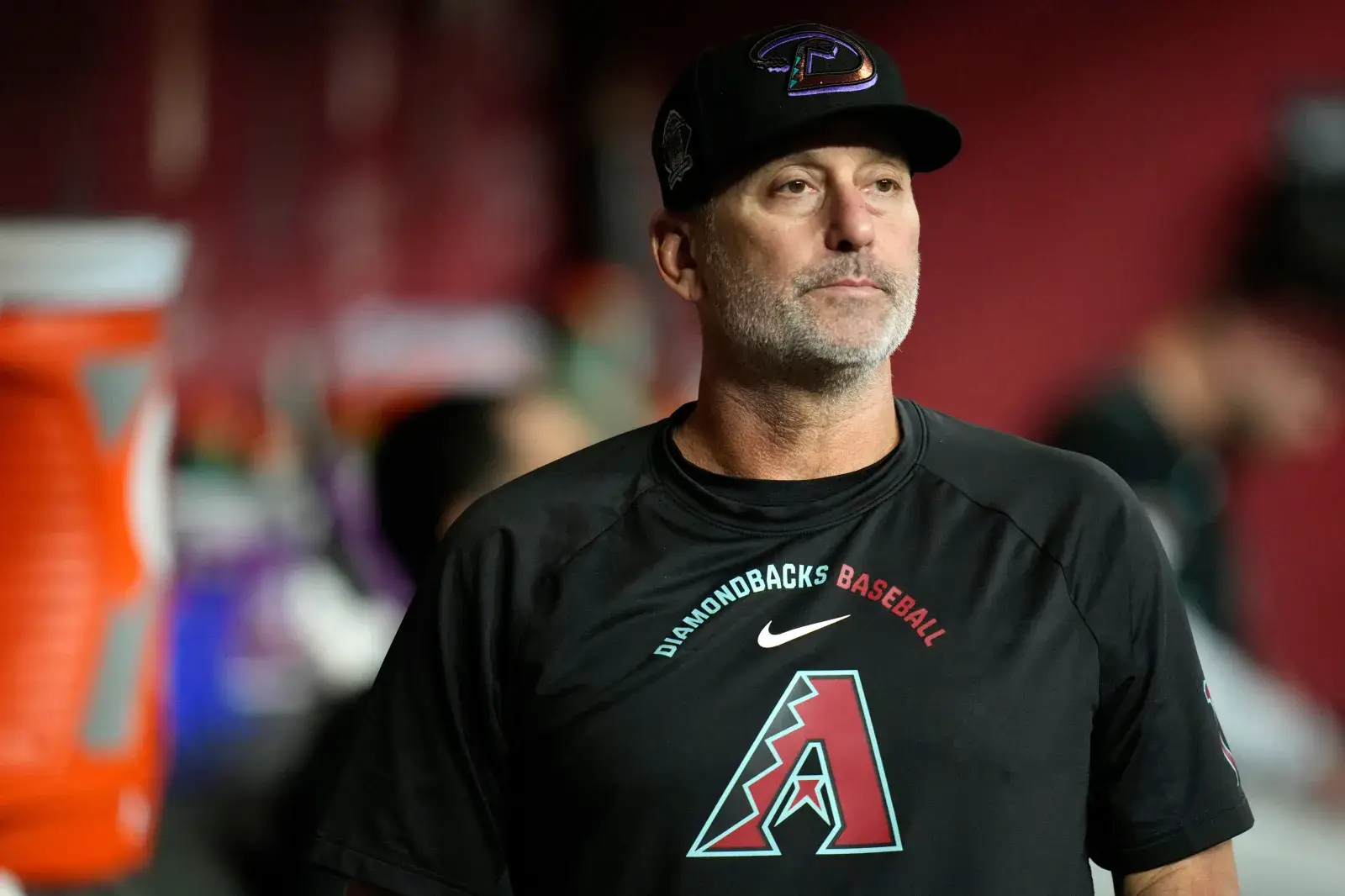

A Decade of Near-Misses and a Manager’s Uncertain Future
Diamondbacks manager Torey Lovullo acknowledged he is uncertain about his future with the club after Arizona barely missed the playoffs on the final day of the regular season. The emotional weight of that near-miss was palpable for Lovullo, who has spent a decade leading the franchise through a period of sustained competitiveness yet elusive postseason success.
Lovullo is the winningest manager in Diamondbacks history with a record of 750-768 over a full decade, but he finished this season on a one-year contract. This precarious contractual status hangs over a tenure that began when Lovullo was hired four weeks after general manager Mike Hazen took over the club, intertwining their tenures from the start.
When asked about returning on another short-term deal, Lovullo replied, “I don’t know. I just want to be wanted.” This sentiment underscores a broader question facing the organization: whether the front office’s vision aligns with the manager’s desire for long-term stability and mutual commitment.
The Agony of the Final Day
The team finished 86-76 with two weekend losses to the playoff-bound San Diego Padres; if Arizona had won those games, it would have edged Philadelphia for the NL’s final wild-card berth. The margin for error was nonexistent, and the Diamondbacks found themselves on the wrong side of a complex mathematical equation.
After losing 10-7 to San Diego on Saturday night, the Diamondbacks needed to win Sunday and needed the Phillies to lose to claim the final wild-card playoff berth. The scenario required a perfect storm of victories for Arizona and defeats for Philadelphia, neither of which materialized.
Lovullo said watching the scoreboard as Philadelphia led Tampa Bay was “painful” and “agonizing,” noting he felt sadness and emptiness. The emotional toll was evident not just in his words but in his interactions with the team during the game. The players were aware of the Phillies’ win when Lovullo made a late-inning pitching change, and he comforted his infielders with words and hugs.
“We fought as hard as we could, and we have nothing to be ashamed of,” Lovullo said, acknowledging the group was special but came up short. His assessment reflects a team that pushed through a difficult schedule but ultimately fell just short of the postseason.
A History of Winning Without the Prize
Lovullo’s team has posted five winning records in the past nine years since he led the D-backs to 93 wins and the division series as a rookie NL Manager of the Year in 2017, with their only postseason appearance being the run to the NL pennant and the 2023 World Series. This statistic highlights a paradox: consistent regular-season success without the ultimate reward.
The competitive landscape of the National League West has further complicated Lovullo’s tenure. The Diamondbacks have been in the NL West with the Los Angeles Dodgers, who have won 13 of the last 14 division titles, and the Padres, who have made the postseason in five of the past seven years. These rivals have established themselves as dominant forces, making it increasingly difficult for Arizona to break through.
Despite the challenges, Lovullo remains emotionally invested in the franchise. He said, “Of course I do” when asked if he wanted to return next season, adding that Arizona is his home and he loves the people, fans, and staff. This personal connection suggests that any decision regarding his future will be driven by more than just professional ambition.
The Demand for Mutual Commitment
Lovullo stated, “I want to win a world championship with this organization, but I want to be wanted” after the Diamondbacks officially missed the postseason for the eighth time in nine years. This statement captures the core of his dilemma: a desire to achieve the highest level of success coupled with a need for organizational validation.
The phrase “to be wanted” implies a two-way street. It is not enough for the team to have a manager; the manager must feel valued and supported in the pursuit of championships. This perspective shifts the narrative from a simple evaluation of win-loss records to a deeper discussion about culture, trust, and long-term planning.
As the Diamondbacks look toward the offseason, the focus will likely turn to whether the front office can offer Lovullo the assurances he seeks. With his contract expiring and the team’s recent history of near-misses, the decision will have significant implications for the franchise’s direction. Whether Lovullo stays or goes, his legacy as the winningest manager in club history remains intact, but the question of whether he will continue to lead them into the future remains open.
The uncertainty surrounding Lovullo’s future mirrors the uncertainty that defined the final day of the season. For a team that came so close, the disappointment is compounded by the lack of clarity about what comes next. The Diamondbacks’ ability to retain their manager may depend on how well they address his need to feel wanted, not just employed.