

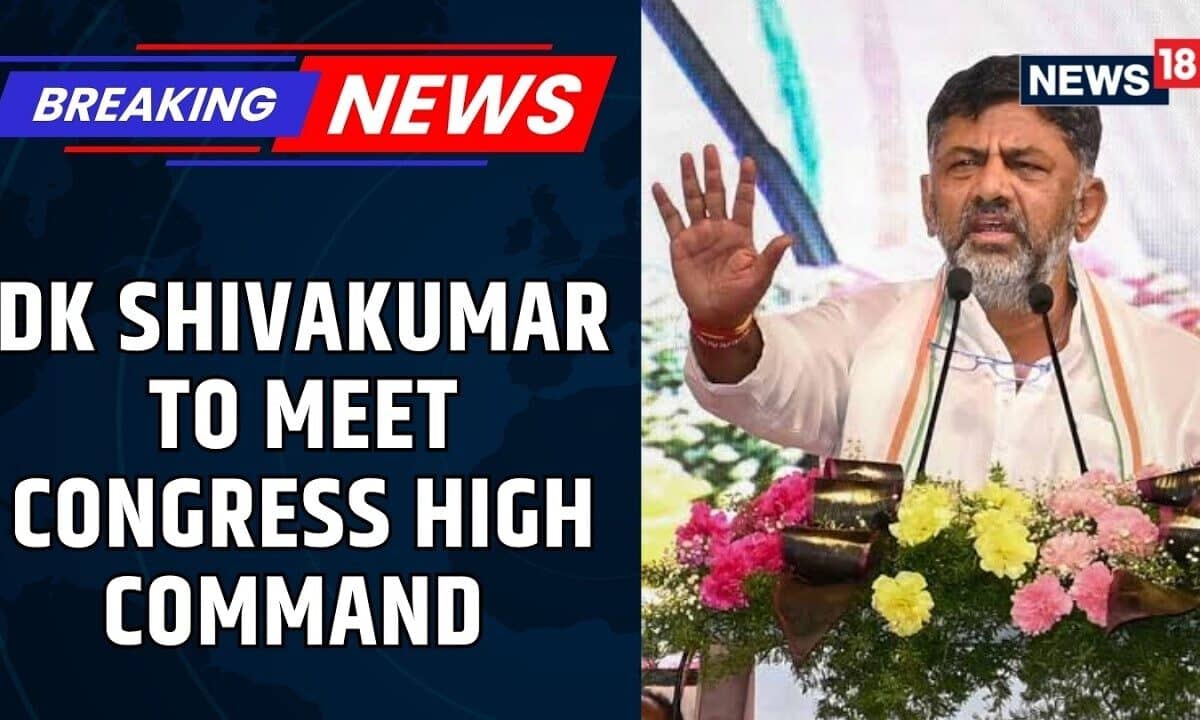

Shivakumar Departs for Capital Amidst Political Uncertainty
Karnataka Deputy Chief Minister D.K. Shivakumar is scheduled to travel to Delhi at 5 p.m. today to engage in critical discussions with the Indian National Congress High Command. The trip marks a significant step in addressing ongoing administrative and political challenges within the state government, signaling an urgent need for central intervention in state-level affairs. Shivakumar’s arrival in the capital is expected to coincide with high-level meetings aimed at resolving internal disputes that have surfaced within the party ranks since the formation of the new government.
The Deputy Chief Minister is set to meet with several key figures, including Congress General Secretary K.C. Venugopal. These interactions are described as crucial for determining the future trajectory of the state administration and the party’s internal structure, particularly concerning the distribution of power and responsibilities. The timing of the visit suggests an immediate necessity to address matters that have been left unresolved for some time, creating a climate of uncertainty within the state unit of the party.
The discussions in Delhi are not merely routine consultations but are anticipated to be pivotal in shaping the stability and operational efficiency of the Karnataka government. Shivakumar, as a prominent state leader, carries the weight of state-level concerns and expectations to the central leadership, making his role in these negotiations paramount. The outcome of these meetings is expected to have far-reaching implications for the party's cohesion and its ability to deliver on its electoral promises in Karnataka.
Cabinet Portfolio Disputes Fuel Party Factionalism
The primary focus of Shivakumar’s discussions in Delhi is the contentious issue of cabinet allocation within the Karnataka government. Reports indicate that there are significant unresolved issues surrounding the distribution of ministerial portfolios, which has led to growing discontent among some senior MLAs within the Karnataka Congress. The allocation process, a critical aspect of forming a stable government, has become a major point of contention, with various factions within the party expressing dissatisfaction with the current status quo and the perceived imbalance in power sharing.
Competing interests and expectations among different groups, each vying for influence and recognition, have created tensions that the leadership must now navigate with extreme caution. These factions often represent diverse regional interests, caste equations, or loyalties to different senior leaders, making the task of portfolio distribution a complex balancing act. The challenge for the Congress High Command is to maintain unity within its ranks while meticulously balancing the demands of these various factions. The situation requires careful diplomacy and strategic decision-making to ensure that no single group feels marginalized, which could further exacerbate existing divisions and potentially destabilize the government.
Tensions Among Senior Legislators Over Ministerial Roles
Discontent is not limited to a small segment of the party but has spread to include some senior MLAs, whose experience and influence within the party make their grievances particularly significant. These legislators have reportedly been vocal about their expectations and grievances regarding their roles in the state government, often feeling overlooked or undervalued in the current cabinet formation. Their dissatisfaction stems from a belief that their contributions to the party's electoral victory have not been adequately recognized through appropriate ministerial positions or portfolios.
The presence of such dissent at the senior level indicates that the issues are deeply rooted and extend beyond mere individual ambitions, touching upon the fundamental principles of power distribution and recognition within the party structure. This situation requires immediate and decisive attention from the party’s top leadership to prevent the discontent from escalating into a more serious internal crisis. The Congress High Command is now tasked with addressing these concerns directly, not only to placate individual legislators but also to restore a sense of fairness and equity within the party.
The meetings in Delhi are seen as a critical opportunity to clarify positions, understand the depth of the grievances, and potentially offer solutions that can satisfy the competing demands of different factions within the Karnataka Congress. The ability of the High Command to broker a deal that is acceptable to all key stakeholders will be a testament to its leadership and its capacity to manage internal dissent effectively.
High Command Seeks Resolution to State-Level Grievances
The Congress leadership is currently facing the difficult task of maintaining unity within the party while simultaneously addressing the specific grievances of its members in Karnataka. This delicate situation highlights the complexities of managing a diverse political coalition, even within a single party, where individual ambitions and factional loyalties often clash with collective goals and the broader party agenda. The High Command's role is crucial in mediating these conflicts and ensuring that the party presents a united front, both to its members and to the public.
Shivakumar’s role as Deputy Chief Minister places him at the center of these discussions, acting as a crucial bridge between the state-level concerns and the High Command’s directives. His ability to articulate the ground realities in Karnataka and negotiate a mutually acceptable solution will be critical in determining the outcome of these meetings. The success of the talks could influence not only the immediate stability of the Karnataka government and its administrative functioning but also the broader political landscape of the region, potentially setting a precedent for how internal party disputes are resolved in other states.
The leadership's approach to resolving the cabinet allocation issues and quelling the growing discontent among senior MLAs will be closely watched. A successful resolution would demonstrate the High Command's strength and its commitment to inclusive governance, while a failure could lead to prolonged instability and undermine public confidence in the state government. The coming days will be pivotal in shaping the future of the party’s administration in Karnataka and its internal dynamics.