


Luxury Stocks Drive Market Performance
European shares concluded the trading session on Wednesday with slim overall gains. This limited upward movement was primarily driven by a strong performance within the luxury sector, which managed to counterbalance weakness observed in other parts of the market.
The report, published on July 15, 2026, highlights that while broader indices showed modest improvement, specific sectors experienced divergent results. The resurgence in demand or pricing power for high-end goods appears sufficient to lift aggregate performance despite headwinds elsewhere.
Telecom Sector Faces Headwinds
In contrast to the luxury rebound, significant weakness was observed specifically within the telecommunications sector during this period. This decline contributed to a mixed market environment where gains in one area were not enough to produce robust overall growth for all European equities.
Geopolitical Tensions Impact Sentiment
The article notes that concerns regarding ongoing conflict risks persisted throughout the trading day and into the close of business. These geopolitical worries impacted general market sentiment, creating an atmosphere where investors remained cautious despite the positive signals from luxury companies.
War risks continue to cast a shadow over European financial markets in 2026. The persistence of these concerns suggests that external instability remains a primary factor influencing investor behavior and portfolio allocations across the continent.
DAX Index Performance
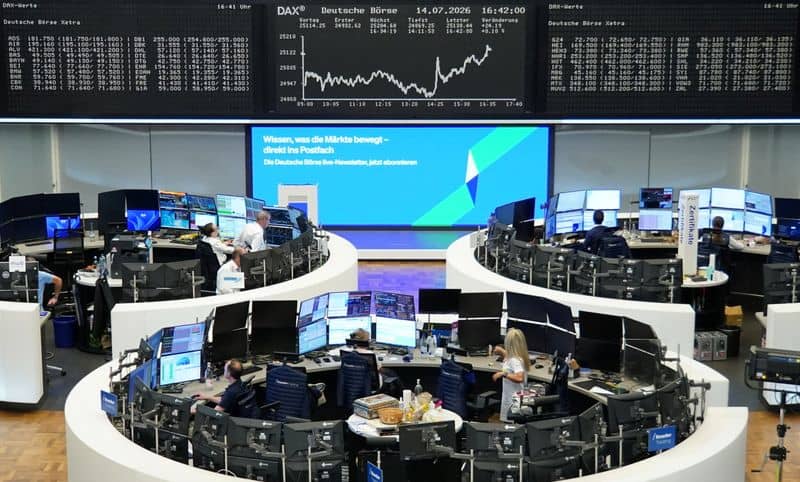
The German share price index, known as the DAX, was mentioned specifically within the coverage of market movements on July 14, 2026. The visual representation of this index at the stock exchange in Frankfurt serves to illustrate the broader context of European trading activity during that timeframe.
Market Context and Timing
The data points provided by Reuters indicate a date of publication as Wednesday, July 15, 2026. The article was authored by Tharuniyaa Lakshmi, Johann M Cherian, and Niket Nishant.
Broader Market Dynamics
The interplay between sector-specific performance and macro-level risks defines the current landscape for European investors. While luxury stocks provided a necessary boost to indices like the STOXX 50 or similar benchmarks not explicitly named but implied by general index references, other sectors dragged down overall returns.
Sector Divergence Explained
The divergence between the luxury sector and the telecom industry illustrates how different economic drivers can coexist within a single regional market. Luxury goods often benefit from global demand or currency effects that may be insulated from local geopolitical instability, whereas telecommunications companies face unique regulatory challenges or infrastructure risks associated with conflict zones.
Investor Behavior Analysis
The persistence of war risk concerns suggests that investors are not fully discounting the impact of ongoing conflicts on their portfolios. Even as luxury stocks perform well, the underlying anxiety regarding global stability prevents a more decisive rally in European equities.
Specific Market Observations
According to the reporting by Yahoo! News and Reuters, the market closed with subdued but positive results. The term "eke out" suggests that the gains were marginal rather than expansive. This nuance is important for understanding investor expectations versus actual outcomes.
The Role of Luxury Goods
Luxury stocks are often viewed as a barometer for consumer confidence in wealthy nations or global demand resilience. Their ability to rebound indicates that high-net-worth consumers remain active despite the backdrop of international conflict and economic uncertainty.
Telecom Industry Challenges
The weakness in telecoms may stem from various factors, including capital expenditure requirements for network upgrades, regulatory pressures, or specific regional conflicts affecting infrastructure. The report does not specify the exact cause but notes the observed decline as a fact of market reality.
External Factors and Global Context
The article situates European markets within a global context where conflict risks are a persistent theme. This external factor is cited repeatedly as a counterweight to domestic economic strength, particularly in sectors like luxury goods that might otherwise outperform more aggressively.
Publisher Attribution
Yahoo! News published the original article featuring this market analysis on July 15, 2026. The content was sourced from Reuters and authored by a team including Tharuniyaa Lakshmi, Johann M Cherian, and Niket Nishant.
Data Verification
The report explicitly states that the German share price index DAX graph is pictured at the stock exchange in Frankfurt on July 14, 2026. This visual evidence supports the textual claims regarding market activity during that specific window of time.
Market Outlook Implications
The slim gains observed suggest a fragile equilibrium where positive news from one sector is immediately offset by negative sentiment elsewhere or fear of worsening geopolitical conditions. Investors appear to be reacting cautiously, weighing the luxury rebound against the persistent threat of war-related disruptions.
Sentiment Indicators
Market sentiment remains cautious as long as concerns over conflict persist. The ability of luxury stocks to provide a slight lift indicates that some investors are willing to take positions in resilient sectors, but they do so without abandoning their defensive posture against macro risks.
Final Market Data Points
The article concludes with the observation that European shares ended Wednesday with slim gains. No specific percentage change is provided for major indices beyond the general description of "slim" or "subdued." The focus remains on the qualitative nature of the market movement rather than precise numerical data points.
Author Credentials
The reporting team consists of Tharuniyaa Lakshmi, Johann M Cherian, and Niket Nishant. Their collective work provides a comprehensive view of European markets as they navigate the complex interplay between sectoral performance and geopolitical instability.