


Perceived Weakness in European Defense Policy
Europe’s response to ongoing conflicts involving Russia and Iran is characterized by restraint and a lack of strategic clarity, according to an opinion piece published in the Kyiv Post. The article argues that while European governments have frequently opposed military escalation in favor of diplomatic solutions, this approach is increasingly viewed as a sign of weakness rather than strength.
The publication asserts that Russia’s war against Ukraine and Iran’s continued pursuit of regional influence have exposed an absence of a coherent European strategy supported by a credible deterrent. The piece suggests that these geopolitical realities highlight the consequences of Europe's current defensive posture.
US Policy Shifts and Diplomatic Friction
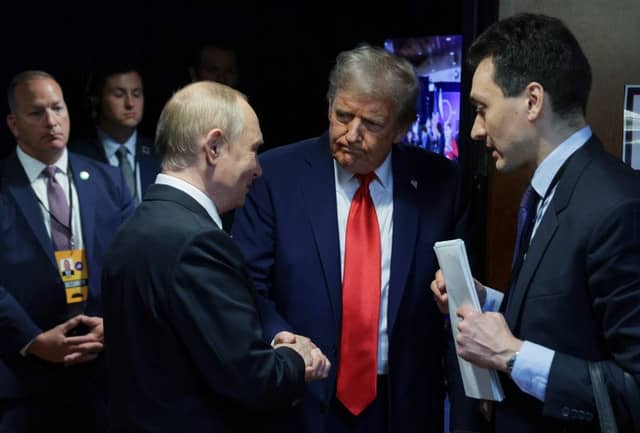
The analysis points to specific policy decisions by the United States as factors complicating the strategic landscape. It notes that US President Donald Trump lifted sanctions on Russian diesel sales, a move described in the article as providing Vladimir Putin with a financial lifeline at Ukraine’s expense.
Seven US senators have urged Trump to reverse this agreement, accusing his administration of supporting Russia’s war effort against Ukraine through these economic measures. Despite the political debate within the United States, experts cited in the report expect the impact of Trump’s decision on lowering US fuel prices to be minimal.
Simultaneously, European governments have maintained a distinct stance regarding US actions in the Middle East. The article states that Europe opposed Trump’s war on Iran from the outset and announced it would not participate in military operations, condemning the US for its involvement. This rejection of military intervention is described as reflecting the same reluctance seen in Europe’s response to the conflict with Russia.
Reliance on NATO’s Defensive Mandate
The Kyiv Post opinion piece criticizes Europe for sheltering behind the principle that NATO is solely a defensive alliance. The authors argue that European leaders continue to cite the fact that Europe has not been directly attacked, despite Russia waging a hybrid war against the continent and a full-scale kinetic war against Ukraine.
The article contends that decades of European diplomatic engagement have failed to halt the Iranian regime’s pursuit of uranium enrichment for nuclear weapons. It further claims that Iran continues to support armed terrorist groups such as Hamas and contributes to a regional network of militant organizations that threaten Israel.
As of October 2026, the report suggests that Russia and Iran are escalating military pressure because they perceive a divided West lacking a clear strategy or end-state. The piece concludes that Europe cannot afford to drift while caught between these two major conflicts.