

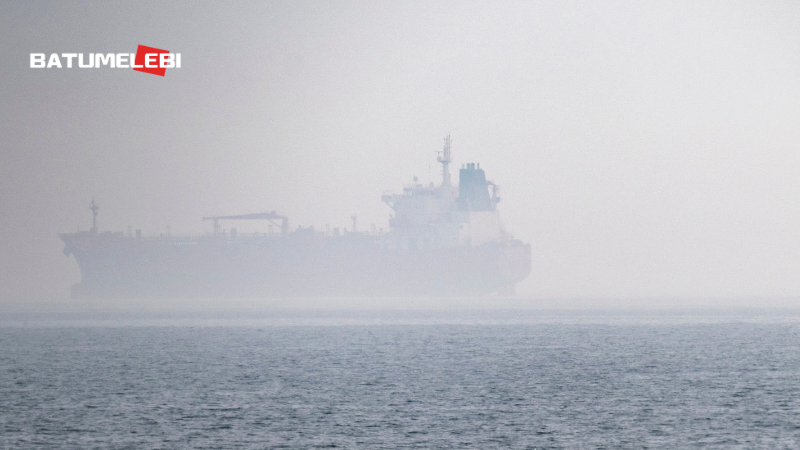

Deceptive Practices on Shadow Fleet Tankers
\nSandro (name changed), a young Georgian seafarer, recalls the most harrowing voyage of his life aboard one of Russia's so-called shadow fleet tankers. According to Sandro, there was a cracked pipe that should have been welded and properly repaired before departure.
\nInstead, he stated they just covered it with a thick layer of paint. He noted all that mattered was that the inspector took a quick look and said, 'Yes, it's been fixed.'\n\n
Lack of Transparency Regarding Technical Records
\nSandro explained that when he signed on for his contract, he expected just another routine assignment. Recruited by a local crewing agency, he knew nothing about the vessel's technical record — or even its true destination.\n\nThe reality set in at the very first port of call.
\nWhen the crew arrived in Belgium, they found the tanker under detention for two months due to issues with seaworthiness. Sandro described how everything started breaking down along the way after that period ended.
\nThe vessel eventually sailed straight to Ust-Luga in Russia.\n\n
Dangerous Voyages Without Advance Notice
\nSandro stated, 'Nobody tells you where you're going in advance.' He added that they only learned they were headed to Ust-Luga after boarding the ship.
\nHe questioned why employers would tell seafarers their destination beforehand. Sandro said, 'They know you can't turn back once you're at sea.'
\n\nInability To Refuse Dangerous Assignments
\nThe lack of transparency regarding destinations means seafarers cannot refuse dangerous voyages once they are already at sea.
\nSandro described the situation as a trap where crew members feel compelled to continue their journey regardless of safety concerns that arise after departure.\n\n
Legal and Operational Implications
\nThe article was published on Batumelebi, with contributions from Netgazeti. The publication noted its founder and director Mzia Amaghlobeli was detained.
\nBatumelebi/Netgazeti stated that it operates as an independent media outlet free from influence. It considers the detention of its leadership to be a matter concerning Russian regime conduct.\n\nThe organization declared it does not intend to comply with demands for Mzia Amaghlobeli's release and continues fighting for freedom of speech.
\nThe article was dated 09.07.2026 according to the source timeline provided in the context notes.\n\n
Detention Details
\nSandro specifically mentioned that before leaving port, the tanker had issues with its condition. The vessel remained detained for two months while docked in Belgium.
\nThis detention period occurred prior to the ship sailing toward Russia and Ust-Luga.\n\n
Seafarer Perspectives on Industry Conditions
\nSandro's account highlights concerns about maintenance standards within this segment of global shipping. He emphasized that critical repairs were not executed properly but rather superficially addressed.
\nThe practice involves covering defects with paint to pass visual inspections by authorities or company representatives.\n\n
Impact on Crew Welfare
\nThe seafarer described the breakdowns as occurring along the route after departing from Belgium. He noted that equipment failures were not uncommon during these voyages.
\nCrew members reportedly signed contracts without knowledge of specific technical conditions or final destinations.\n\n
Broader Context of Shadow Fleet Operations
\nThe term 'shadow fleet' refers to vessels often associated with Russian-linked operations. These ships frequently operate outside standard regulatory frameworks that apply to conventional commercial shipping.
\nSandro's experience illustrates how crew members may be placed in situations where safety protocols are compromised.\n\n
Regulatory Challenges
\nThe detention of the vessel in Belgium indicates enforcement actions taken by authorities regarding unseaworthy conditions. However, these detentions do not always prevent vessels from reaching their intended destinations.
\nSandro noted that after two months of being stuck in Belgian waters, the ship continued its journey to Russia.\n\n
Media Coverage and Source Attribution
\nThe story appeared on Batumelebi with English-language reporting by Netgazeti. The publication distinguishes itself through claims of independence from external influence.
\nMzia Amaghlobeli is identified as the founder and director who established the organization in 2001.\n\n
Publication Metadata
\nThe article was released on July 9, 2026 according to source timestamps. The content focuses exclusively on reported experiences of Georgian seafarers working under challenging conditions.
\nNo additional details beyond those provided in the research notes and original source context are included.\n\n
Verification Status
\nAll claims presented here derive directly from statements made by Sandro or information contained within the Batumelebi/Netgazeti publication. No independent verification outside these sources has been conducted for this report.
"