

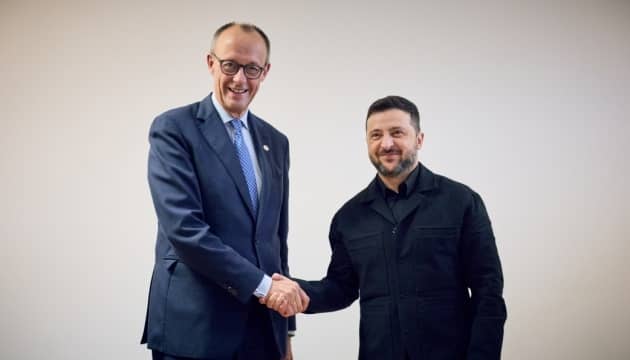

Berlin and Kyiv Maintain Direct High-Level Dialogue
German Chancellor Friedrich Merz engaged in a telephone conversation with Ukrainian President Volodymyr Zelensky, a significant diplomatic exchange reported by the Ukrainian National News Agency, Ukrinform. The call took place on Thursday, September 3, 2026, at approximately 08:10 local time in Kyiv, underscoring the ongoing direct communication channels between the leaderships of Germany and Ukraine.
The report from Ukrinform, a primary source for national news in Ukraine, confirmed the interaction, identifying Friedrich Merz in his capacity as Chancellor of Germany and Volodymyr Zelensky as the President of Ukraine. While the agency confirmed the occurrence of the high-level discussion, specific details regarding the agenda, the duration of the conversation, or any immediate policy outcomes were not disclosed in the initial release. Such direct leader-to-leader communications are often critical for coordinating international support, discussing strategic priorities, and maintaining solidarity amidst complex geopolitical challenges.
Germany's Role in European Support for Ukraine
The call between Chancellor Merz and President Zelensky highlights Germany's continued role as a pivotal European partner for Ukraine. As a leading economic and political power within the European Union, Germany's diplomatic engagement is closely watched, particularly in the context of the sustained conflict in Ukraine. Direct communication between the heads of state and government is essential for fostering bilateral relations and aligning strategies on various fronts, including humanitarian aid, financial assistance, and defense cooperation.
Conflict's Daily Reality Shapes Diplomatic Agenda
The timing of the phone call between Chancellor Merz and President Zelensky on September 3, 2026, occurred against a backdrop of intense military activity and pervasive security concerns across Ukraine. Ukrinform's reporting on the same day detailed a series of significant incidents that underscore the ongoing challenges faced by the nation.
Earlier on September 3, Russian forces reportedly launched more than 20 attacks on the Dnipropetrovsk region, causing damage to an enterprise. This pattern of strikes on civilian infrastructure and industrial targets has been a consistent feature of the conflict, aiming to disrupt Ukraine's economy and daily life. Furthermore, a Russian strike on an apartment building in Odesa resulted in injuries to eight individuals, highlighting the direct impact of the conflict on urban centers and civilian populations.
International Efforts Amidst Escalation
Beyond the immediate military engagements, the international community continued to grapple with the broader implications of the conflict. The International Civil Aviation Organization (ICAO) issued updated recommendations for protecting civil aviation in conflict zones, reflecting global concerns about airspace safety and the potential for spillover effects from the ongoing hostilities. This highlights the far-reaching consequences of the conflict, extending beyond national borders to impact international travel and security protocols.
The Merz-Zelensky call also took place within a dynamic international diplomatic landscape. Turkish President Recep Tayyip Erdogan, following a meeting with Russian President Vladimir Putin, publicly affirmed Turkey's readiness to exert every possible effort towards achieving peace. Concurrently, former U.S. President Donald Trump, as reported by Ukrinform, outlined a specific condition for an "immediate" meeting with President Putin, indicating the multifaceted and often contrasting approaches taken by various global actors in addressing the conflict.
Security Measures and National Resilience
The pervasive security situation on September 3 led to tangible impacts on daily life and national heritage within Ukraine. The Mezhyhiria residence complex, a significant cultural and historical site, temporarily suspended all tours due to heightened security concerns. In Kharkiv, an exclusive report by Ukrinform detailed the disappearance of 11th–13th-century Polovtsian stone sculptures from a local beach, raising alarms about the protection of cultural artifacts during wartime.
Amidst these challenges, Ukraine continued to focus on strengthening its defense capabilities and fostering national resilience. Nearly 3,500 applicants chose military education this year, signaling a strong commitment among the populace to national service. A military chaplain emphasized the role of religious education in cultivating patriotism within the armed forces, underscoring the moral and spiritual dimensions of military preparedness. Meanwhile, along the border, spokesperson Demchenko reported no significant activity from Russian sabotage groups, indicating a vigilant stance by Ukrainian defense forces.
Echoes of History and Complex Regional Dynamics
The broader context of September 3, 2026, also encompassed historical narratives and evolving regional political dynamics. In Lviv, historical exhumations brought to light the remains of 17 Polish Army soldiers and seven German troops. This discovery contributes to the ongoing archival and historical work focused on World War II sites across Ukraine, serving as a poignant reminder of the region's complex history of conflict and international involvement, a history that continues to shape contemporary geopolitical realities.
Ukrinform's Comprehensive Wartime Coverage
These diverse updates, from high-level diplomatic calls to battlefield reports and historical findings, were disseminated by Ukrinform, the Ukrainian National News Agency. Established in 1918, Ukrinform serves as a vital source of information for both domestic and international audiences, especially during periods of national crisis. The agency leverages various channels, including newsletters, a comprehensive photobank, and in-depth longreads, to provide extensive coverage. Its reporting spans a wide array of critical areas, including the ongoing war, efforts for the recovery of Ukraine, national politics, economic developments, fact checks, defense strategies, societal and cultural issues, sports, crime, and emergency situations, offering a holistic view of the nation's experiences.
Allied Support Faces Internal Pressures
The diplomatic engagement between Germany and Ukraine, exemplified by the Merz-Zelensky call, exists within a wider framework of international alliances and public sentiment. Political dynamics within neighboring Poland, a crucial ally for Ukraine, highlighted the complexities of maintaining unified support. A poll conducted in Poland indicated that a majority of Poles opposed the provision of Poland’s Patriot missile systems to Ukraine. This public stance underscores the internal political pressures and differing national priorities that can influence the extent and nature of military aid, even among close allies. Such public opinion can present a challenge to governments seeking to maintain robust international coalitions in support of Ukraine.
Ultimately, the telephone conversation between Chancellor Merz and President Zelensky on September 3, 2026, stands as a testament to the enduring diplomatic ties between Berlin and Kyiv. Occurring amidst a landscape of active conflict, international diplomatic maneuvering, and varying degrees of public support among allies, the call reinforces the continued commitment to dialogue and coordination as Ukraine navigates its ongoing challenges.