

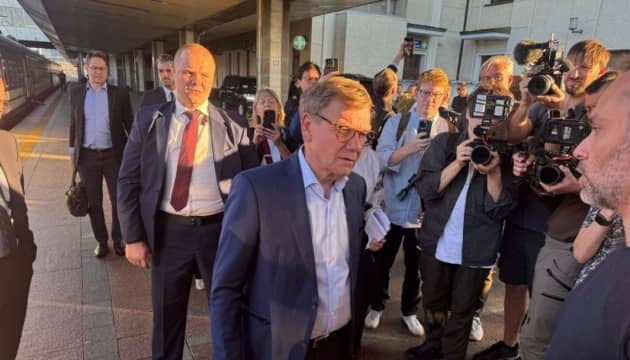

German Foreign Minister Arrives in Kyiv Amidst Intensified Conflict
German Foreign Minister Johann Wadephul arrived in Kyiv on Saturday morning, undertaking a high-level diplomatic visit to the Ukrainian capital. The arrival underscored Germany's continued engagement and support for Ukraine during a critical phase of the ongoing conflict. The visit was officially confirmed by Ukrinform, the Ukrainian National News Agency, which reported the development on Sunday, August 23, 2026, providing a timeline for the minister's activities.
The timing of Minister Wadephul's presence in Kyiv is particularly significant, placing it within a period characterized by intense military activity along the front lines and a complex, evolving geopolitical landscape. Ukrinform's report, published late on Saturday night, followed the minister's arrival earlier that day, highlighting the immediate relevance and attention given to such diplomatic missions amidst the hostilities.
Kyiv Visit Amidst Escalating Russian Aggression
Wadephul's visit unfolds against a backdrop of sustained and aggressive military engagement by Russian forces across multiple sectors of Ukraine. The days immediately preceding the German Foreign Minister's arrival saw a series of significant attacks, demonstrating Russia's continued targeting of both military and civilian infrastructure.
On the evening prior to Minister Wadephul's arrival, Russian forces launched two distinct strikes against an industrial facility located in the Poltava region. These attacks on industrial targets signify an ongoing effort to degrade Ukraine's economic and productive capacity, impacting its ability to sustain its defense and economy.
Further escalation was reported later that same evening, with Russian forces executing a double strike on a distribution center belonging to a retail chain. Such attacks on civilian commercial infrastructure not only cause significant material damage but also disrupt essential supply chains, impacting the daily lives of Ukrainian citizens and posing challenges to humanitarian efforts. These incidents contributed to a broader pattern of activity, as noted in war updates from the previous day, which cited a staggering 197 clashes along the front line. Reports specifically indicated that Russia was launching the most concentrated attacks in the Kostiantynivka sector, underscoring the intensity of the ground fighting.
Persistent Infrastructure Damage and Civilian Impact
Beyond the immediate front lines, infrastructure damage has remained a persistent and critical issue across various regions of Ukraine. Earlier in the week, a Russian drone attack in Mykolaiv resulted in injuries to a civilian man and caused significant damage to vital transport infrastructure. This incident highlights the direct human cost of the conflict and the ongoing threat to essential services and mobility.
Similarly, in the Poltava region, Russian forces specifically targeted a DTEK gas production facility. Attacks on energy infrastructure, such as this, are a recurring feature of the conflict, aimed at undermining Ukraine's energy security and its capacity to provide heating and power to its population, especially as seasons change. These incidents collectively underscore the severe and ongoing challenges to civilian safety and energy stability that continue to characterize the current phase of the conflict, forming a grim reality against which diplomatic efforts like Wadephul's visit are conducted.
Ukrainian Counter-Operations and International Diplomatic Efforts
The diplomatic engagement by German leadership in Kyiv coincides with significant and effective military operations conducted by Ukrainian forces. Ukraine’s Naval Forces (USF) have reported notable successes, including striking 36 Russian shadow fleet vessels operating in the Black and Azov Seas during the month of August. These operations are crucial for disrupting Russia's maritime logistics and its ability to circumvent international sanctions, demonstrating Ukraine's expanding capabilities in naval warfare.
The USF's broader campaign also included targeted strikes on 27 energy facilities, with 15 of these strategically located in occupied Crimea. These actions are designed to degrade Russia's military infrastructure and logistics, particularly those supporting its forces in the occupied territories and its broader war effort.
Resilience and Global Scrutiny of the Conflict
Amidst the ongoing attacks, recovery efforts have been diligently underway in affected areas, showcasing the resilience of Ukrainian communities and emergency services. For instance, power was successfully restored to 13,500 consumers in Zaporizhzhia following a morning Russian attack earlier in the week. These developments underscore the dynamic nature of the conflict, with both sides engaging in offensive and defensive operations across land, sea, and critical energy sectors, while Ukraine simultaneously works to mitigate the impact on its citizens.
Beyond the immediate military situation, significant political attention is focused on international mechanisms addressing the war. The United Nations Security Council is scheduled to convene and address Russia’s war against Ukraine on Ukraine’s Independence Day. This upcoming session highlights the continued and vital role of international bodies in monitoring the conflict, condemning aggression, and seeking diplomatic pathways to resolution, even as Russia remains a permanent member with veto power.
Domestic Debates and Legal Accountability
Domestically, political discourse in Ukraine continues to evolve and address complex issues related to national security and historical decisions. Former MP Oleksandr Dzhioev has publicly stated that the circumstances surrounding Ukraine’s nuclear disarmament should be thoroughly investigated by Parliament. This call for investigation adds another layer to the political narrative, touching upon historical security guarantees and their implications for the current conflict.
The timing of Minister Wadephul's visit also coincides with other significant diplomatic and legal developments that reflect the broader impact of the war. For example, a supermarket director has been charged following a deadly Russian strike on a Kryvyi Rih shopping center, illustrating the ongoing pursuit of legal repercussions and accountability for alleged war crimes and civilian casualties. Meanwhile, the broader war economy and the extensive recovery efforts required to rebuild damaged regions remain central topics in Ukrainian media and policy discussions, shaping the nation's future trajectory.
The presence of the German Foreign Minister in Kyiv, therefore, signals not only continued diplomatic engagement from Germany but also its commitment to navigating its relationship with Ukraine amidst the ongoing hostilities. The visit follows a week marked by significant military exchanges, infrastructure attacks, and crucial international political maneuvering, reflecting the complex and multi-faceted environment in which such high-level diplomatic efforts are conducted.