


Ministries Outline Policy Priorities for Second Half of Year
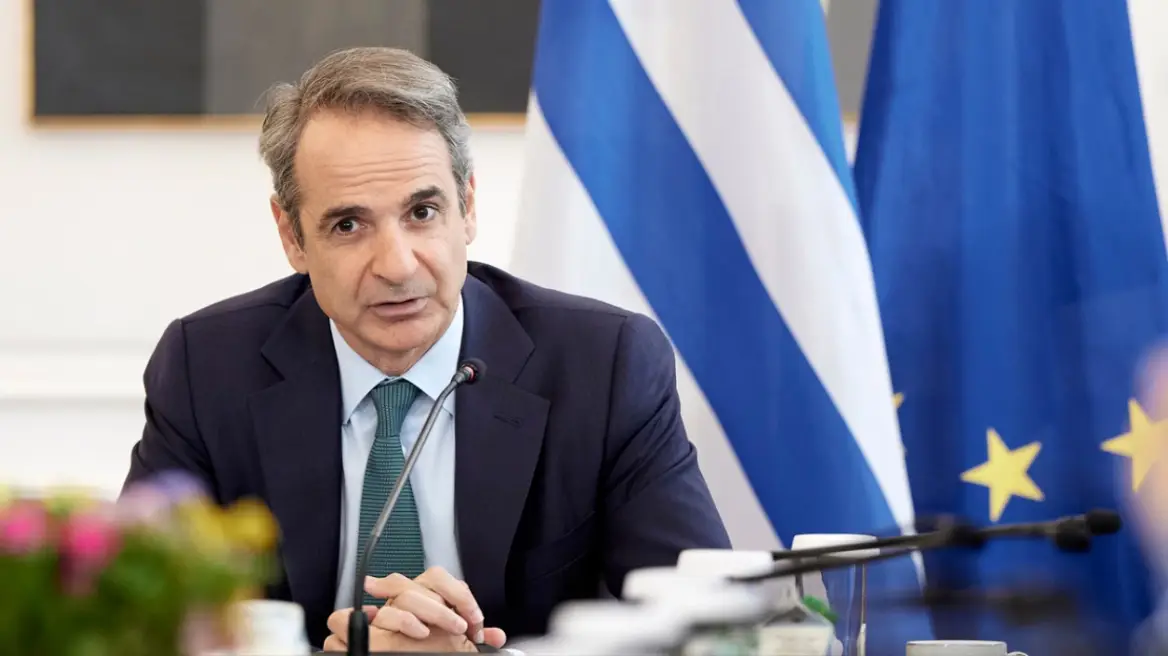
Athens, Greece — The Greek government convened a Cabinet meeting at Maximos Mansion on June 30 to present a detailed roadmap for the remainder of the year. Deputy Prime Minister Kostis Hatzidakis and Minister of State Akis Skertsos led the presentation, outlining key priorities for each ministry as part of an effort to clarify the administration's legislative agenda.
The meeting, scheduled for 11:00 local time, featured a packed agenda focused on structural reforms and infrastructure development. According to reports from ProtoThema English, the government’s stated position during the session was that the next general election will take place as scheduled in 2027, at a time determined by Prime Minister Kyriakos Mitsotakis, rather than in the autumn of 2026.
Deputy Prime Minister Hatzidakis and Minister Skertsos highlighted several major initiatives set to dominate policy discussions in the coming months. The agenda places significant emphasis on the implementation of the new National Baccalaureate system, a reform intended to restructure secondary education assessments across the country.
Additionally, the government plans to transfer planning authorities to the Hellenic Cadastre. This move is designed to streamline land management and spatial planning processes by consolidating regulatory powers under the national mapping agency. The administration also intends to develop special spatial plans targeting three specific sectors: renewables, tourism, and industry.
Infrastructure development remains a central pillar of the government's second-half strategy. Officials indicated that major infrastructure projects would advance alongside these regulatory changes. The presentation served as a public demonstration of ongoing administrative activity, contrasting with political rumors suggesting a potential shift in electoral timing.
Prime Minister Increases Regional Visits Amidst Rumors
While Prime Minister Kyriakos Mitsotakis has publicly dismissed talk of a prolonged pre-election period, his recent actions have focused on mobilizing party machinery through increased regional engagement. The Prime Minister’s schedule includes visits to various locations to showcase progress on health infrastructure funded by the Recovery and Resilience Facility.
On June 29, Mitsotakis visited Aigaleo. He is scheduled to travel to Penteli on Friday, continuing a series of regional stops aimed at highlighting government achievements in healthcare. The visits focus on renovated health centers and hospitals, with the administration utilizing these sites to demonstrate the impact of EU funding.
The political messaging accompanying these activities relies on the slogan "We said it, we’re doing it." This phrase underscores the government's narrative that its policy commitments are being executed according to plan, rather than in preparation for an imminent electoral cycle. The administration maintains that the upcoming election will follow the standard four-year term, concluding in 2027.
Strategic Communication Against Autumn Election Fears
The timing of the Cabinet meeting and the subsequent regional tours appear designed to address growing speculation regarding an early autumn election. By detailing specific, long-term policy goals such as the National Baccalaureate and spatial planning reforms, the government aims to project stability and continuity.
Officials argue that the complexity of these initiatives requires a full legislative term to complete effectively. The transfer of planning authorities to the Hellenic Cadastre, for instance, involves significant administrative restructuring that cannot be rushed without compromising regulatory integrity. Similarly, the development of special spatial plans for renewables and tourism is framed as a long-term economic strategy rather than a short-term electoral tactic.
The government’s insistence on the 2027 election date stands in contrast to opposition claims and media reports suggesting that political pressures might force an earlier vote. However, no opposing party has provided a confirmed alternative timeline or official response to the specific details of the Cabinet agenda in the available reporting.
Instead, the focus remains on the operational aspects of governance. The inclusion of industry and tourism in the special spatial plans reflects broader economic objectives that extend beyond the immediate political calendar. These sectors are critical to Greece’s recovery efforts, and their integration into national planning is presented as a technical necessity rather than a political maneuver.
As the second half of the year begins, the administration continues to balance legislative delivery with political communication. The upcoming visits to Penteli and other regions will likely serve as further opportunities for the Prime Minister to reinforce the message that the government is focused on execution rather than electioneering. The success of these initiatives will depend on their implementation through the ministries outlined in the June 30 meeting.
The Roadmap does not specify exact dates for the rollout of the National Baccalaureate or the completion of the Cadastre transfers, but it establishes them as top-tier priorities. The government’s strategy relies on demonstrating tangible progress in health infrastructure and spatial planning to counter narratives of political instability.