

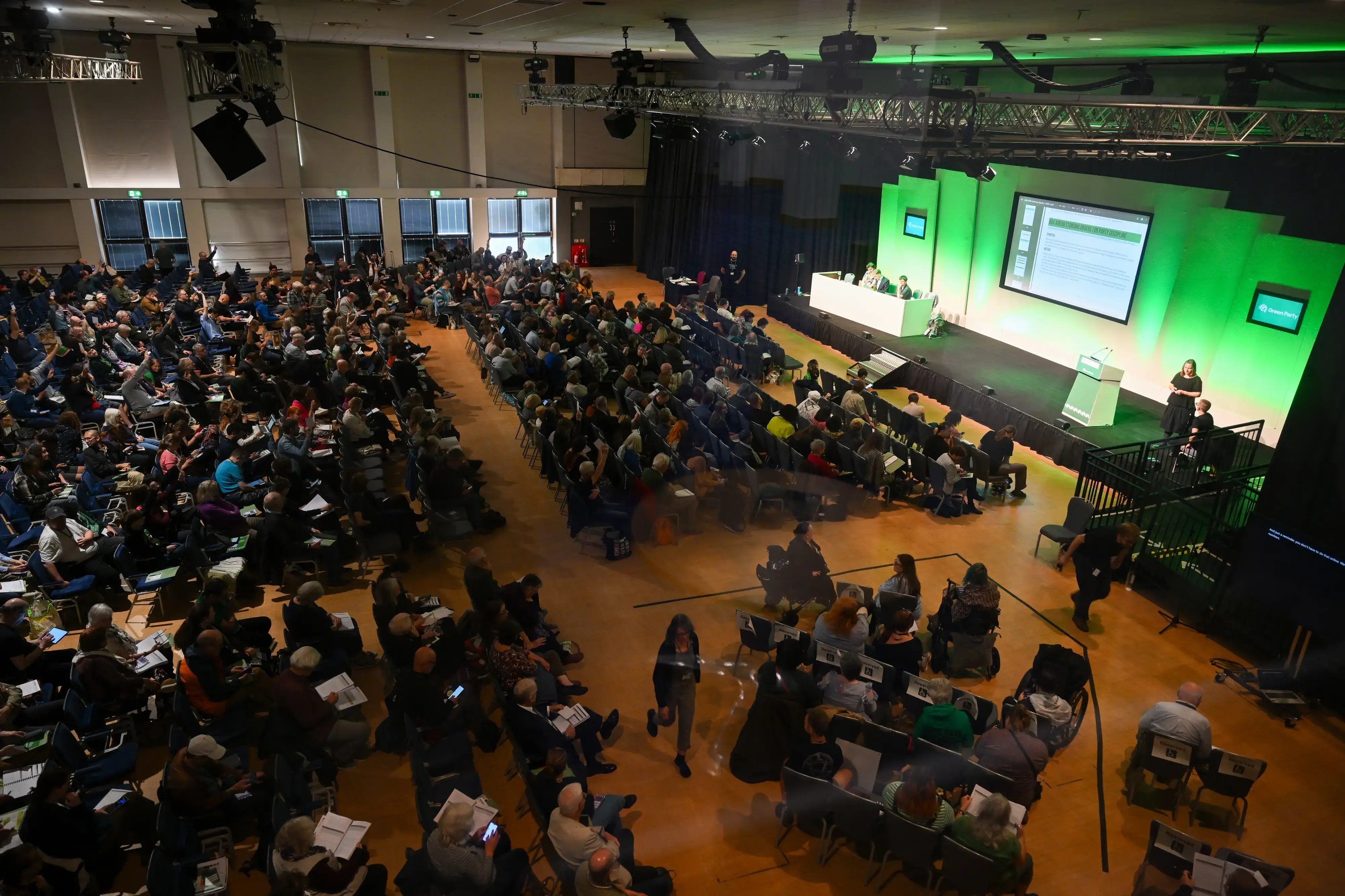

Green Party Enforces BDS Rules, Banning Jewish-Palestinian Group from Conference
The Green Party has officially prohibited the Jewish-Palestinian peace organization Standing Together from participating in its upcoming annual conference. This decisive action has been attributed to the party's stringent adherence to its established regulations concerning Boycott, Divestment, and Sanctions (BDS) against Israel.
Sources indicate that the ban was enacted to prevent any perceived violation of the Green Party's internal policies on boycotting Israel. Standing Together, an organization based within Israel, is known for its vocal criticism of the Israeli government's policies. The group has publicly condemned the government's actions, using terms such as "genocidal war" and "apartheid." Despite its strong opposition to the current Israeli administration and its policies, the organization's organizational ties to Israel led to its exclusion from the party's key annual gathering.
This exclusion underscores the Green Party's firm stance on issues pertaining to Israel and its commitment to enforcing its BDS policies. The ban directly impacts Standing Together's ability to engage with party members and present its perspectives at the conference, which is scheduled to take place next month.
Standing Together's Stance and the BDS Framework
Standing Together describes itself as a grassroots movement that unites Jewish and Palestinian citizens of Israel in a struggle for peace, equality, and climate justice. The organization's platform advocates for an end to the occupation of Palestinian territories and for equal rights for all Israelis. Its critique of the Israeli government's policies, including accusations of "genocidal war" and "apartheid," aligns with some of the most severe criticisms leveled against the state of Israel. However, the Green Party's BDS rules appear to be applied broadly, encompassing any organization with operational ties to Israel, regardless of its specific political critiques or internal composition.
The application of these rules in banning Standing Together has sparked debate about the nuances of the party's BDS policy. Critics argue that the policy, as implemented, fails to distinguish between organizations that support the Israeli government and those that actively oppose its policies from within Israel. The decision suggests that the party's framework prioritizes a blanket boycott over engagement with groups that share some of its core values but maintain a presence in Israel.
Jewish Leadership Calls for Rejection of 'Extremists'
In the wake of the Green Party's decision to ban Standing Together, prominent Jewish leaders have voiced their strong disapproval. They issued a public statement urging the Green Party to "reject ideological extremists" within its ranks. This call appears to be a direct response to what they perceive as the party's willingness to engage with or tolerate individuals and groups holding extreme anti-Israel views, while simultaneously excluding a group like Standing Together that comprises both Jewish and Palestinian members critical of Israeli government actions.
The exclusion of Standing Together has amplified concerns about the prevailing ideological climate within the Green Party, particularly concerning its approach to the Israeli-Palestinian conflict. The timing of this ban is particularly significant, as it precedes a potential vote at the upcoming conference on a motion that controversially asserts "Zionism is racism." The presence of such a motion on the conference agenda provides critical context for the party's decision to exclude Standing Together, suggesting a broader internal struggle over the party's identity and its stance on Zionism.
Internal Policy Debates and Foreign Relations Demands
The Green Party's strict enforcement of its BDS rules regarding Israel stands in contrast to other foreign policy demands reportedly being advanced by its members. Reports suggest that a segment of the Green Party membership is actively advocating for the imposition of new sanctions against Iran. Concurrently, these same members are reportedly pushing for the reversal of the existing ban on the Islamic Revolutionary Guard Corps (IRGC), a move that appears to contradict a hardline stance against certain state entities.
Furthermore, there is evidence of Green Party members actively campaigning for local councils across the country to adopt and implement their own BDS policies. This push for decentralized adoption of boycott measures indicates a broader strategy to embed anti-Israel economic pressure at a municipal level, running parallel to the national party's directives and enforcement actions, such as the ban on Standing Together.
Broader Implications for the Green Party Conference
The exclusion of Standing Together serves as a stark illustration of the complex and often contentious internal dynamics that shape the Green Party's approach to Middle Eastern policy. The organization, which explicitly identifies as Jewish-Palestinian and is a vocal critic of the Israeli government's conduct, was nevertheless deemed ineligible for participation under the party's current regulations. This highlights the challenges the party faces in navigating its commitment to BDS while engaging with diverse perspectives on the conflict.
The forthcoming conference is poised to become a significant venue for these ongoing internal debates and tensions. Beyond the high-profile exclusion of Standing Together, the event may feature formal deliberations and a vote on the motion that controversially declares "Zionism is racism." The confluence of these events—the barring of a peace organization and the potential endorsement of a motion equating Zionism with racism—underscores the deep divisions and intense discussions occurring within the Green Party concerning its foundational principles and its international policy objectives, particularly regarding Israel.
Green Party leader Zack Polanski has, in the past, been observed engaging with prominent figures in the Palestine solidarity movement, such as Ben Jamal, the Director of the Palestine Solidarity Campaign. However, the current enforcement of BDS rules appears to be narrowly focused on organizational links to Israel, leading to the exclusion of groups like Standing Together, even when those groups are critical of the Israeli government. This suggests a rigid application of party policy that may overlook the specific political positions of organizations operating within Israel.
The entire situation illuminates the Green Party's commitment to its boycott framework while simultaneously confronting external criticism from Jewish leaders who have characterized the party's approach as implicitly endorsing or failing to adequately challenge extremism. The party continues to grapple with these competing pressures, alongside internal demands for sanctions on Iran and the reversal of IRGC bans, indicating a multifaceted and often contradictory approach to international relations among its membership.