


Founding the Tradition: The Qutb Shahi Legacy
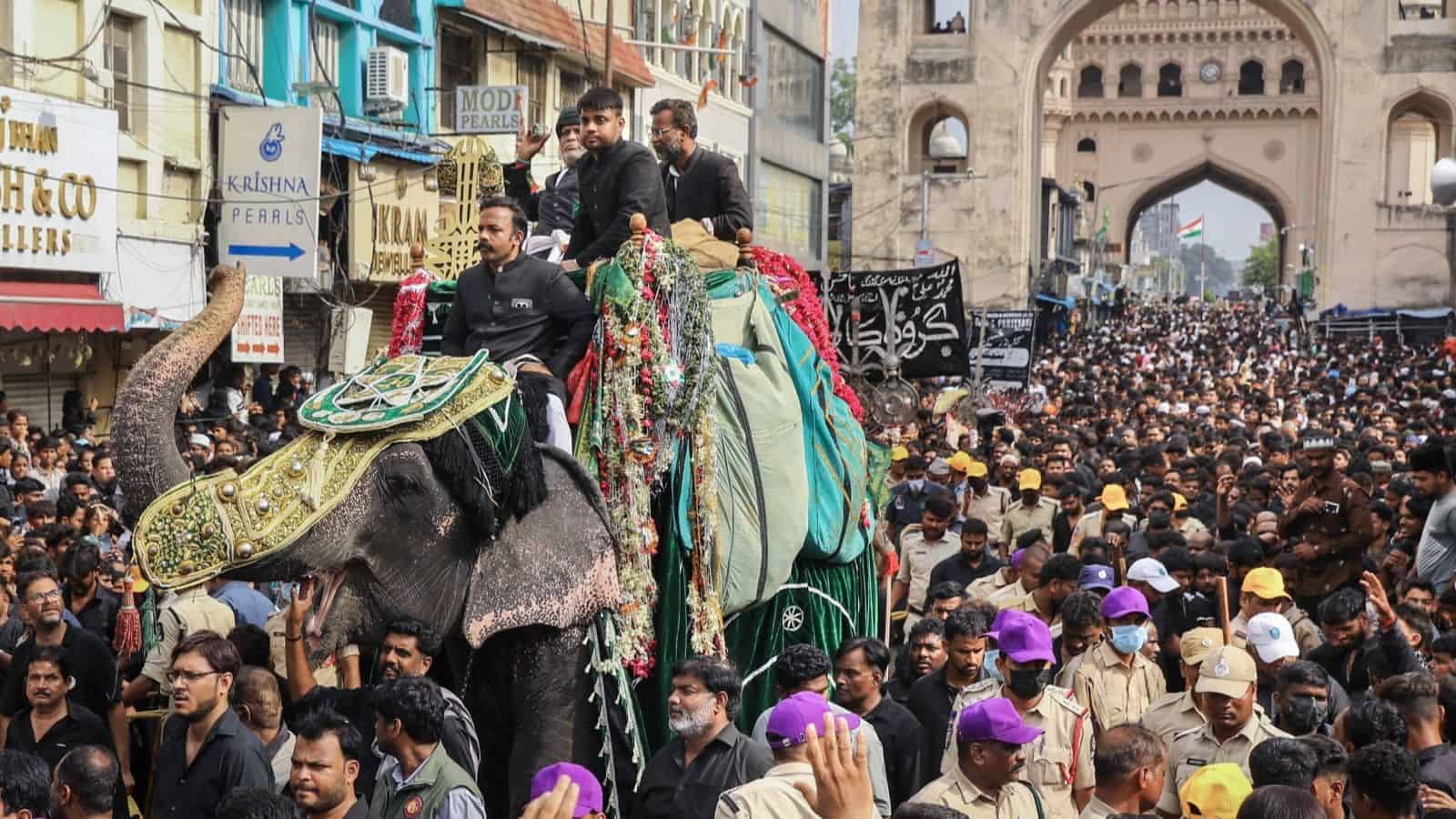
The Bibi Ka Alam procession, a deeply significant religious gathering, traces its origins to the Old City of Hyderabad. This enduring tradition was established in the 17th century, during the reign of the Qutb Shahi dynasty, also referred to as the Golconda dynasty. This powerful lineage governed the Deccan region from 1518 to 1687, leaving an indelible mark on its cultural and religious landscape.
Historical accounts confirm that the founder of the Qutb Shahi dynasty hailed from Iran and adhered to Shia Islam. This foundational identity played a crucial role in integrating the observance of Muharram, and specifically the Bibi Ka Alam procession, into the very fabric of Hyderabad's religious life. The dynasty's Shia heritage meant that the commemoration of events central to Shia Islam, such as the martyrdom of Imam Hussain, received royal patronage and became a prominent public observance.
Royal Patronage Across Dynasties
The Qutb Shahi rulers set a significant precedent for royal involvement in the annual event. Their active participation underscored the procession's importance and helped solidify its place within the city's ceremonial calendar. Following the Qutb Shahis, the subsequent rulers, the Nizams of Hyderabad, continued this tradition. Public memory strongly retains the fact that the Nizams participated in the Bibi Ka Alam procession every year. This consistent annual attendance by the ruling dynasties, first the Qutb Shahis and then the Nizams, not only legitimized the procession but also elevated its status within Hyderabad’s cultural and religious landscape, ensuring its continuity and prominence for centuries.
Commemorating Sacred History: The Ashura Observance
The Bibi Ka Alam procession is one of the most prominent religious observances carried out on the 10th day of Muharram, the first month of the Islamic calendar. This specific date is known as Ashura, a day of profound significance, particularly for Shia Muslims worldwide. The observance solemnly commemorates the martyrdom of Imam Hussain, a pivotal figure in Islamic history, who was tragically killed in Karbala on this day in 680 CE.
The Legacy of Imam Hussain
Imam Hussain is revered as one of the sons of Imam Ali, who was both the son-in-law and cousin of the Prophet Muhammad. His martyrdom at Karbala is a central event in Shia Islam, symbolizing sacrifice, resistance against injustice, and unwavering devotion. The Bibi Ka Alam procession serves as a powerful public expression of grief and remembrance for these historical events, allowing participants to connect with the suffering and principles embodied by Imam Hussain.
While the event is fundamentally a Shia Muslim gathering, rooted in the specific historical and theological interpretations of this community, its scope and impact extend beyond a single sect within Hyderabad. The procession's origins with the Shia Qutb Shahi dynasty ensured that this commemoration became deeply embedded in the city's religious calendar, shaping its spiritual identity.
A Confluence of Faiths: Hyderabad's Unique Participation
The Bibi Ka Alam procession stands out as one of the largest and most visually striking religious gatherings in Hyderabad. What makes this event particularly remarkable, and a powerful testament to the city's diverse cultural fabric, is its broad participation. Reports consistently indicate that involvement in the procession is not confined solely to Shia Muslims, who are the primary observers of Ashura.
Beyond Sectarian Lines
Significantly, Sunni Muslims and Hindus also actively participate in the procession, either by joining the march, offering respects, or observing from the sidelines. This multi-faith participation is widely described as a profound story of cultural assimilation and inter-community harmony. In a city known for its syncretic traditions, the Bibi Ka Alam procession exemplifies how religious observances can transcend sectarian boundaries and foster a shared sense of reverence and cultural identity.
Despite the procession being essentially a Shia Muslim gathering, the inclusive involvement of other religious groups is consistently highlighted as a defining characteristic of the event in public memory. This tradition of shared observance continued seamlessly with the later Nizams after the fall of the Qutb Shahi dynasty, further cementing its status as a major and unifying component of Hyderabad’s broader religious ethos.
Historical Continuity and Modern Significance
The enduring continuity of the Bibi Ka Alam procession provides a vital link between the modern metropolis of Hyderabad and its founding era. The profound influence of the Iranian Shia Muslim founders of the Qutb Shahi dynasty is widely cited as a key factor in why the martyrdom of Imam Hussain has remained such a central and deeply observed part of Hyderabad’s religious history. The annual participation of the Nizams in previous centuries, following the Qutb Shahis, consistently reinforced the event's prominence and ensured its survival through changing political landscapes.
Current observers and participants note that the procession continues to be one of the largest and most anticipated religious gatherings in the city. The event draws a diverse array of participants from various communities, reflecting and reaffirming the historical integration and cultural assimilation established during the 17th-century rule. Annually occurring on Ashura, the procession faithfully maintains the historical timeline and spiritual significance established by its origins, serving as a vibrant, living tradition that bridges centuries of faith and community in Hyderabad.