

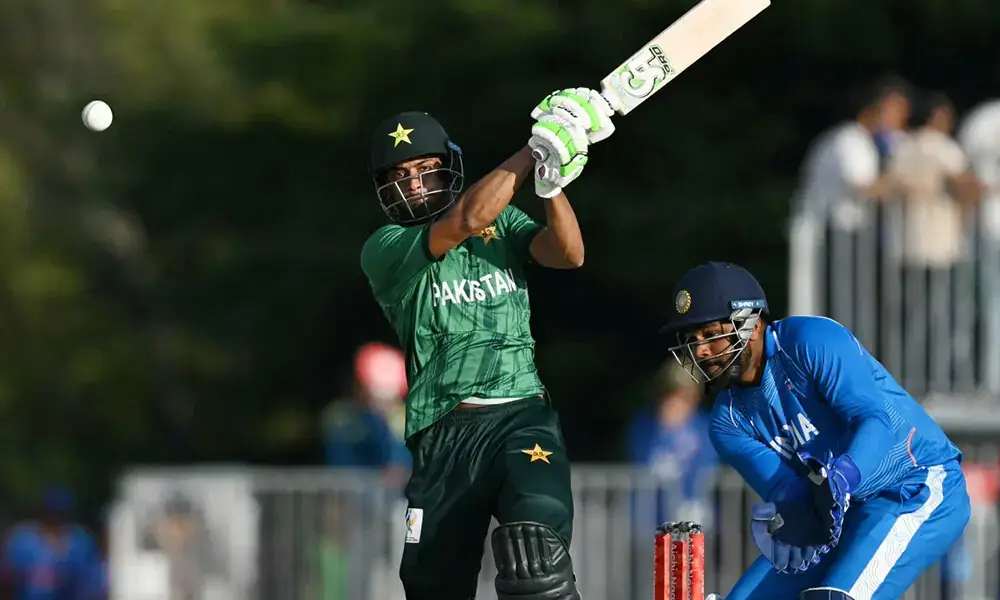

A High-Stakes Final at Korogi Park
India defeated Pakistan in the Asian Games final to clinch cricket gold, securing a decisive victory that unfolded on a converted baseball field at Korogi Park Athletic Stadium in Nagoya, Japan. The match took place in front of a small but raucous crowd, setting the stage for a contest defined as much by political tension as by athletic performance.
World T20 champions India posted 211-6 in their 20 overs, a total that ultimately proved insurmountable for their rivals. The victory was sealed by 19 runs in the gold medal match, with Pakistan falling short despite a valiant individual effort from Hasan Nawaz, who scored 96 in a losing cause against India's formidable batting lineup.
India’s Batting Dominance and Key Contributions
India’s innings was anchored by aggressive stroke play from Abhishek Sharma, who scored 61, while Tilak Varma remained not out on 51 to ensure the total reached a competitive height. The opening phase of India’s batting display featured explosive power, highlighted by 15-year-old Vaibhav Sooryavanshi, who hit back-to-back sixes in the second over off Saad Masood before falling for 15.
However, India’s progress was not without its moments of vulnerability. Abhishek Sharma was dropped twice by Pakistan fielding and should have been run out on 46 when bowler Ahmed Daniyal’s throw missed the stumps and wicketkeeper. The middle order also faced pressure; Ishan Kishan fell for 20, and captain Shreyas Iyer departed for 21, pegging India back to 133-5 in the 15th over.
It was the lower-middle order that stabilized and then accelerated the scoring. Tilak Varma hit four sixes and Shivam Dube hit two more as they put on 62 runs in five overs for the sixth wicket, ensuring India finished with a commanding total of 211-6.
Pakistan’s Chase and Hasan Nawaz’s Lone Stand
Chasing 212, Pakistan showed resilience early on. Sahibzada Farhan scored 10 and Maaz Sadaqat scored 23 before Hasan Nawaz began his innings. Nawaz reached a fifty off 28 balls with five sixes, showcasing the power required to chase down such a high target.
Nawaz and Saim Ayub built an 87-run partnership that kept Pakistan in contention, but the turning point came when Shivam Dube induced Ayub into a false shot caught by Washington Sundar. The pressure mounted as Jasprit Bumrah was brought back for an over that cost only 11 runs, leaving Pakistan needing 33 off the final over bowled by Dube.
Hasan Nawaz continued to fight on the other end, reaching 96 off 51 deliveries. However, he fell on the last ball attempting a big shot, ending Pakistan’s hopes. The team finished at 192-6, falling short of their previous best score in T20 internationals batting second, which was 208-3 against Sri Lanka.
Diplomatic Tensions Shape Ceremony
Beyond the boundaries of the pitch, the match was marked by significant diplomatic friction. Captains refused normal handshakes before the match due to political tensions, and no handshakes occurred at the end of the match or during the medal ceremony.
The aftermath of the game saw further unusual protocol deviations. The medal ceremony was substantially delayed, with ICC chairman Jay Shah presenting medals only to Indian players, while Asian Games officials presented medals to Pakistan and bronze medallists Sri Lanka. No reason was given for the delay or the change to medal ceremony plans; Al Jazeera had asked Asian Games officials for comment.
The victory cements India’s status as a dominant force in T20 cricket, but the manner of the win—played out on a temporary pitch in Nagoya under the shadow of geopolitical strain—remains a distinctive chapter in the history of the Asian Games.