


Escalating Economic Strain on Tehran
A coordinated United States campaign designed to restrict Iran’s economy is creating significant challenges for the Islamic Republic, according to three senior Iranian sources. The strategy involves a combination of naval blockades targeting oil exports and intensified efforts to prevent the evasion of existing international sanctions. These measures are reported to be growing increasingly difficult for Iran to manage or counter effectively.
The sources indicated that the pressure is no longer theoretical but is actively impacting the country’s ability to conduct normal economic operations. The blockade specifically targets the flow of Iranian oil, a critical component of the national revenue, while parallel diplomatic and financial mechanisms are being utilized to close loopholes that Tehran had previously exploited.
Strategic Shift in US Policy
Washington has recently intensified its approach toward Tehran, marking a departure from previous periods where economic leverage was applied more gradually. In recent weeks, US officials have sought to "ratchet up" the economic pressure on the Iranian government. This acceleration in tactics is part of a broader strategic objective: to force Tehran into making concessions during future negotiations.
The current push for economic coercion follows a period of heightened military and diplomatic tension that has lasted for six months. According to the reporting, this six-month conflict did not result in the specific concessions or outcomes that US officials had hoped to secure through direct confrontation or earlier diplomatic channels. Consequently, the administration has shifted focus toward using severe economic constraints as a primary tool for leverage.
Historical Context of Sanctions Evasion
The current difficulty faced by Iran stands in contrast to its historical capabilities. For decades, Iran’s clerical rulers successfully managed to bypass or circumvent international sanctions regimes. The country developed complex networks and financial mechanisms that allowed it to maintain significant trade relationships despite heavy restrictions.
However, the combination of physical blockades on shipping routes and aggressive enforcement against sanctions evasion is presenting new challenges that differ from past experiences. The sources suggest that the traditional methods of circumvention are becoming less viable under the current level of scrutiny and naval presence.
Implications for Future Negotiations
The timing of this intensified pressure is directly linked to upcoming diplomatic efforts. US officials view the economic strain as a necessary precursor to any potential agreement, aiming to weaken Iran’s negotiating position before talks commence. The goal is to extract concessions that were not achieved during the preceding six months of conflict.
While the sources confirm the growing difficulty for Iran, they do not specify the exact timeline for when these economic pressures might lead to a breakdown in government functions or a forced return to the negotiating table. The report highlights the immediate strain on the economy but leaves the long-term political outcomes open to interpretation by observers.
Visual Indicators of Tension
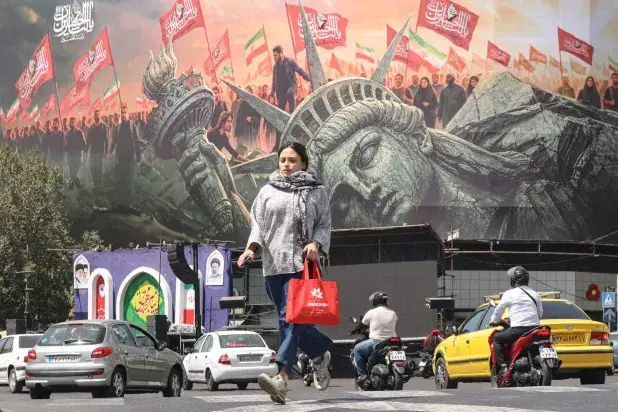
The atmosphere in Tehran reflects the underlying tension between the two nations. On September 2, 2026, images captured at Enghelab Square showed a woman crossing the street as motorists drove past anti-US billboards. These public displays serve as visual markers of the ongoing hostility and the domestic political narrative surrounding the US campaign.
The date of the image, September 2, 2026, aligns with the broader timeline of the reported escalation. The presence of such imagery in international media coverage underscores the public dimension of the conflict, even as the primary mechanisms of pressure remain economic and naval rather than purely kinetic.
Timeline of Recent Developments
- Six months of conflict occurred prior to the current phase of economic pressure, failing to secure desired concessions.
- In recent weeks leading up to early September 2026, Washington increased the intensity of its economic tactics.
- On September 2, 2026, public anti-US sentiment was documented in Tehran’s Enghelab Square.
The three senior Iranian sources did not provide specific data on oil export volumes or the exact value of sanctions evasion prevented. Their statements focus on the qualitative assessment that the campaign is "starting to tell" and is becoming harder to withstand. The report relies on these insider accounts to characterize the effectiveness of the US strategy, as independent verification of the economic impact inside Iran remains limited.
Regional and International Reactions
The article does not detail specific responses from other nations regarding the blockade or sanctions enforcement. The focus remains on the bilateral dynamic between Washington and Tehran, with the Iranian sources providing the primary insight into the domestic impact of the US actions. The absence of reported reactions from regional allies or global powers suggests that the immediate narrative is centered on the direct pressure exerted by the United States.
Future Outlook
The success of this strategy in extracting concessions remains unconfirmed. The report notes that previous methods failed to secure these outcomes during the six-month conflict, implying that the economic pressure is a new variable in an already complex situation. Whether this increased difficulty will lead to diplomatic breakthroughs or further entrenchment on both sides is not addressed by the sources.
The narrative concludes with the observation that the campaign is currently having a tangible effect, as reported by insiders within the Iranian government. The long-term political consequences are left for future developments to determine.