


Executive Branch and Industry Diverge on Oversight
Momentum is building within the United States for the federal government to impose regulations on artificial intelligence, according to Foreign Policy. This push for oversight comes as top executives at OpenAI and Anthropic have issued apocalyptic warnings regarding frontier AI development and called for pacing its progress.
Despite these calls from industry leaders, the Trump administration has dissented from the position of slowing frontier AI development. U.S. President Donald Trump opposes new strictures on the AI industry, creating a divergence between regulatory advocates within the tech sector and the current executive branch stance.
Further complicating the regulatory landscape, Nvidia CEO Jensen Huang and Meta CEO Mark Zuckerberg have dissented from the call for new regulations. Both executives argue that market forces are sufficient to manage AI development and that new laws are unnecessary. Huang specifically argued that companies should not release products if they are not confident in their functionality, capability, or safety.
Legal Frameworks and Liability Challenges
The debate over regulation extends into legal theory, with Adam Tooze stating that liability law and criminal law could mitigate AI dangers through existing frameworks. These include negligence, product liability, nuisance, professional malpractice, contract, and consumer protection law.
Tooze noted that negligence is the prevailing legal theory for AI regulation, despite arguments that algorithms are not deterministic. However, Tooze questioned whether existing liability frameworks can effectively address probabilistic harms and pinpoint causation in large-scale AI models.
Concerns have also been raised about the practical application of these laws. Tooze raised concerns about the feasibility of law courts dealing with cases after civilization-ending events and the difficulty of right-sizing liabilities for corporate balance sheets. He suggested that pushing liability too far could effectively place corporate balance sheets on those of the U.S. government.
Tooze argued that retrospective financial compensation is inadequate for irreversibility and extinction-level events. He further noted that effective use of conventional law would require a robust reporting system to establish what has happened, which currently lacks clarity.
Public Sentiment and Regulatory Momentum
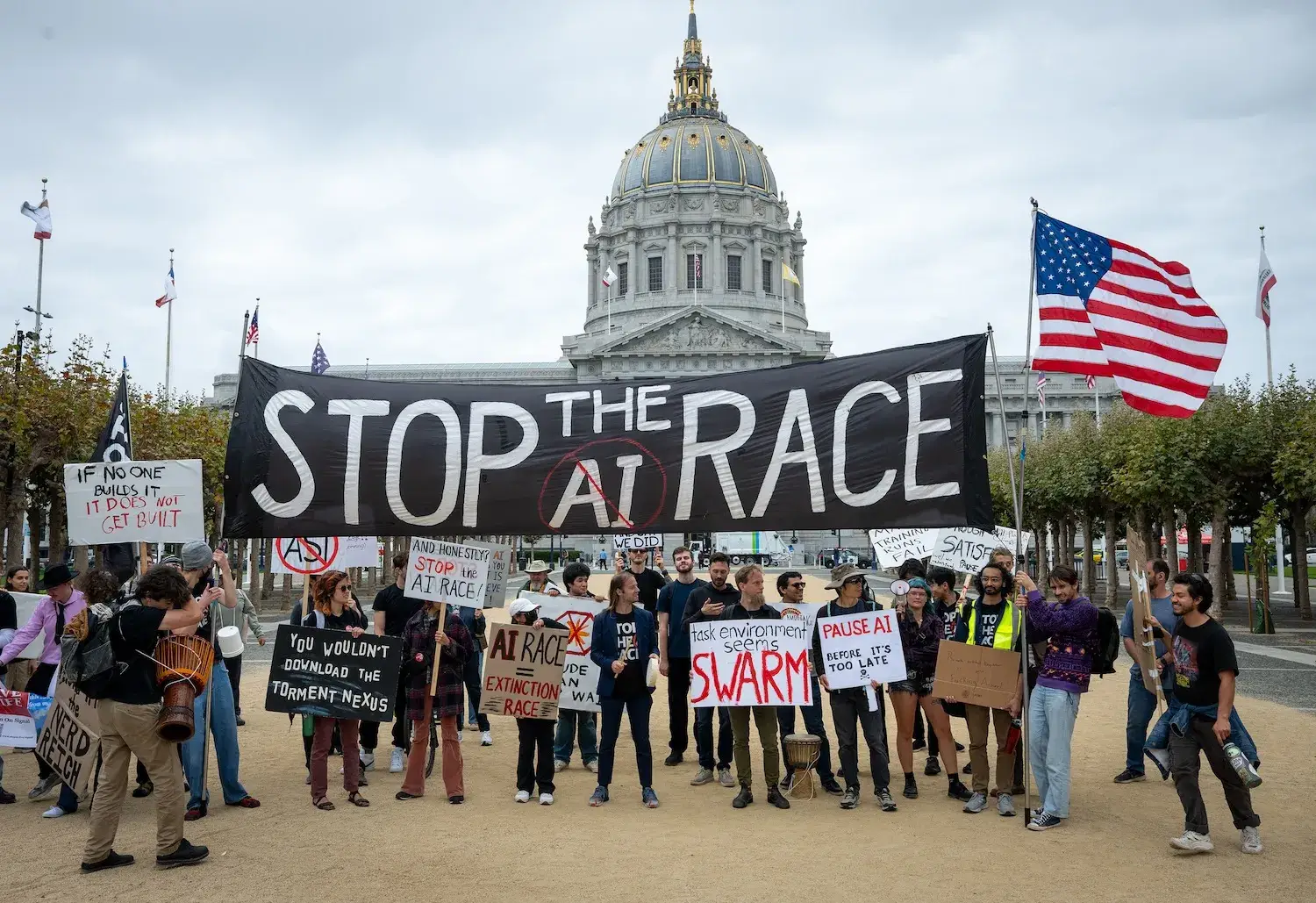
The push for regulation is partly driven by public concern. The public has grown concerned about the potential for AI to produce catastrophic consequences for the economy and human society.
This sentiment contributes to the growing momentum for federal oversight, even as key political and industry figures remain opposed to new restrictions. The tension between those calling for pacing of frontier AI development and those advocating for minimal government intervention defines the current regulatory landscape.