

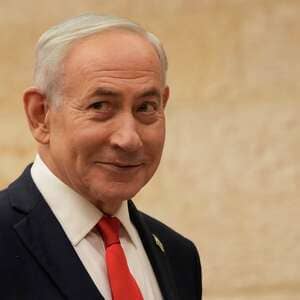

Netanyahu’s Brief but Crucial UN General Assembly Appearance
Israeli Prime Minister Benjamin Netanyahu is slated for a swift 24-hour visit to New York this month, where he is scheduled to address the annual gathering of world leaders at the United Nations. This brief but impactful trip was officially confirmed by Israel’s U.N. envoy, Ambassador Danny Danon. Ambassador Danon underscored the imperative nature of the prime minister's attendance, asserting that proceeding with the speech was necessary because “there is no option” for the prime minister to avoid this significant international forum.
The visit is strategically timed to coincide with the annual session of the U.N. General Assembly, an established and vital platform where heads of state and government from across the globe convene to articulate their nations' positions on pressing international issues. Despite the exceptionally short duration of Netanyahu's visit, Ambassador Danon reiterated the profound importance of the prime minister’s physical presence on this global stage. He explicitly stated, “For us, it’s important the prime minister will come,” signaling the strategic value Israel places on direct engagement with the international community.
Netanyahu’s decision to participate in this high-profile gathering unfolds against a backdrop of intense international scrutiny directed at Israel’s ongoing military operations in Gaza. The protracted conflict between Israel and Hamas has significantly elevated the prime minister’s profile, transforming him into an increasingly polarizing figure on the global stage. His appearance at the UNGA is therefore not merely a routine diplomatic engagement but a moment fraught with political and diplomatic tension, offering a direct opportunity for Israel to present its narrative amidst widespread international debate.
Mayor's Call for Arrest Ignites Diplomatic Controversy
The confirmation of Prime Minister Netanyahu’s visit immediately followed a highly publicized and controversial call by New York Mayor Zohran Mamdani for the Israeli leader’s arrest. Mayor Mamdani, in a forceful public statement, explicitly labeled the Israeli prime minister a “war criminal” and urged local authorities to detain him upon his arrival in New York, citing his alleged role in the ongoing war in Gaza. This demand, emanating from a prominent municipal official, quickly escalated into a diplomatic flashpoint.
However, the feasibility of such an arrest was swiftly dismissed by Israel’s Ambassador Danny Danon. Ambassador Danon highlighted that Mayor Mamdani was subsequently compelled to retract his initial demand, a necessity stemming from the fundamental legal reality that New York City lacks the requisite authority to take a sitting head of state into custody. This retraction underscored the significant jurisdictional limitations faced by local governmental bodies when dealing with international diplomatic figures.
Ambassador Danon did not mince words in his assessment of Mamdani’s actions, accusing the mayor of engaging in calculated political maneuvering rather than pursuing legitimate legal avenues. Danon articulated a broader sentiment, stating, “You know, it became very trendy to do politics by blaming Israel,” thereby characterizing the mayor’s initial call for arrest as a performative act of “doing politics” designed to garner attention rather than achieve a legal outcome. This exchange vividly illustrates the complex interplay between local political activism and international diplomatic protocols.
Legal Barriers to Detaining a Visiting Head of State
The controversy surrounding the arrest call brought into sharp focus the intricate legal framework governing international relations and the specific protections afforded to heads of state. Mayor Mamdani's demand was reportedly predicated on broader international legal proceedings, with the mayor specifically pointing to an arrest warrant allegedly issued by the world’s top war crimes tribunal against Prime Minister Netanyahu in The Hague, as reported in available records. This reference aimed to lend weight to his call for detention.
However, the legal reality on the ground in New York City presents an insurmountable barrier to such actions. Despite the potential existence of a warrant from the International Criminal Court (ICC) — the preeminent international judicial body for prosecuting individuals for war crimes, crimes against humanity, genocide, and the crime of aggression — local law enforcement agencies in New York are without the jurisdiction or legal mandate to execute such a warrant. They cannot act on behalf of an international body, nor do they possess the authority to detain a sitting foreign head of state who is visiting under diplomatic auspices. This fundamental principle of diplomatic immunity, coupled with the lack of domestic legal mechanisms for enforcing international warrants against heads of state, rendered Mamdani’s initial demand legally untenable and necessitated its swift retraction.
Diplomatic Fallout and Political Narratives
Ambassador Danny Danon’s robust comments constituted the principal official response from the Israeli government concerning the controversy ignited by Mayor Mamdani’s arrest call. Danon strategically framed the entire situation as a clear instance of political posturing, reiterating his assertion that criticizing and blaming Israel had evolved into a "trendy" and convenient tactic for politicians seeking public attention or advancing specific agendas. This framing positioned the Israeli government as a target of politically motivated attacks, rather than legitimate legal scrutiny, at the local level.
In the immediate aftermath of the diplomatic exchange, Mayor Mamdani’s office notably did not respond to inquiries or messages seeking further comment on Tuesday, specifically regarding the retraction of the arrest call or the broader diplomatic fallout. This silence, as reported by the Associated Press, meant that Ambassador Danon’s characterization of the event — as being primarily politically motivated and lacking legal foundation — remained largely unchallenged by the mayor’s office in the critical hours following the statements. The absence of a rebuttal allowed Danon’s narrative to dominate the initial public discourse surrounding the incident.
The entire episode serves as a potent illustration of the intricate and often fraught intersection of international law, local political dynamics, and the established principles of diplomatic immunity. Such complexities frequently emerge when high-profile, and often controversial, figures attend multilateral gatherings like the UN General Assembly. While the initial call for arrest was ultimately withdrawn due to undeniable legal and jurisdictional constraints, the political discourse surrounding Prime Minister Netanyahu’s attendance at the U.N. has been significantly amplified and remains a highly active and contentious topic. This incident highlights how local political gestures, even if legally unenforceable, can contribute to and shape the broader international narrative around a leader and their nation.