

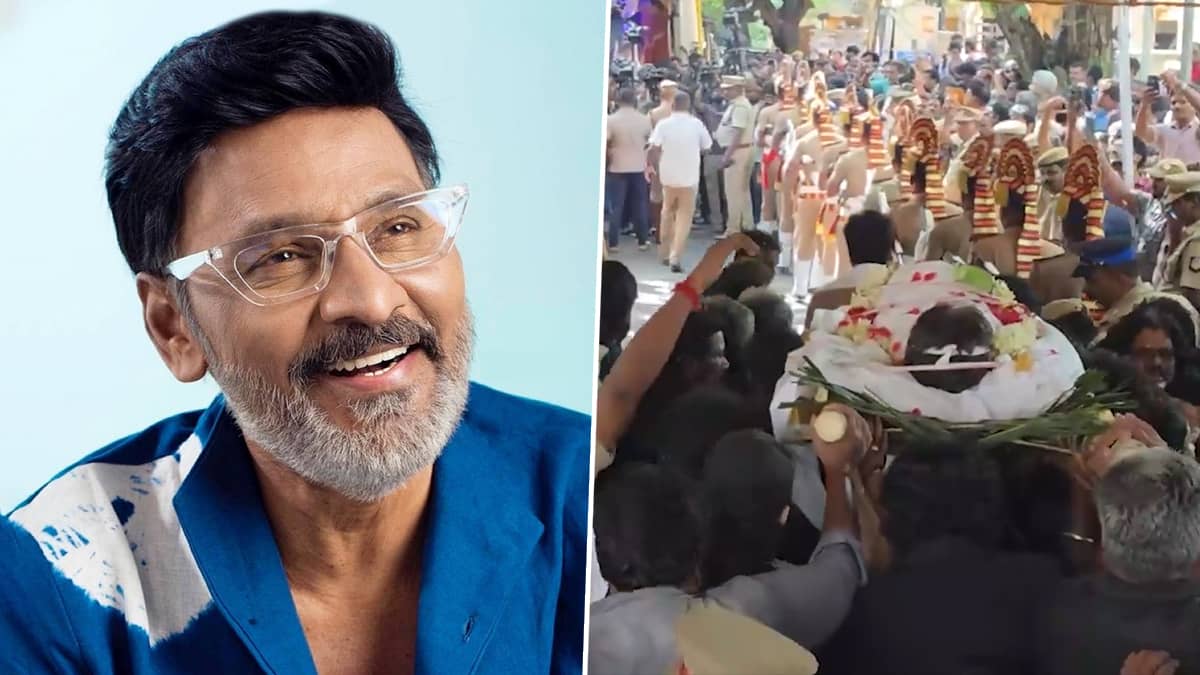

State Honours Mark the End of a Cinematic Career
Veteran Tamil filmmaker, actor, and screenwriter K. Bhagyaraj was cremated with full state honours in Chennai on Sunday, bringing to a close a career that left a lasting imprint on Tamil cinema. The ceremony took place at the Besant Nagar Electric Crematorium, where thousands of fans, film personalities, and political leaders gathered to pay their final respects.
The presence of high-profile dignitaries underscored the significance of Bhagyaraj’s contributions to the regional industry. Tamil Nadu Chief Minister Joseph Vijay was among those present at the cremation ground to witness the proceedings. The gathering included a diverse array of attendees, ranging from political leaders to prominent figures within the film community, reflecting the broad impact of Bhagyaraj’s work across different sectors of society.
The state honours bestowed upon Bhagyaraj are typically reserved for individuals who have rendered exceptional service to the nation or the state. His cremation marked a formal conclusion to his public life, with the event serving as a collective acknowledgment of his professional achievements and cultural influence in Tamil Nadu.
A Multi-Faceted Talent in Tamil Cinema
Bhagyaraj was recognized as a multi-faceted talent who excelled in multiple disciplines within the film industry. According to reports, he worked extensively as a director, actor, screenplay writer, dialogue writer, and music composer. This versatility allowed him to shape films from various angles, contributing to his widespread acclaim among audiences and peers alike.
His work was characterized by a specific stylistic approach that focused on the portrayal of ordinary people. Sources indicate that he depicted these lives with simplicity, humour, and emotional depth. This narrative style resonated with audiences across generations, creating a body of work that maintained relevance over time. The films he directed or acted in are noted for connecting with viewers through relatable themes and grounded storytelling.
The breadth of his roles allowed him to influence the technical and creative aspects of filmmaking simultaneously. As a dialogue writer and music composer, he contributed to the auditory and textual elements of cinema, while his work as an actor and director placed him at the forefront of performance and production. This comprehensive involvement in the filmmaking process is cited as a key factor in the enduring appeal of his projects.
Recognition of Cultural Impact
The attendance at the Besant Nagar Electric Crematorium highlighted the cultural weight carried by Bhagyaraj’s legacy. The gathering of thousands of individuals demonstrates the scale of public interest in his final rites. Film personalities who attended the event served as representatives of the industry he helped shape, while political leaders’ presence indicated the intersection of cinema and public life in Tamil Nadu.
Reports describe the atmosphere at the crematorium as one of collective mourning and respect. The event was not only a private farewell for his family but also a public acknowledgment of his status as a veteran figure in South Indian entertainment. The state honours provided an official framework for this recognition, aligning his personal passing with formal state protocols.
Bhagyaraj’s career spanned decades, during which he became a familiar name in Tamil households. His ability to craft stories that appealed to multiple generations is noted as a distinctive aspect of his professional history. The films he created are remembered for their emotional resonance and their focus on everyday experiences, a style that distinguished his work within the broader landscape of Indian cinema.
Final Rites Conclude Public Observances
The cremation at the Besant Nagar Electric Crematorium served as the final public act in the series of events honoring Bhagyaraj. The location, a major facility for end-of-life rituals in Chennai, hosted the proceedings as the community processed through to pay their respects.
Information regarding the specific sequence of the state honours ceremony was limited to reports confirming its full execution. The presence of Chief Minister Joseph Vijay and other political figures at the site confirmed the government’s involvement in the observances. Film industry representatives were also documented as being present, ensuring that the professional community had a direct role in the farewell.
The event marked the end of the public phase of Bhagyaraj’s passing. With the cremation complete, the focus shifts from public ceremony to private mourning for his family and close associates. The recorded attendance of thousands underscores the magnitude of the turnout, providing a factual measure of the public’s engagement with his legacy.
Details surrounding the specific political or social implications of the state honours were not elaborated upon in the available reports. The event is documented strictly as a ceremonial conclusion to his life, characterized by the presence of dignitaries and the scale of the gathering. The factual record confirms the date, location, and key attendees, providing a clear account of the final rites without speculative commentary.
The legacy of Bhagyaraj remains in his filmography, which continues to be referenced in discussions of Tamil cinema history. His roles as a director, actor, and writer are preserved in the films he produced, serving as the primary evidence of his professional impact. The state honours and public funeral served as contemporary acknowledgments of this historical contribution.