

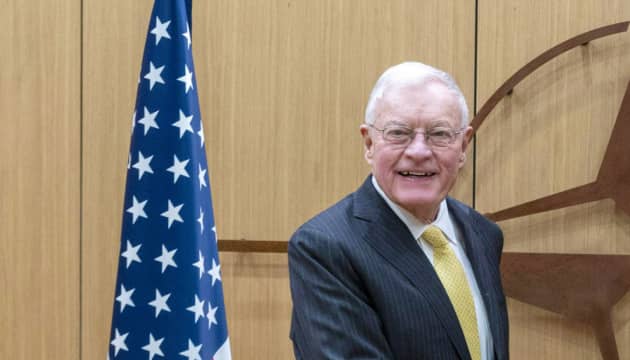

A Call for Strategic Balance in Global Aid
Thomas Kellogg, who previously served as the United States ambassador to NATO, has put forth a significant recommendation for American foreign policy: a deliberate and careful balancing of security assistance directed towards Ukraine and the Middle East. This counsel stems from a critical need to alleviate and strategically manage the considerable burden currently placed upon the United States' defense industry.
In his comprehensive assessment, Kellogg underscored the intricate logistical and industrial challenges that arise when a nation attempts to sustain long-term, high-intensity military support across disparate global theaters simultaneously. The veteran diplomat specifically highlighted that the prevailing pace and scale of aid distribution necessitate a fundamental recalibration. This adjustment, he argued, is vital to prevent the overextension of the domestic industrial base, which is the bedrock of America's defense capabilities and its capacity to project power and maintain security commitments worldwide.
Industrial Capacity Under Dual-Theater Pressure
The core of Kellogg’s argument rests firmly on the finite capacity of the American defense manufacturing sector. By advocating for a more balanced distribution of assistance, Washington can proactively prevent the severe strain on production lines and intricate supply chains that often accompanies simultaneous high-intensity conflicts. This strategic foresight is crucial to maintaining the efficacy and readiness of the US defense apparatus.
Challenges to Production Lines and Supply Chains
According to Kellogg, the defense industry faces immense pressure when tasked with supplying advanced weaponry, critical munitions, and other essential military hardware to multiple regions at once. The former ambassador noted that without a carefully balanced approach, the United States risks several critical vulnerabilities. These include the rapid depletion of its strategic stockpiles, which are vital for national defense and rapid response, or encountering severe production bottlenecks that could compromise national security interests globally. Such industrial constraints could hinder the ability to respond effectively to unforeseen crises or sustain ongoing operations.
This perspective aligns with broader discussions within military and policy circles regarding the long-term sustainability of current aid levels. While Kellogg did not specify exact quantities of aid to be reallocated, his focus was on the structural necessity of distributing resources more evenly. This, he believes, is essential to maintain operational readiness and strategic flexibility in both the European theater, particularly concerning Ukraine, and across the Middle East.
Global Implications of Domestic Strain
The strain on the US defense industry has far-reaching geopolitical implications. An overextended industrial base could lead to delays in delivering promised aid, impacting the effectiveness of partner nations in defending themselves, and potentially emboldening adversaries. Kellogg’s emphasis on managing this burden highlights the interconnectedness of domestic industrial capacity and global strategic influence. The ability of the United States to reliably supply its allies and partners is a cornerstone of its foreign policy and security architecture.
Navigating Geopolitical Commitments and Future Policy
The call for a more balanced approach to security assistance comes at a pivotal time, with US foreign policy heavily engaged in both Eastern Europe and Western Asia. Kellogg’s statement underscores the inherent complexity of maintaining influence and stability in these critical regions without exhausting national resources or compromising long-term strategic objectives.
The Dual Fronts: Ukraine and the Middle East
The context for Kellogg’s remarks is set against ongoing conflicts and security challenges in both Ukraine and various Middle Eastern nations. The United States has been a primary supplier of military hardware, intelligence support, and training to Kyiv since the escalation of hostilities with Russia. Simultaneously, Washington maintains significant security partnerships and robust aid programs across the Middle East, aimed at countering regional threats, promoting stability, and supporting counter-terrorism efforts. Kellogg’s assertion that these two vital theaters must be balanced suggests that current efforts may be leaning too heavily toward one area, potentially at the expense of the other. The former ambassador’s viewpoint adds considerable weight to arguments for a more holistic and integrated review of US security assistance priorities across the globe.
Shifting Towards Sustainable Aid Strategies
While Kellogg’s comments primarily highlight industrial constraints, they reflect a broader, ongoing debate within US policy circles about the appropriate scope and sustainability of American military engagement worldwide. Other officials and analysts have previously discussed the imperative need to evaluate aid packages based on long-term strategic necessity rather than solely on immediate crisis response. The recommendation to balance aid does not necessarily imply a reduction in overall support for either region but rather advocates for a more sustainable and strategically sound distribution model. This approach aims to ensure that the United States can continue to meet its security commitments to allies and partners without compromising its vital industrial base or its long-term defense capabilities.