

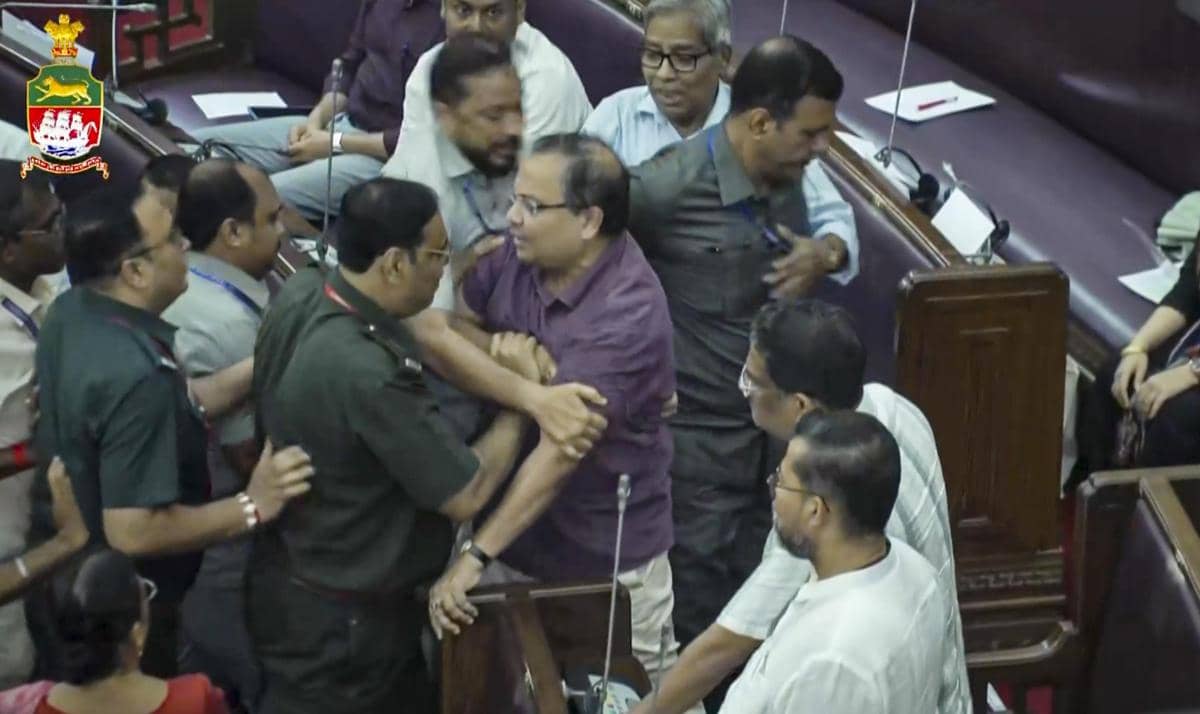

Removal of Kunal Ghosh During Parliamentary Session
Kunal Ghosh, an elected Member of Legislative Assembly (MLA) representing the Trinamool Congress party in West Bengal, was removed from the assembly floor on July 22, 2026. The removal took place during a session where another member was addressing the house.
According to reports from The Hindu published on that date, Ghosh is described as a loyalist of Chief Minister Mamata Banerjee. He faced immediate ejection by assembly officials after engaging in disruptive behavior directed at a colleague who held opposing views within the ruling party structure.
The specific act leading to his removal involved interrupting the speech delivered by a dissident MLA. The term 'dissident' indicates that this fellow member was expressing dissent or opposition, potentially against the leadership of the Trinamool Congress in West Bengal despite being part of the same political alliance at the state level.
Assembly security personnel and presiding officers executed the marshalling out procedure once Ghosh persisted with his interruption. This action effectively ended any further participation by Ghosh during that specific session until such time as he could return to a designated seating area outside the chamber or face disciplinary proceedings separate from immediate ejection.
The incident highlights internal friction occurring within what is ostensibly a unified political party at the state level. The presence of dissident voices suggests ongoing debates regarding policy directions, leadership authority, or strategic priorities that have reached a point where physical disruption became necessary to halt proceedings.
Internal Dynamics and Party Discipline
The identity of Kunal Ghosh as a Mamata loyalist adds specific context to the nature of his actions. Loyalists typically adhere closely to directives from party leadership, yet this instance appears to have involved an individual acting independently or perhaps under instructions that conflicted with standard parliamentary decorum.
Disrupting a dissident colleague's address represents a significant breach of expected conduct in legislative bodies across democratic systems. Such actions are generally reserved for members who fail to recognize the procedural authority granted to presiding officers and other elected representatives exercising their floor rights.
The source material does not provide explicit details regarding whether Ghosh received prior warnings or if this was an isolated incident involving a single session's disruption. However, the immediate nature of his removal suggests that assembly rules were enforced strictly without delay once the threshold for acceptable behavior was crossed during live proceedings.
Implications for Party Unity
The event occurred in West Bengal, a state where Trinamool Congress maintains significant political influence. The existence of dissident members within the party indicates that not all elected representatives align uniformly with central leadership positions or strategic decisions made by the chief minister's office.
When loyalists like Ghosh engage against dissenters, it may reflect attempts to suppress alternative viewpoints before they gain traction among wider constituencies. Alternatively, such behavior could stem from personal grievances unrelated directly to broader party strategy but still impacting institutional functioning within the legislative assembly.
Potential Disciplinary Measures
While immediate ejection occurred during the session itself, longer-term consequences for Ghosh remain unconfirmed based on available information. Legislative assemblies often maintain separate committees responsible for investigating breaches of conduct and recommending sanctions ranging from suspensions to expulsion depending on severity.
The absence of reported statements from opposing parties or official responses from party leadership limits understanding regarding how the incident will be framed internally within Trinamool Congress structures going forward. Without explicit commentary from senior leaders, speculation about future treatment remains speculative rather than factual reporting grounded in verifiable sources.
Procedural Context of Assembly Sessions
The removal process followed established protocols used during contentious sessions where order must be maintained regardless of political affiliations or ideological differences among members present. Presiding officers possess inherent authority to remove individuals who violate rules governing floor conduct, speech limits, and respect for opposing viewpoints.
Role of Dissident Voices
The target of Ghosh's disruption was identified specifically as a dissident MLA rather than an external critic or opposition member from another party. This distinction underscores that internal disagreements within coalition governments or single-party rule scenarios can escalate into confrontational situations requiring administrative intervention.
Timing and Location Specifics
The incident took place on July 22, 2026, according to publication metadata associated with The Hindu article covering the story. While exact timestamps of disruption or duration of ejection are not detailed in provided materials, the date anchors the event within current political timelines relevant to West Bengal state affairs.
Media Coverage Patterns
The reporting originates from a major national publication focusing on regional developments across India's diverse states. Selection of this particular story for coverage suggests recognition that intra-party conflicts among dominant regional parties carry implications beyond local electoral cycles, potentially influencing voter perceptions or alliance dynamics ahead of future elections.