

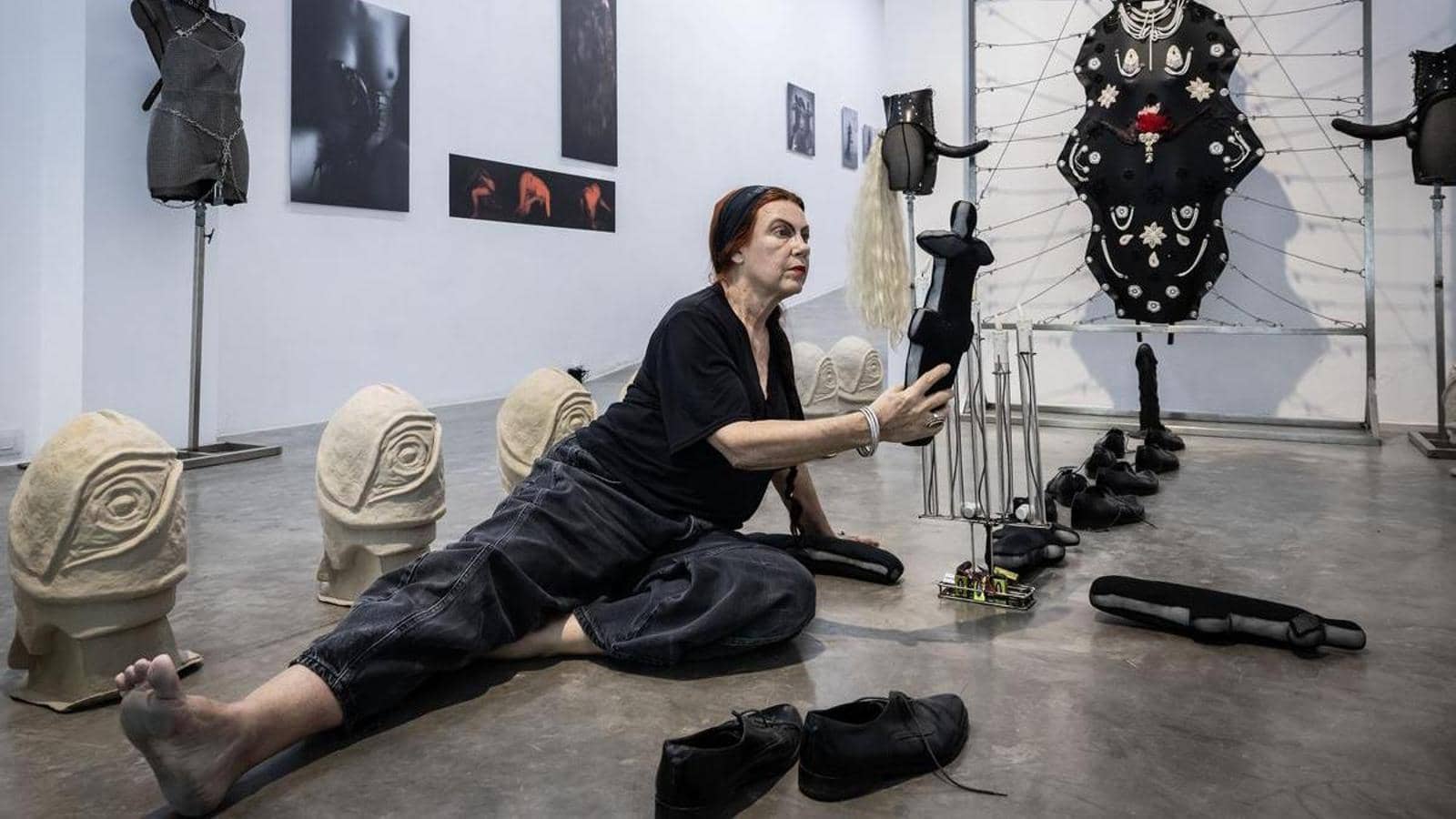

Mariaelena Roque Confronts Mischaracterization at Gallery Debut
Mariaelena Roque, a distinguished artist born in Tarragona in 1952, has made a powerful and deeply personal statement regarding the treatment she has endured throughout her life. At the Rocío Santa Cruz gallery in Barcelona, where her inaugural gallery exhibition is currently on display, Roque unequivocally declared that she has been subjected to the accusation and perception of being a prostitute, despite never having engaged in sex work.
"I am not a prostitute nor have I ever been one, but, nevertheless, I have been treated like a prostitute and denied as a prostitute for being a free woman who defends her own language," Roque asserted. This striking declaration forms a central pillar of her public address, directly linking the mischaracterization of her identity to her unwavering commitment to personal freedom and the preservation of her linguistic heritage. The artist posits that her autonomous spirit and vocal advocacy for her native tongue have been the catalysts for this profound societal judgment and denial, highlighting a struggle against labels imposed by external forces.
This public revelation adds a significant layer of context to Roque's artistic journey, which includes her notable role as a co-founder of the avant-garde Carles Santos Company. Her current exhibition at the Rocío Santa Cruz gallery is a landmark event, marking her very first time presenting her work in a gallery setting. This debut coincides with the prestigious 12th edition of the Gallery Weekend, an annual occasion that brings together a diverse array of established and emerging artists across Barcelona's vibrant art scene, placing Roque's personal narrative within a broader cultural dialogue.
A Career's Evolution: From Performance Art to Gallery Walls
Mariaelena Roque's artistic trajectory has been shaped by a commitment to innovative and often challenging forms of expression. As a co-founder of the renowned Carles Santos Company, she played a pivotal role in an artistic collective known for its experimental approach, often blurring the lines between music, theater, and performance art. This background underscores a career rooted in direct engagement and conceptual exploration, suggesting a long-standing practice of pushing boundaries and questioning conventional artistic formats, which now culminates in her gallery debut.
The decision to exhibit her work in a gallery for the first time represents a significant evolution in Roque's public artistic presence. While her influence through the Carles Santos Company has been substantial, this solo gallery presentation offers a focused lens into her individual vision and ongoing concerns, allowing for a more intimate engagement with her thematic explorations. The timing of this milestone is particularly noteworthy, as it aligns with the 12th edition of the Gallery Weekend, an event celebrated for spotlighting both established masters and compelling new voices in contemporary art, reinforcing its role as a crucial platform for artistic discourse.
Roque's exhibition is presented alongside those of other distinguished artists, including Francesc Torre and Eulàlia Valldosera, both of whom boast extensive and respected careers within the Spanish art scene. This collective showcasing within the Gallery Weekend framework highlights the event's commitment to presenting a rich tapestry of artistic perspectives and reinforces the significance of Roque's inclusion among such esteemed peers, signaling a recognition of her unique contribution to the contemporary art landscape.
Visual Narratives: Self-Portraiture and Social Advocacy
Central to Mariaelena Roque's exhibition are compelling photographs derived from a powerful performance piece. These images capture the artist in a raw and vulnerable state, depicted naked and running through a forest at night. This striking visual narrative is not merely a personal exploration but serves as a profound commentary on societal perceptions and the marginalization of women, inviting viewers to confront uncomfortable truths about vulnerability and freedom.
In her discussions surrounding the work, Roque explicitly drew parallels between her own experience and the plight of women exploited by society. She referenced "prostitutes that hunters take to their wild parties," invoking a stark image of vulnerability, objectification, and the predatory nature of certain societal elements. Furthermore, she extended her empathy to women who endure the hardship of waiting for clients on the side of the road, underscoring a shared experience of societal judgment, precariousness, and the struggle for dignity. Through her art, Roque states she actively raises her voice, aiming to give agency and recognition to these often-unseen and unheard women, transforming her personal narrative into a powerful act of social advocacy.
Roque consistently defines the fundamental principle of her artistic practice as the "self-portrait." In this context, the performance photographs transcend a simple depiction of her physical self; they become a conduit for exploring universal themes of identity, freedom, and societal constraint through her own lived experience. The act of running naked through the forest, as captured in her exhibition, transforms into a symbolic gesture of defiance and solidarity, connecting her personal narrative to the broader struggles faced by women in various forms of societal marginalization and challenging conventional notions of self-representation in art.
Exhibition Details and Public Reception
The exhibition is hosted at the prestigious Rocío Santa Cruz gallery in Barcelona, a venue known for its commitment to contemporary art and its role in fostering critical dialogue. The presentation of Roque's work within this established space further amplifies the reach and impact of her message, ensuring it resonates with a wide audience. The public's engagement with her challenging themes is documented, with coverage of the event appearing prominently in the Culture section of various publications, including the article dated September 17, 2026. A notable photograph capturing Roque at her exhibition, which illustrates her presence and the atmosphere of the event, was credited to Pere Virgili Antoni Ribas Tur, adding to the visual documentation of this significant artistic moment.