


MEA Data Reveals Geographic Shift in Risks for Indian Diaspora
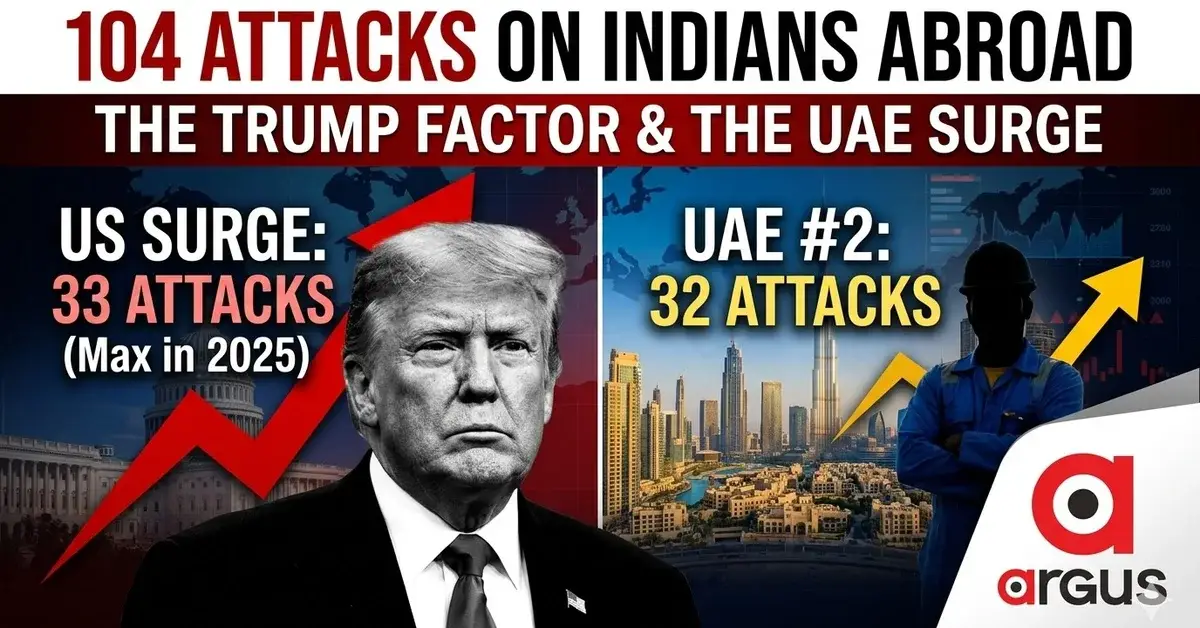
Data presented by the Ministry of External Affairs (MEA) to Parliament indicates a sharp rise in reported attacks involving Indian nationals across several countries with significant diaspora populations. Between 2021 and 2025, a total of 104 attacks were recorded globally, signaling an evolving landscape of safety concerns for Indians abroad. The United States emerged as the location with the highest cumulative number of incidents, followed closely by the United Arab Emirates (UAE). This comprehensive data highlights a changing geography of risk for Indians living, working, or studying abroad, moving beyond traditional perceptions of vulnerability.
The MEA figures provide a detailed breakdown of these incidents over the five-year period. The United States recorded 33 reported attacks on Indian nationals, placing it at the top of the list. The United Arab Emirates ranked a very close second with 32 incidents. The proximity of these figures underscores a significant concentration of risks in two very different geopolitical and social environments. Beyond these top two, other countries also reported substantial numbers of attacks: the United Kingdom recorded 31 cases, Canada saw 30 cases, and Ireland reported 24 cases. These statistics collectively paint a picture of heightened vigilance required across diverse regions where the Indian diaspora has a strong presence.
Rising Incidents in Key Nations: A Closer Look at US and UAE Trends
The most significant and concerning change highlighted by the MEA data is the dramatic increase in reported incidents within the United States. Incidents there jumped from just one case in 2021 to a striking 14 cases in 2025. This sharp escalation over a relatively short period has inevitably led to widespread speculation about the underlying factors driving such a surge in attacks against Indian nationals. Observers have pointed to the possibility that heightened immigration rhetoric, particularly during the Trump era, may have contributed to the creation of a more hostile social and political environment in the US, potentially influencing the rise in these attacks.
However, it is crucial to note that while a correlation in timing has been observed and discussed, the MEA data itself does not establish a direct causal link between the Trump-era rhetoric and the surge in attacks. The Ministry's report provides raw figures on incidents without officially attributing specific causes to each event or confirming that political speech directly incited the violence. The data serves as a factual record of reported occurrences, prompting further inquiry into the complex interplay of social, political, and economic factors at play.
Migrant Worker Vulnerabilities Drive UAE Incidents
In stark contrast to the speculative political climate concerns in the US, the United Arab Emirates' high ranking in the list of countries with reported attacks reflects a fundamentally different set of risks. The 32 incidents recorded in the UAE are primarily understood to be related to the specific vulnerabilities faced by migrant workers, who constitute a significant portion of the Indian community in the region. These vulnerabilities can stem from various factors inherent in temporary labor migration, including potential issues with employment contracts, living conditions, or social integration challenges.
The UAE also witnessed a notable and concerning rise in reported cases over the period, with 12 cases reported in 2025 alone. This increase mirrors the upward trend seen in the US, indicating that despite the differing root causes, the safety and security of Indian nationals are becoming a more pressing and complex concern in both countries. The nature of these risks in the UAE necessitates a focus on labor rights, consular support for workers, and engagement with employers and local authorities to ensure fair treatment and safe working environments.
Broader Patterns Across the Diaspora
Beyond the top two countries, the data also highlights significant numbers of attacks in other key nations with large Indian diaspora populations. The United Kingdom, with 31 reported cases, and Canada, with 30 cases, show that Western nations continue to present challenges for Indian nationals. Ireland, reporting 24 cases, also stands out, indicating that these incidents are not isolated to the largest or most politically charged environments but are a broader phenomenon requiring global attention. While the specific triggers for incidents in these countries are not detailed in the MEA data, their consistent appearance on the list underscores the need for a comprehensive and nuanced approach to diaspora safety.
Diplomatic Responses and Future Safeguards for Indian Nationals
The presentation of this data by the Ministry of External Affairs to Parliament signifies an official recognition of the escalating issue and provides a crucial factual basis for future policy decisions. The concentration of attacks in the US, UAE, UK, Canada, and Ireland indicates that these regions require focused diplomatic and consular attention, including enhanced outreach programs and robust support mechanisms for Indian citizens. The consistent rise in incidents, particularly evident in the 2025 figures for the US and UAE, suggests that this trend may continue, necessitating proactive measures rather than reactive responses.
As the Indian diaspora continues to grow and diversify globally, understanding the specific and varied risks in each host country becomes increasingly essential. While the cases in the US have been linked to broader political narratives and societal sentiments, the incidents in the UAE distinctly highlight the critical importance of robust labor rights and comprehensive worker protection frameworks. Similarly, the challenges faced by Indian nationals in countries like the UK, Canada, and Ireland, although not detailed by cause, demand tailored strategies for prevention and redressal. The distinction between these types of risks is paramount for developing targeted and effective responses to protect Indian nationals abroad, ensuring that consular services and diplomatic engagements are aligned with the unique vulnerabilities present in each region.
The MEA's ongoing monitoring and reporting of these incidents are vital for informing both domestic policy and international relations. These figures enable the Indian government to engage more effectively with host countries on issues of citizen safety, advocate for stronger protections, and adapt its consular services to meet the evolving needs of its diaspora. The data serves as a call to action for policymakers, community leaders, and international organizations to collaborate on creating safer environments for Indian nationals worldwide.