

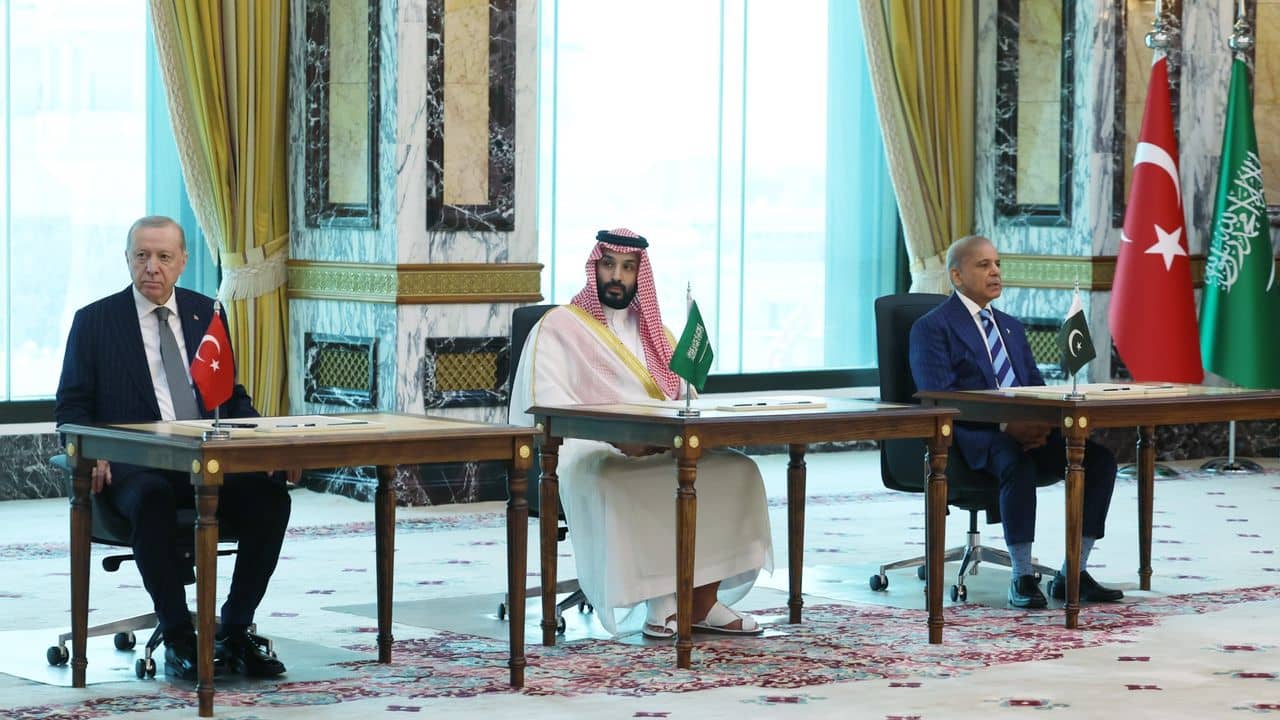

A New Security Alignment Emerges in the Middle East
A landmark tripartite accord involving Saudi Arabia, Pakistan, and Turkey has been established, drawing significant attention to its potential implications for regional security structures in the Middle East. This agreement brings together three nations with substantial strategic interests and shared geopolitical concerns, signaling a notable shift in regional dynamics. Observers are analyzing this diplomatic development as a possible foundational framework for an "Islamic NATO," designed to address the complex security challenges unique to the region.
The formation of this alliance marks a significant coordination effort among the three nations, each bringing distinct strengths and strategic importance. Saudi Arabia, a major economic power and custodian of Islam's holiest sites, plays a pivotal role in Middle Eastern politics and possesses considerable military spending capabilities. Turkey, a NATO member with a modern military and growing regional influence, holds a critical geopolitical position at the crossroads of Europe and Asia. Pakistan, a nuclear power with one of the world's largest standing armies, offers significant military expertise and experience, particularly in counter-terrorism operations, alongside its strategic location in South Asia.
Key Players in the Mecca Accord
The convergence of Saudi Arabia, Pakistan, and Turkey in a formalized agreement suggests a deepening of bilateral and multilateral ties that extends beyond traditional diplomatic engagement. This accord reflects a mutual recognition of the need for enhanced security cooperation in a volatile region. While their individual strategic interests may vary, their shared concerns about regional instability, terrorism, and the evolving geopolitical landscape appear to have provided a strong impetus for this collaborative framework. The agreement is seen as an attempt to leverage their combined military, economic, and diplomatic strengths to foster greater stability and security.
The Vision of an "Islamic NATO"
The characterization of the Mecca accord as an "Islamic NATO" for the Middle East has prominently emerged in media and strategic analysis circles. This comparison highlights the potential for a defensive or collective security nature, akin to the North Atlantic Treaty Organization (NATO) framework, but adapted to the specific context of the Islamic world. The term implies a structured approach to mutual defense among Muslim-majority nations, potentially challenging existing non-Islamic military alliances or creating a parallel security architecture.
Comparing the Accord to NATO's Collective Defense
NATO's core principle of collective defense, enshrined in Article 5, stipulates that an attack against one member is considered an attack against all. Applying this concept to an "Islamic NATO" suggests a similar commitment to mutual protection and coordinated responses to threats affecting any signatory nation. Such a framework could involve joint military exercises, intelligence sharing, coordinated defense policies, and potentially even unified command structures for specific operations. The aspiration behind this comparison is to establish a robust, self-sufficient security bloc capable of addressing internal and external threats to the stability of Islamic nations.
However, the specific mechanisms of this potential alliance remain to be fully defined by the terms of the tripartite agreement itself. While the comparison to NATO provides a conceptual understanding, the operationalization of security cooperation through this new framework will depend on the detailed provisions agreed upon by Saudi Arabia, Pakistan, and Turkey. Observers suggest that the accord could serve as a foundational element for broader cooperation among Islamic states, potentially inviting other Muslim-majority nations to join or align with its objectives in the future, thereby expanding its reach and influence.
Regional Powers Redefine Security Partnerships
Some analysts view the Mecca accord as indicative of a significant regional shift away from the United States security umbrella. The United States has historically served as the primary external security guarantor for many Middle Eastern nations, including Saudi Arabia and Turkey, providing military aid, intelligence support, and maintaining a substantial military presence in the region. This long-standing arrangement has shaped the security landscape of the Middle East for decades.
The emergence of a robust internal Islamic defense mechanism could signal a desire among these signatories to reduce their reliance on Washington for strategic safety and to assert greater autonomy in their defense policies. This perceived shift does not necessarily imply a complete severance of ties with the United States but rather a diversification of security partnerships. It may reflect a broader trend where regional powers seek to enhance their self-sufficiency and define their own security interests more independently, responding to evolving global and regional dynamics, including potential changes in US foreign policy priorities.
Strategic Implications for Middle Eastern Stability
The establishment of this tripartite accord has immediate and far-reaching implications for the balance of power in the Middle East. It introduces a new dynamic where three major regional actors formally coordinate their military and strategic interests, potentially altering how neighboring states and other international players approach diplomatic and security negotiations. This enhanced cooperation could lead to a more integrated regional defense posture, fostering greater stability in some areas while potentially creating new geopolitical alignments.
While the accord is described as landmark, its long-term impact will depend significantly on the effective implementation of its provisions and the willingness of other Islamic nations to join or align with this framework. The current focus remains on the foundational relationship between Saudi Arabia, Pakistan, and Turkey, and how their combined capabilities will influence regional stability, address common threats, and shape the future security architecture of the Middle East.