



Documentary Illuminates Unseen Medical Practices In Ebute Metta
\nIn the bustling markets of Ebute Metta, Lagos, a centuries-old medical practice unfolds in plain sight yet remains largely invisible to the outside world. Beneath makeshift stalls, Hausa traditional practitioners remove uvulas and tonsils using simple instruments without anesthesia or formal medical certification.
\nFor many patients, however, these market stalls are not symbols of ignorance but of survival. When hospitals are overcrowded, appointments are weeks away, and pain cannot wait, these practitioners become the closest and often the only option available to those in need.
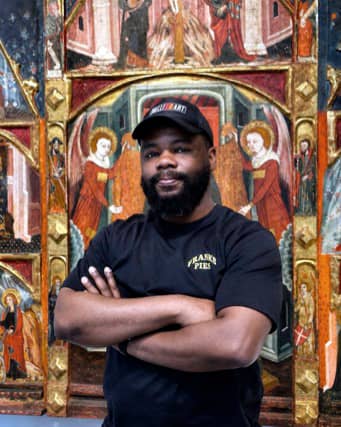
\nThis complex intersection of tradition, healthcare access, and daily survival captured the imagination of filmmaker and sociologist Mohammed Adedayo. His debut documentary, titled \"Belu Belu,\" is attracting attention for illuminating an African reality rarely explored on screen.
\nQuestioning The Persistence Of Tradition Amidst Modern Healthcare Gaps
\nRather than treating the practice as an oddity or a failure of culture alone, Adedayo asks a deeper question: Why do such traditions continue to thrive in the age of modern medicine? His answer is neither simplistic nor judgmental.
\nInstead, the documentary patiently reveals that these traditions often survive not because people reject modernity, but because modern institutions frequently fail to reach those who need them most. The film suggests a direct correlation between institutional failure and the reliance on traditional methods for immediate pain relief.
\nA Personal History Rooted In Childhood Observation
\nFor Adedayo, the story is also deeply personal. Growing up in Ebute Metta, he often heard the cries of patients undergoing these procedures without understanding what was happening at the time. Years later, after studying sociology and criminology, his perspective shifted from confusion to a desire for documentation.
\nThe transition from childhood observer to filmmaker highlights how long-standing social structures are embedded in daily life within specific neighborhoods like Ebute Metta. Adedayo's work does not merely document these events but seeks to understand the systemic reasons behind their continuation.
\nAnalysis Of Institutional Failure And Patient Survival Strategies
\nThe documentary posits that the survival of traditional practitioners is inextricably linked to the inability of formal healthcare systems to provide timely services. When public hospitals are overcrowded, patients face long waiting times for appointments that can extend into weeks.
\nIn such scenarios, pain cannot wait. The immediate need for relief forces individuals toward alternative providers who operate outside the regulatory framework but offer speed and accessibility. Adedayo's film captures this dynamic without assigning blame solely to one side of the equation.
\nThe practitioners in question are Hausa traditional healers operating within a specific cultural context. They utilize simple instruments rather than advanced technology, relying on generations of knowledge passed down through their communities. This approach contrasts sharply with the high-tech environment often found in modern hospitals, yet it serves a vital function for those who cannot access formal care.
\nAdedayo's work challenges viewers to reconsider how they perceive traditional medicine. It is not presented as backwardness but as an adaptive response to systemic constraints. The film highlights that when the state fails to provide adequate healthcare coverage or timely appointments, informal sectors fill the void immediately.
\nThe Role Of Visibility In Social Discourse
\nBy bringing these market stalls into focus through a documentary lens, Adedayo forces an examination of what is considered visible versus invisible in African society. Practices that occur openly under makeshift roofs are often ignored by mainstream media and policy makers until explicitly documented.
\nThe release date for the coverage surrounding this work was noted as Tuesday, July 14, 2026, indicating a continued relevance to current discussions on healthcare accessibility in Nigeria. The article originally appeared on The Sun Nigeria under the headline \"Beyond the Lens: Mohammed Adedayo documents Africa.\"
\nHenry Akubuiro reported on the piece for The Sun Nigeria, framing it within national columns and opinion sections that discuss politics, power, and social issues. This placement underscores how healthcare access is viewed not just as a medical issue but as a political and sociological one.
\nCultural Context And The Limits Of Modern Intervention
\nThe documentary does not propose immediate solutions or call for the eradication of traditional practices. Instead, it invites reflection on why these methods persist despite the availability of modern alternatives in theory. Adedayo suggests that simply introducing new technology is insufficient if the delivery system remains inaccessible.
\nPatients choose these practitioners because they are there when hospitals are not. The decision to seek care from a traditional healer often involves weighing immediate pain relief against long-term safety or certification standards. For many, the former takes precedence over the latter due to urgency and desperation.
\nThis dynamic reflects broader challenges in healthcare delivery across developing nations where infrastructure gaps force reliance on informal providers. Adedayo's film serves as an archival record of these conditions rather than a call for immediate legislative change or moral condemnation.
\nFuture Implications For Healthcare Policy And Documentation
\nThe attention brought to \"Belu Belu\" may influence how policymakers view traditional medicine in the future. If institutions fail to serve all populations effectively, informal sectors will continue to expand regardless of regulatory status. Adedayo's work provides a baseline for understanding current realities.
\nAs sociologists and filmmakers document these phenomena, they contribute to a growing body of evidence regarding healthcare disparities. The visibility granted by documentaries like this one may eventually lead to policy adjustments aimed at reducing wait times or integrating traditional practices into formal health systems where appropriate.
\nThe story remains deeply personal for Adedayo because it connects his childhood memories with adult analysis. His journey from hearing cries in the market as a child to creating a film about those same sounds illustrates how individual experiences can drive broader social inquiry.
"