

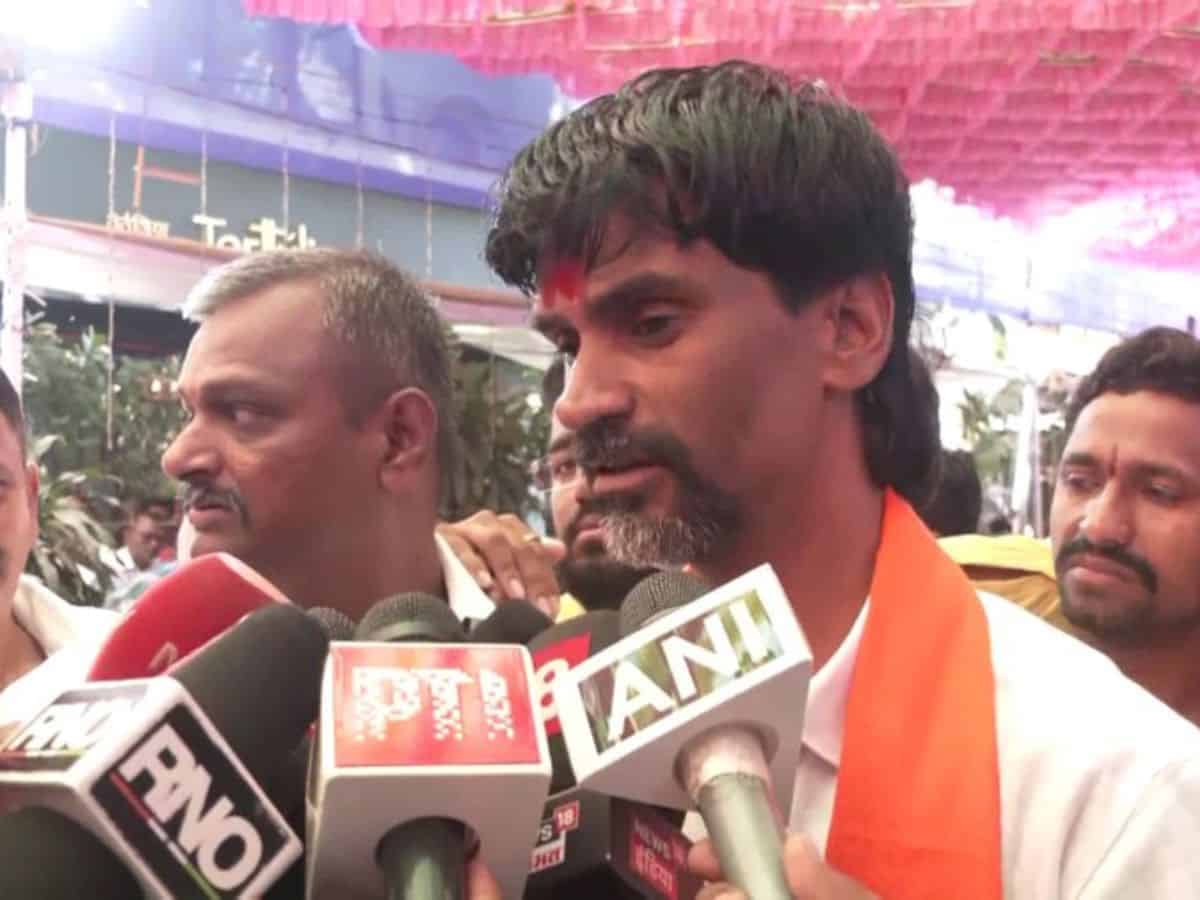

Police Refusal Cites Security Strains During Festival Period
Mumbai police authorities on Sunday, September 13, formally denied permission to Maratha quota activist Manoj Jarange for a planned indefinite hunger strike in the metropolis. The denial applies to the period starting September 19, according to an official refusal letter issued by the Azad Maidan police station. This decision effectively blocked Jarange's proposed demonstration in the heart of Mumbai, a move that comes amidst heightened security preparations for one of the city's most significant annual events.
The decision was communicated through a comprehensive six-page document signed by Senior Inspector Raja Bidkar of the Azad Maidan police station. This detailed letter rejected a formal request submitted by Jarange-Patil’s team, outlining specific regulatory and logistical reasons for the rejection. Officials stated that the timing of the proposed protest coincided directly with the Ganeshotsav festival, which was scheduled to run from September 14 to September 25. This overlap was a critical factor in the authorities' assessment, as the festival period places immense demands on the city's infrastructure and law enforcement.
Police officials indicated that law enforcement forces were already stretched thin due to the expected crowds associated with the Ganpati festivities. Ganeshotsav, a ten-day celebration, draws millions of devotees to public pandals and private homes across Mumbai, necessitating extensive police deployment for crowd control, traffic management, and general security. Authorities warned that permitting a large demonstration, such as an indefinite hunger strike that could attract significant support, during this period could trigger significant law and order complications. The refusal letter emphasized that the existing deployment of personnel for festival management left insufficient resources to manage an additional major public gathering without compromising public safety and the smooth conduct of the religious celebrations.
Regulatory Violations and Past Protest Records
The six-page refusal letter cited potential violations of the Public Meetings, Demonstrations, and Processions Rules as a primary basis for the denial. These rules govern how public assemblies can be conducted in the city, aiming to ensure public safety and minimize disruption. Inspector Bidkar’s document also referenced alleged non-compliance with venue conditions during Jarange-Patil’s previous protests, suggesting a pattern of behavior that raised concerns for the authorities.
Officials specifically pointed to past incidents where crowds associated with Jarange's demonstrations exceeded permitted limits. According to police records, a previous stir organized by the activist resulted in huge crowds that surpassed the authorized numbers, leading to significant challenges for law enforcement. These large, unauthorized gatherings caused severe traffic disruptions around critical city hubs, including Chhatrapati Shivaji Maharaj Terminus (CSMT) and Brihanmumbai Electric Supply and Transport (BEST) depots. Such disruptions not only inconvenience commuters but also pose risks to public safety and emergency services.
The refusal letter detailed that these past violations posed a precedent for potential public order issues. Police authorities argued that allowing another large-scale demonstration under similar conditions, especially during a period of already high public density like Ganeshotsav, would exacerbate existing logistical challenges in the city center. The cumulative effect of festival crowds and a major protest was deemed an unacceptable risk to public order and safety.
Activist's Strategic Intentions and Official Justifications
Following the denial, Maratha quota activist Manoj Jarange criticized the government’s decision, viewing it as an attempt to stifle the movement for reservation benefits. The rejection of his request to hold the hunger strike in Mumbai has drawn attention from supporters who view the protest as a necessary step for securing the long-standing demands related to Maratha quotas. Jarange had intended to use the platform of the indefinite hunger strike to highlight these demands, aiming to exert pressure on state authorities through a high-profile demonstration.
The planned location in Mumbai was strategically selected to maximize visibility and pressure on state authorities. Mumbai, as the state capital and a major media hub, offers an unparalleled platform for drawing widespread attention to political and social causes. Furthermore, the timing of the request was significant, as it aligned with the peak of the Ganeshotsav celebrations. Activists had called for the march during this window, likely to attract broader public attention and leverage the high footfall and media presence associated with the festival. The festival period typically draws millions of devotees to Mumbai, creating a high-density environment that requires extensive security planning and meticulous crowd management.
Balancing Protest Rights with Public Safety
The rejection highlights the ongoing tension between the fundamental right to protest and the imperative of public safety management in urban centers, particularly during major religious festivals. Police authorities consistently maintain that their primary duty is to ensure the safety and security of all citizens, as well as to maintain law and order, especially during high-traffic and high-density periods like Ganeshotsav.
Officials noted that the Ganeshotsav festival involves specific, elaborate protocols for crowd control, traffic diversion, and the movement of large numbers of people. Any deviation from these established protocols, such as allowing an indefinite hunger strike that could unpredictably draw large crowds and potentially disrupt planned routes or security perimeters, was deemed incompatible with existing security frameworks. The police assessment concluded that accommodating such a protest would necessitate diverting critical resources from festival duties, thereby compromising the safety of millions of devotees.
The six-page letter provided detailed justifications for the denial, leaving little room for immediate negotiation on the proposed terms. This comprehensive documentation underscores the authorities' stance that the decision was based on a thorough evaluation of security risks and logistical constraints rather than an arbitrary refusal. The incident underscores the logistical complexities of organizing political protests in a densely populated metropolitan area like Mumbai, especially during peak festival seasons when the city's resources are already stretched to their limits. Authorities have consistently cited security concerns as the primary barrier to such large-scale events during this time of year, emphasizing the delicate balance between facilitating democratic expression and ensuring public order.