


Srinagar Sees Competing Political Demonstrations
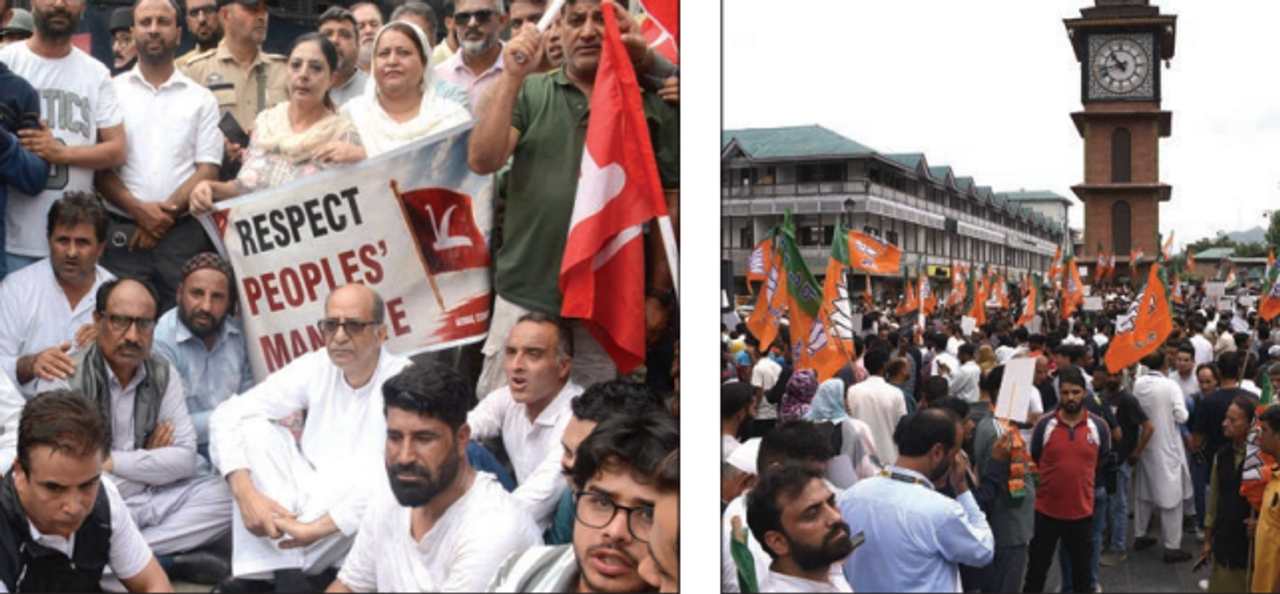
Jammu and Kashmir witnessed a sharp political confrontation on Wednesday as the ruling National Conference (NC) and the opposition Bharatiya Janata Party (BJP) staged parallel protests in Srinagar. The events transformed the city's streets into a focal point for competing political demands, specifically regarding the restoration of statehood to the region and accountability for local governance.
The National Conference directed its demonstration against the BJP-led central government, citing what it described as an unacceptable delay in restoring full statehood to Jammu and Kashmir. In a separate but concurrent action, the Bharatiya Janata Party organized its rally targeting the Chief Minister Omar Abdullah-led state government. The opposition party accused the administration of failing to fulfill specific electoral commitments made prior to the recent elections, encompassing a range of issues from employment to corruption.
These simultaneous actions marked one of the most prominent instances of rival political mobilization in the region since the significant constitutional changes implemented in August 2019. Both the ruling party and the principal opposition chose street protests as a method to exert pressure on their respective political opponents, underscoring the intense and polarized political climate in J&K.
National Conference Presses for Statehood Restoration
The National Conference had announced plans for a march directed toward the BJP headquarters located in Jawahar Nagar. The party intended to stage a gherao, or encirclement, at the location to demand the immediate restoration of statehood to Jammu and Kashmir. This demand is central to the NC's political platform, particularly in the aftermath of the constitutional amendments.
Senior party leaders assembled near the Gindun Sports Complex in Rajbagh to lead the demonstration, signaling the party's commitment to the cause. Those present included prominent figures such as Health and Education Minister Sakina Itoo, along with several Members of the Legislative Assembly (MLAs), including Tanvir Sadiq, Salman Sagar, Ahsan Pardesi, Shamima Firdous, Nazir Gurezi, Javid Baig, and Abdul Majeed Larmi. Their presence underscored the institutional backing for the protest.
Protesters at the gathering raised slogans demanding the restoration of statehood, emphasizing the need for J&K to regain its previous constitutional status. They also called for the reinstatement of constitutional guarantees that were withdrawn following the decisions made on August 5, 2019. These guarantees, which previously defined the region's special status, have been a contentious point of political debate and a primary focus of the NC's advocacy.
Confrontation with Authorities
As National Conference protesters attempted to move toward their designated target, police and security personnel swiftly erected barricades near the Rajbagh police station. These measures effectively stopped the NC march from proceeding further toward Jawahar Nagar, preventing the planned encirclement of the BJP headquarters.
A confrontation between the demonstrators and security forces ensued as protesters attempted to breach the barricades. During this clash, some protesters were detained by authorities, highlighting the administration's firm stance against unauthorized marches. The National Conference vehemently accused the administration of actively preventing people from joining the demonstration, thereby hindering their right to peaceful protest. The party also alleged that some of its elected representatives were mishandled during the incident, though specific details regarding the nature of the mistreatment were not provided in initial reports.
BJP Challenges State Government on Unmet Pledges
While the National Conference focused on constitutional status and the role of the central government, the BJP’s demonstration centered on administrative failures attributed to the state government. The party demonstrated against the Omar Abdullah-led government, citing a lack of progress on key issues that had been prominently raised during the election campaign.
The BJP’s list of grievances included specific unfulfilled promises regarding employment opportunities for locals, a critical concern for the region's youth. The party also highlighted pervasive concerns over corruption within the current administration, alleging a lack of transparency and accountability in governance.
Further complaints cited by the BJP involved the delay in holding local body elections, which are crucial for grassroots democracy and local development. Additionally, the opposition raised issues related to power tariffs, accusing the state government of failing to address electricity costs effectively and provide relief to consumers.
Parallel Police Action Halts BJP March
Like the National Conference, the Bharatiya Janata Party also attempted to march toward its designated target during the Wednesday events, aiming to directly confront the state administration with its grievances. However, police intervention similarly prevented the opposition party from completing their planned route, mirroring the actions taken against the NC protest.
The concurrent nature of these protests, both met with police barricades and prevention from reaching their intended destinations, highlighted the intense political climate in Jammu and Kashmir. By utilizing street demonstrations, both major parties sought to demonstrate their influence and hold their respective adversaries accountable for perceived political and administrative shortcomings, even as both faced restrictions on their public expression.
Political Landscape Shifts Post-2019 Changes
These rival protests represent a significant and telling instance of political mobilization in Jammu and Kashmir following the constitutional changes enacted in August 2019. Prior to these changes, the political dynamics and protest landscape were different, often centered on issues within the state's special constitutional framework.
The NC's demand for the restoration of statehood and constitutional guarantees directly addresses the core impact of the 2019 decisions, positioning the party as a vocal advocate for the region's pre-August 2019 status. Conversely, the BJP, while part of the central government that enacted those changes, focused its local protest on administrative and governance issues, holding the state government accountable for day-to-day concerns affecting the populace.
The fact that both major political entities resorted to street protests, and both were prevented by authorities from reaching their targets, underscores the evolving nature of political expression and the challenges faced by parties in the region. This dual mobilization signals a re-energized political discourse in J&K, with parties articulating distinct visions for its future, whether through constitutional restoration or improved local governance.