Full story
Reclaiming Intellectual Agency in Political Discourse
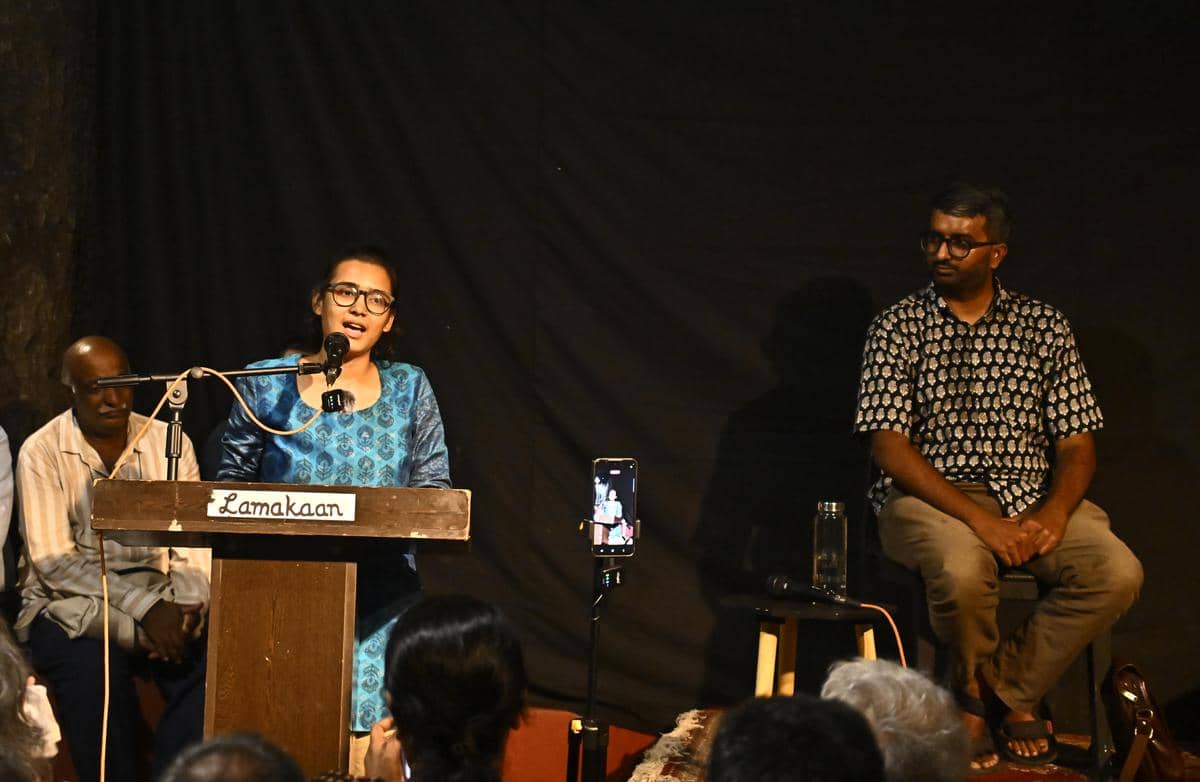
Neha Bora has articulated a perspective on the current state of Indian democracy that centers on the evolving role of students within the national political landscape. In a discussion published by The Hindu, Bora highlighted the historical marginalization of youth voices, arguing that they have frequently been reduced to mere statistical components in electoral calculations rather than being recognized for their intellectual contributions.
Bora stated that students have historically been viewed primarily as a voting bloc. According to her analysis, this perspective overlooks the individual agency and critical thinking capabilities of young people. She emphasized that this reductionist view has prevented students from being seen as independent thinkers capable of shaping policy and societal direction through reasoned discourse rather than just electoral participation.
The core of Bora’s argument rests on the assertion that the student population possesses a distinct intellectual identity that is often ignored by political structures. By describing the traditional approach to youth as one that values them only for their votes, she points to a systemic gap in how democratic engagement is understood and facilitated. This viewpoint suggests that the potential for students to influence governance through ideas and resistance has been underutilized due to this narrow framing.
Bora’s comments underscore a broader critique of how political entities interact with younger demographics. She suggests that recognizing students as "a mind" rather than just "a vote" is essential for a robust democratic process. This distinction implies that true democratic health requires the inclusion of student voices in substantive debates, allowing their perspectives to inform political outcomes beyond the ballot box.
Resistance Against Political Oppression and Fascism
Beyond the issue of intellectual recognition, Bora has focused on the active role students play in resisting what she describes as political oppression. Her discussion highlights a growing movement among youth that is explicitly directed against authoritarian tendencies within the political sphere.
Bora identified fascism as a significant threat that student resistance aims to counter. She described the current climate in India as one where political oppression is evident, necessitating a organized response from the younger generation. This resistance is not merely reactive but is framed as a proactive fight for the preservation of democratic values.
The narrative presented by Bora connects the empowerment of youth directly to the health of Indian democracy. She argues that student activism serves as a critical check against the consolidation of power and the erosion of civil liberties. By engaging in resistance, students are asserting their place in the political process as defenders of democratic principles.
This perspective positions student groups not just as participants in politics but as essential actors in safeguarding the nation’s constitutional framework. Bora’s remarks suggest that the fight against fascism is intertwined with the broader struggle for youth empowerment, indicating that these issues cannot be addressed in isolation.
The Intersection of Youth Empowerment and Democratic Survival
The discussion led by Bora draws a direct line between the empowerment of young people and the survival of democratic institutions. She posits that without the active involvement and intellectual engagement of students, democracy risks becoming hollow, driven solely by electoral mechanics rather than genuine public will.
Bora’s analysis implies that the current political environment in India demands a reevaluation of how youth are integrated into the political system. By challenging the notion that students are only valuable as voters, she advocates for a model where their ideas and resistance are central to political dialogue.
This approach requires a shift in how political parties and government bodies perceive and interact with student populations. Bora suggests that acknowledging the intellectual agency of students is a prerequisite for addressing the challenges of political oppression and fascism. Without this acknowledgment, the resistance movements led by youth may remain marginalized despite their numerical significance.
The emphasis on fighting fascism indicates a high-stakes environment where democratic norms are under pressure. Bora’s comments reflect a concern that without the vigilant opposition of empowered student groups, these pressures could lead to a significant decline in democratic quality.
Implications for Future Political Engagement
Bora’s insights into the student resistance movement offer a framework for understanding current political tensions in India. Her focus on youth empowerment suggests that future political developments will likely be influenced by how effectively the state and opposition parties engage with this demographic as intellectual peers.
The distinction between being seen as a mind versus a vote remains a central theme in her critique. This dichotomy highlights the ongoing struggle for recognition and respect within the political arena. Bora’s work continues to highlight the importance of this struggle for the broader democratic project.
As the resistance against political oppression gains momentum, the role of students is becoming increasingly visible. Bora’s commentary serves as a documentation of this shift, providing a record of the arguments being made by those on the front lines of this political engagement.
The fight for democracy, as described by Bora, is thus framed as a multi-faceted effort involving both the rejection of fascist tendencies and the affirmation of youth agency. This dual focus defines the current phase of student activism in India, marking it as a critical component of the nation’s political future.