

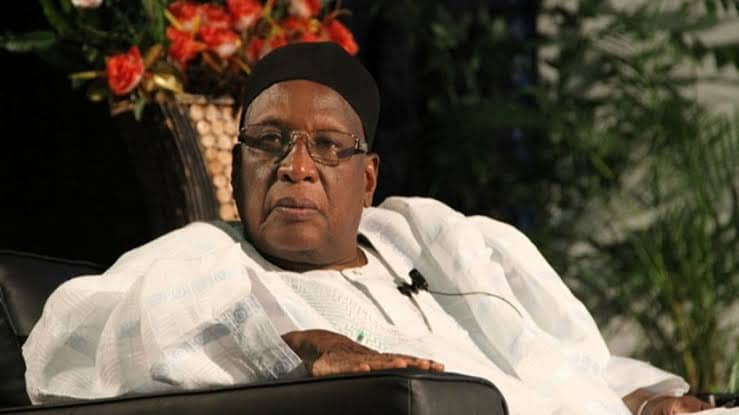

Regional Leaders Express Grief Over Veteran Statesman
GOMBE — The Chairman of the Northern Nigeria Governors’ Forum (NNGF) and Governor of Gombe State, Muhammadu Inuwa Yahaya, has expressed profound grief over the death of Alhaji Bamanga Tukur, an elder statesman whose career spanned pivotal roles from state governance to national economic development and party leadership. Alhaji Tukur, a former Governor of the old Gongola State, former National Chairman of the Peoples Democratic Party (PDP), and a former Minister of Industries, passed away on Saturday, September 12, 2026.
In a condolence message issued on behalf of his colleagues in the NNGF, Governor Yahaya described the passing of the veteran administrator, politician, and businessman as a monumental loss to Northern Nigeria and the nation at large. A statement by Ismaila Uba Misilli, Director-General of Press Affairs at the Gombe Government House, quoted Yahaya as noting that Nigeria had lost one of its most experienced public servants, political leaders, and champions of economic development, whose contributions shaped various facets of the nation's progress.
Yahaya highlighted Tukur’s extensive career, recalling that the deceased devoted more than six decades to public service, business, politics, and national development. His dedication saw him contribute significantly to the country's administrative and political frameworks, leaving an indelible mark on generations of Nigerians through his service in several strategic capacities throughout his life.
A Life of Diverse National Service
Born on September 15, 1935, Alhaji Bamanga Tukur's journey in public service began early, marking him as a figure deeply involved in Nigeria's post-independence development and growth. His career trajectory showcased a rare versatility, moving seamlessly between critical sectors of national life.
From Public Administration to Party Leadership
One of his earliest significant appointments was as the General Manager and Chief Executive of the Nigerian Ports Authority (NPA), a critical institution for the nation's economic lifeline. In this role, he was instrumental in shaping the country's maritime sector, overseeing operations vital for trade and commerce and contributing significantly to national revenue generation.
His foray into executive governance saw him serve as the Governor of the old Gongola State, a significant administrative entity that encompassed parts of present-day Adamawa and Taraba states. His tenure as governor provided him with direct experience in regional development and administration, addressing the needs of a diverse populace and laying foundational structures for local governance.
Later, he brought his extensive experience to the federal level as the Minister of Industries, where he played a crucial role in formulating policies aimed at fostering industrial growth and diversification within the Nigerian economy. His efforts in this ministry were geared towards strengthening the nation's manufacturing base and promoting self-sufficiency.
Beyond his administrative and executive roles, Alhaji Tukur also rose to prominence in the political arena, notably serving as the National Chairman of the Peoples Democratic Party (PDP). His leadership at the helm of one of Nigeria's major political parties underscored his influence and commitment to democratic processes and party politics, guiding the party through significant periods in the nation's political history. Throughout these varied capacities, Tukur was consistently recognized for his dedication to national development, his strategic vision, and his ability to navigate complex administrative and political landscapes.
National Leaders and Political Institutions Mourn
The news of Alhaji Tukur's passing resonated across the nation, drawing condolences from the highest echelons of government and political life. President Bola Tinubu, representing the federal government, joined the chorus of mourners, acknowledging Tukur's profound impact on Nigeria and his enduring legacy of service.
The Peoples Democratic Party (PDP), the political platform Tukur once led as National Chairman, also issued a statement expressing deep sorrow at the loss of one of its revered elders and foundational figures. Former Senate President Bukola Saraki, another prominent political figure, also conveyed his condolences, highlighting Tukur's contributions to the nation's political landscape and his role as a mentor to many.
Tukur passed away on Saturday, September 12, 2026, in Abuja, following what his family described as a prolonged illness. The announcement was made by his son, Awwal Tukur, who serves as the Secretary to the Adamawa State Government, adding a personal dimension to the public grief and confirming the details of his father's passing.
The family's statement, released with profound sadness and total submission to the will of Almighty Allah, described Alhaji Bamanga Mohammed Tukur as a "beloved father and patriarch" who dedicated his life to service. It further emphasized his unwavering commitment not only to his immediate family but also to his community, Adamawa State, and the entirety of Nigeria, underscoring the breadth of his influence and affection across various spheres.
Final Rites and a Legacy Honored
Alhaji Tukur's long and impactful life concluded at the age of 90. Born on September 15, 1935, his passing on September 12, 2026, meant he would have celebrated his 91st birthday just three days later, a poignant note on a life well-lived and extensively dedicated to public service and national development.
Community Gathers for Burial
Details regarding the final arrangements for the elder statesman were promptly disclosed by his family, ensuring that his community and admirers could pay their last respects. The burial was scheduled for Sunday, September 13, 2026, at 10 a.m., a day after his passing.
The solemn ceremony took place at the Lamido’s palace, a location that signifies his deep roots and respected status within the traditional and cultural fabric of his home region. This choice of venue allowed for a dignified farewell befitting a figure of his stature, bringing together family, political associates, and community members to honor his memory and legacy of service to Nigeria.