

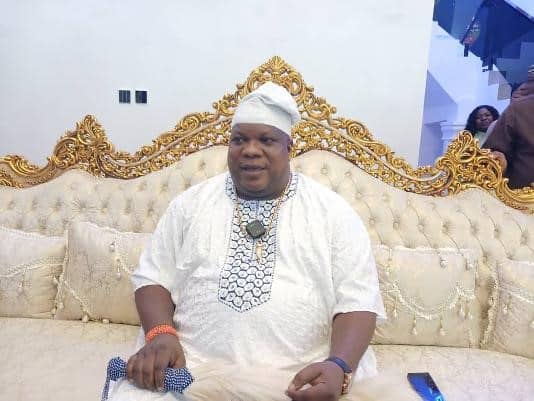

Ogun Monarch Demands Thorough Vetting for Next Governor
A prominent monarch in Ogun State has issued a public call for a rigorous vetting process to be applied to any individual aspiring to succeed the current governor, Dapo Abiodun, in the lead-up to the 2027 elections. This directive underscores a perceived need for heightened scrutiny in the selection of the state's next chief executive, emphasizing adherence to specific, comprehensive standards of evaluation.
The monarch articulated that the next governor of Ogun State must undergo careful examination across a defined set of criteria. These include demonstrated competence, a verifiable track record, impeccable character, and a reputable family background. The explicit emphasis on these attributes signals a demand for a holistic assessment of candidates, moving beyond mere political affiliation or party loyalty to a deeper understanding of an individual’s suitability for high office.
According to the monarch, the caliber of leadership that ultimately emerges from the 2027 electoral cycle will have profound and far-reaching consequences for the future trajectory of Ogun State. This statement highlights the critical importance attributed to the upcoming elections, framing them as a pivotal moment that will determine the long-term governance, stability, and development of the region.
Defining the Standards for State Leadership
In detailing the essential requirements for the next gubernatorial candidate, the monarch specified that competence must serve as a primary and non-negotiable factor in the evaluation process. This implies a thorough verification of a candidate's technical abilities, administrative acumen, and professional capabilities. It suggests an expectation that the individual possess the necessary skills to effectively manage state affairs, formulate sound policies, and oversee their implementation for the benefit of the populace.
Furthermore, the monarch underscored the critical necessity of assessing a candidate's track record. This aspect of the vetting process would require an exhaustive examination of past actions, achievements, and responsibilities, presumably within public service, corporate leadership, or other relevant professional domains. The aim is to establish a consistent history of performance, problem-solving, and successful leadership, providing concrete evidence of their capacity to deliver on promises and navigate complex challenges.
The requirement for a comprehensive character assessment indicates that personal integrity, ethical conduct, and moral fortitude are viewed as indispensable qualifications for the governorship. This dimension of scrutiny would delve into a candidate's reputation for honesty, transparency, and adherence to ethical principles, ensuring that public trust can be confidently placed in their leadership. A leader's character is seen as foundational to good governance and the prevention of corruption.
Significantly, the monarch’s inclusion of family background in the list of required examinations adds another layer to the vetting process. This suggests that familial associations, reputation, and the broader societal standing of a candidate's family are considered relevant to their suitability for high office. It implies an expectation that the candidate comes from a background that aligns with the values of public service and does not carry any baggage that could compromise their impartiality or the state's image.
Traditional Authority Shapes Political Discourse
The pronouncement from an Ogun State monarch carries significant weight within the local political landscape. Traditional rulers in Nigeria, while not holding direct executive power, often serve as influential custodians of culture, community welfare, and moral values. Their statements can profoundly impact public opinion and guide the expectations of the electorate, particularly in matters concerning leadership and governance.
In many Nigerian communities, traditional institutions play a crucial role in maintaining social cohesion and acting as a bridge between the government and the populace. When a monarch makes such a definitive call for rigorous vetting, it signals a strong desire from a respected community leader for accountability and quality leadership. Such interventions are often seen as a reflection of the aspirations and concerns of the people they represent, thereby influencing the political calculations of aspirants and parties alike.
Setting the Agenda for Ogun's 2027 Elections
The call for rigorous screening emerges as political attention gradually begins to pivot towards the 2027 elections in Ogun State. With Governor Dapo Abiodun currently serving his term, the monarch’s comments introduce an early and public expectation for heightened accountability and transparency in the process of selecting his eventual replacement. This pre-emptive declaration sets a high bar for all potential aspirants and their respective political parties.
Anticipating Political Shifts and Accountability
By stressing that the quality of leadership chosen in 2027 will significantly impact the future of Ogun State, the monarch has effectively framed the upcoming election as a pivotal moment for the region. This statement implies that the decisions made during this period will not only determine who holds power but also shape the state's developmental trajectory, economic stability, and social welfare for years to come. Political actors are thus put on notice that the selection process will be under intense public scrutiny, driven by these specified criteria.
The demand for thorough screening serves as a potent public reminder to political parties, aspiring candidates, and voters alike regarding the elevated standards expected for the office of the governor. It establishes a clear benchmark against which future candidates may be measured, potentially influencing how political parties conduct their primaries, select their nominees, and how the electorate ultimately evaluates them at the polls. This could lead to a more merit-based approach to candidate selection, rather than one solely driven by political expediency.
Long-Term Vision for State Development
The monarch’s assertion that the quality of leadership will have far-reaching consequences highlights the substantial stakes involved in the 2027 elections. This perspective aligns with the understanding that gubernatorial decisions directly affect critical areas such as infrastructure development, the effectiveness of policy implementation, the provision of social services, and the overall economic health of the state. A leader with strong competence and character is seen as essential for fostering sustainable growth and ensuring equitable distribution of resources.
As of now, no other political parties or prominent stakeholders have provided immediate public responses to these specific demands for vetting. The monarch’s statements therefore stand as a singular, yet impactful, public call for specific and elevated standards in the upcoming political process within Ogun State, potentially setting an early tone for the electoral discourse.