

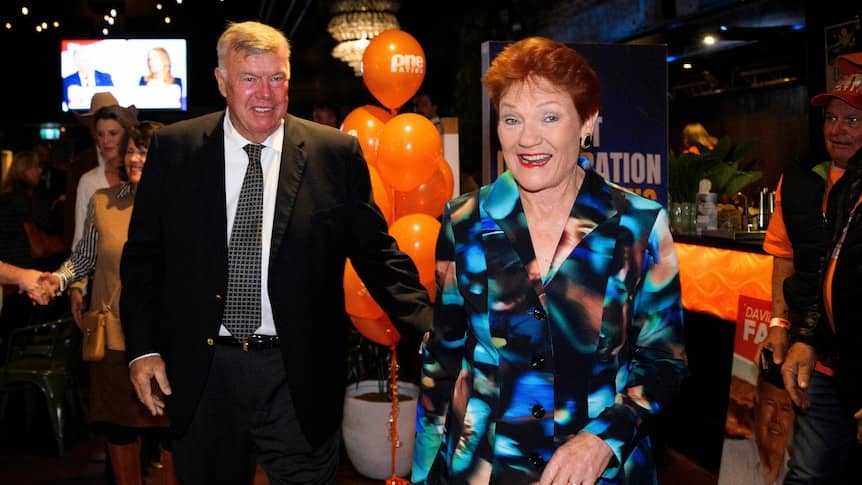

Hanson Intervenes Over MP's Migration Comparison
One Nation leader Pauline Hanson has swiftly intervened following comments made by her party’s member of parliament, David Farley, regarding the organization's immigration policies. The intervention occurred as the party prepares for a significant political test in Western Australia, underscoring the sensitivity of its core policy positions.
Farley told ABC Insiders that One Nation’s proposed migration cuts would result in an annual intake of approximately 230,000 people. Crucially, he stated that this figure is "not too different" from the current government's migration numbers. This comparison drew an immediate and firm correction from Hanson, who subsequently wrote to clarify the party's official stance, highlighting a divergence between the parliamentary member’s public statements and the leadership’s carefully crafted policy positioning.
The party leader’s response emphasizes the importance of maintaining a distinct ideological boundary, particularly on an issue as central to One Nation's platform as immigration. Farley’s remarks came during an interview focused on the party’s broader platform, just as it gears up for upcoming electoral contests where its immigration policies are expected to be a key differentiator.
Farley's Remarks on ABC Insiders
During his appearance on ABC Insiders, David Farley articulated One Nation's proposed annual migration rate of around 230,000. His subsequent assertion that this figure was "not too different" from the government's current intake immediately raised questions about the party's commitment to significantly reducing immigration, a cornerstone of its appeal to many voters. For One Nation, a party built on a strong anti-immigration platform, any suggestion of policy alignment with the incumbent government could be seen as undermining its unique selling proposition and its image as a radical alternative.
Hanson's rapid intervention was designed to reassert the party's firm position and prevent any confusion among its base or the broader electorate. The correction aimed to ensure that One Nation's message on immigration remains clear and distinct from that of the major parties, especially as it faces a critical by-election.
High-Stakes By-Election in Western Australia
One Nation is currently facing what has been described as its first real test in Western Australia during the Secret Harbour by-election. This contest is being characterized as high-stakes for the party, which has seen growing appeal in recent political cycles across the country. The by-election serves as a critical indicator of the party's standing in the state and its ability to translate broader national sentiment into local electoral success.
The intensity of the race was evident when Liberal leader Basil Zempilas and One Nation’s candidate for Secret Harbour, Luke Herdegen, were observed at an early voting centre on Monday. Their presence signaled active engagement from both major contenders, underscoring the importance attributed to the outcome of this specific contest. Political observers note that the results from Secret Harbour will provide valuable data on the viability of One Nation’s platform in a specific regional context, particularly how its core messages resonate with local constituents.
One Nation's Regional Immigration Strategy
Beyond the discussion of total migration numbers, David Farley also outlined specific distribution strategies central to One Nation’s immigration policy. The party aims to fundamentally redirect immigration flows, moving them away from major cities and into regional communities across the country. This approach is intended to serve a dual purpose: to alleviate population pressures and infrastructure strain in congested urban centers, while simultaneously supporting economic and demographic growth in less populated regional areas.
This strategy marks a distinct shift in how the party proposes to manage demographic changes, presenting a more nuanced approach than a simple call for reduced numbers. By focusing on regional redistribution, One Nation seeks to address concerns about urban sprawl and regional decline, potentially broadening its appeal to voters in areas grappling with these issues. This policy detail forms a significant part of the party's broader platform, which heavily emphasizes immigration and border control issues as key pillars of its alternative vision for the country.
Migration Debate Intensifies Ahead of Poll
The comments regarding migration rates by David Farley were made on August 23, 2026. This timing is particularly significant as it coincides directly with the critical lead-up to the Secret Harbour by-election, where voter sentiment on immigration is expected to be a pivotal factor. The proximity of Farley's remarks to such a crucial electoral contest amplified the need for a swift and decisive response from the party leadership.
Farley’s comparison of One Nation’s proposed numbers to those of the Labor government has drawn considerable attention to the perceived similarities in policy outcomes, despite the parties' vastly differing rhetorical approaches. This perception of similarity could potentially dilute One Nation's message as a distinct alternative, making Hanson’s subsequent intervention all the more critical. Her actions underscore the extreme sensitivity of these comparisons within the broader political discourse, especially when a party's core identity is at stake.
Maintaining a Distinct Ideological Stance
The divergence between David Farley’s statements and Pauline Hanson’s corrections will undoubtedly influence how One Nation presents its platform to voters, particularly those in Western Australia. By clarifying that the party’s proposed migration rate is definitively not "not too different" from the government's, Hanson seeks to reinforce and maintain a distinct ideological boundary for One Nation. This boundary is crucial for the party to differentiate itself from mainstream political offerings and to appeal to voters who are specifically looking for a more restrictive and controlled approach to immigration.
As the Secret Harbour by-election approaches, the focus remains squarely on how these policy distinctions resonate with constituents. The outcome of this contest will likely serve as a vital barometer, informing One Nation's future strategies regarding immigration rhetoric and the precise formulation of its policies at both state and federal levels. The incident highlights the constant balancing act required by political parties to maintain internal cohesion while projecting a clear and consistent message to the electorate.