

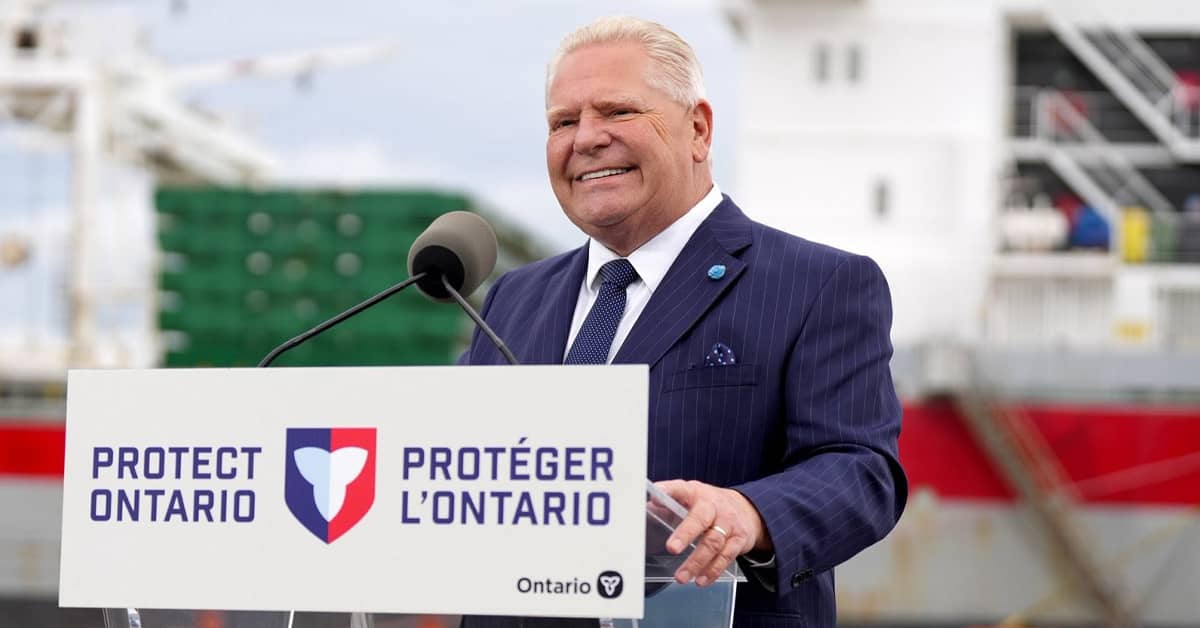

Ontario Government Resists Naming Speeding Ministers
The Ontario government, led by Premier Doug Ford, is actively engaged in a concerted effort to prevent the public disclosure of identities belonging to cabinet ministers whose official government vehicles have been cited for speeding infractions. This resistance centers on the administration's argument that releasing such information would constitute an unwarranted invasion of the ministers' personal privacy and could expose their confidential "travel habits."
This ongoing dispute stems from records obtained through Freedom of Information (FOI) requests, which brought to light numerous instances of government-assigned vehicles accumulating speeding tickets. Despite the factual existence of these records and the clear documentation of the infractions, the Ford government has steadfastly maintained its position that the names of the ministers associated with these violations must remain confidential, setting up a direct conflict between government secrecy and public accountability.
Global News Uncovers Vehicle Violations
The entire issue surfaced following a comprehensive investigation conducted by Global News. This journalistic endeavor meticulously secured data pertaining to traffic tickets issued to vehicles specifically assigned for the use of cabinet members. The investigation critically leveraged Freedom of Information protocols to access these official records, thereby initiating a significant public inquiry into the provincial government's approach to transparency and the handling of disclosures involving its highest-ranking officials.
Consistent Speeding Beyond Legal Limits
A key finding from the information obtained by Global News revealed a pattern of significant disregard for speed limits. On average, the government vehicles involved in these documented incidents were traveling 17 kilometers per hour above the posted speed limit. This data is particularly salient as it indicates that the offenses were not merely marginal or accidental infractions, but rather consistent and notable violations across multiple recorded instances, raising questions about adherence to traffic laws by those in public office.
Financial Impact of the Infractions
Beyond the specifics of speed, the Global News investigation also shed light on the financial implications of these violations. The average cost associated with each speeding ticket issued to these government vehicles was determined to be $144. This figure represents the typical fine levied for each offense recorded within the extensive documentation secured through the Freedom of Information requests, highlighting the monetary consequence of these repeated infractions.
Privacy Claims Clash with Public Right-to-Know
At the heart of the current standoff lies a fundamental conflict between the government's interpretation of privacy laws and the principles underpinning the public's right to information. The Ford government's unwavering stance is that the specific identity of the minister operating a government vehicle at the time of a speeding infraction falls squarely within the realm of personal privacy, thus justifying its refusal to release the names.
Government's Rationale for Withholding Identities
Officials within the administration have explicitly cited the protection of ministers' "travel habits" as a paramount reason for withholding their specific names. The argument put forth suggests that revealing which ministers were involved in speeding incidents could inadvertently lead to unwarranted scrutiny of their personal schedules, routes, and movements. The government contends that such details are inherently private and should be shielded from public exposure, even when connected to infractions committed in publicly funded vehicles.
This rationale frames the debate not just around individual speeding tickets, but around a broader concern for the security and personal space of elected officials. However, critics argue that when public resources, such as government vehicles, are involved in legal violations, the public has a legitimate interest in knowing who is accountable, irrespective of their official position or personal movements.
Freedom of Information as a Catalyst for Dispute
The disagreement over disclosure is directly attributable to the Global News report, which served as the initial catalyst by bringing these previously undisclosed records into the public domain. The publication's strategic utilization of Freedom of Information requests was instrumental in establishing the baseline data, detailing both the average speed violations and the associated financial costs. This proactive journalistic approach directly prompted the government's defensive and resistant response regarding the release of identifying information, transforming a collection of traffic tickets into a significant transparency debate.
Broader Implications for Government Transparency
The government's steadfast refusal to release the names of the speeding ministers has significant implications, drawing considerable attention to the broader mechanisms and challenges of government transparency, particularly in cases involving high-ranking elected officials. While the raw data concerning the speeds and fines has been made public, the crucial linkage of these violations to specific cabinet members remains deliberately obscured by the administration's persistent privacy claims.
The Vital Role of Freedom of Information Requests
This entire investigation powerfully underscores the indispensable utility of Freedom of Information requests as a critical tool for public oversight and accountability. Such requests enable journalists and citizens alike to uncover administrative details and government actions that might otherwise remain opaque or entirely hidden from public view. The Global News report, in particular, relied entirely on these legal mechanisms to obtain the precise statistics, including the average 17 km/h over-limit speed and the average $144 ticket cost, demonstrating their effectiveness in fostering governmental transparency.
FOI laws are designed to ensure that governments are accountable to their citizens, allowing access to information that impacts public interest. The current situation tests the boundaries of these laws, pitting the public's right to know against the government's interpretation of personal privacy for its officials.
Ongoing Battle for Full Disclosure
As of the most recent reporting, the Ontario government continues its active opposition against the full disclosure of the ministers' identities. The records confirming the speeding incidents are undeniably present within the documents obtained by Global News, detailing the infractions themselves. However, the specific names attached to those violations, which would provide complete accountability, are being withheld from the public domain, leaving a critical gap in the information available to citizens about the conduct of their elected representatives.