Full story
Reaction to AAP Leadership Suspension
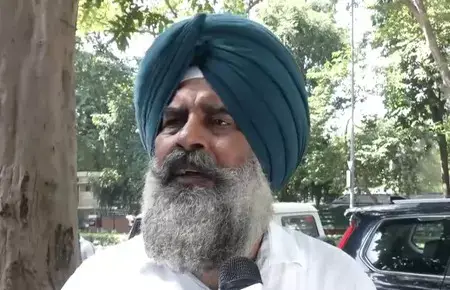
Punjab Congress President Pargat Singh has criticized Aam Aadmi Party (AAP) national convenor Arvind Kejriwal, describing him as a "true dictator" in response to the party's suspension of one of its own leaders. The remarks followed the decision by AAP to suspend the primary membership of serving legislator Sukhveer Singh Maiserkhana.
Singh directed his criticism at the speed and nature of the party's disciplinary action against Maiserkhana, who had publicly criticized the state government's handling of education and health services. Speaking to IANS on Sunday, Singh stated, "This is the true face of the Aam Aadmi Party. They used to showcase a model of education and health. But one of their own MLAs said that proper arrangements for education are not in place. Within two hours—this is dictatorship. Kejriwal is a pure dictator. He is one thing to show and another thing in practice."
The suspension of Maiserkhana, the AAP MLA from Maur, came after he broke down during a live Facebook video on Saturday. During the broadcast, the legislator criticized his own government for shortages of teachers in government schools, stating that he had repeatedly raised the issue with authorities without resolution. The party cited alleged anti-party activities and indiscipline as the reasons for suspending his primary membership.
Concerns Over Institutional Trust and Law and Order
In addition to commenting on AAP's internal discipline, Singh addressed broader concerns regarding governance in Punjab. He argued that the state's law and order situation is compromised due to a lack of professionalism among political and police leadership. "There was a lack of will in political and police leadership in the state," Singh said, adding that "two, three, or four murders are happening every day."
Singh linked these security concerns to a wider erosion of public confidence in governance structures. "When you demolish institutions, it is natural that a situation arises which, I believe, creates chaos. Today, in our country, we are losing trust in institutions, or losing trust in a political system," he said.
Addressing recent protests against Chief Election Commissioner Gyanesh Kumar, Singh distinguished between criticism of individuals and the degradation of systemic integrity. "Losing trust in an individual is one thing, but when institutions get demolished, that is a huge loss for the country," he stated. He concluded his remarks on this topic by referencing a common saying: "As they say, a person dying is not true death, but the death of their conscience is true death."
Leadership Transition in Punjab Congress
Singh's comments come shortly after his appointment as the new president of the Punjab Pradesh Congress Committee (PPCC). He assumed the role following the resignation of Amarinder Singh Raja Warring from the post, marking a significant shift in the party's leadership structure within the state.
As the newly installed PPCC chief, Singh has used his platform to highlight both internal contradictions within rival parties and systemic failures in governance. His characterization of Kejriwal as a "pure dictator" underscores the intensifying political rhetoric ahead of future electoral cycles, while his warnings about institutional decay reflect a broader critique of the current political climate.
The suspension of Maiserkhana has drawn attention to the AAP's internal disciplinary mechanisms, with Singh suggesting that such swift actions reveal a lack of democratic practice within the party. Meanwhile, his observations on Punjab's law and order situation point to what he views as a critical failure in leadership professionalism.
Singh's dual focus on intra-party dynamics and inter-institutional trust illustrates the complexity of his political messaging. By linking the AAP's disciplinary actions to broader themes of institutional erosion, he attempts to frame the party's internal issues as symptomatic of larger democratic deficits.
The context of his appointment adds weight to these criticisms, as Singh now holds a pivotal position in shaping the Congress party's narrative in Punjab. His immediate engagement with high-profile political controversies signals an aggressive approach to defining the party's stance on key governance and democratic issues.