

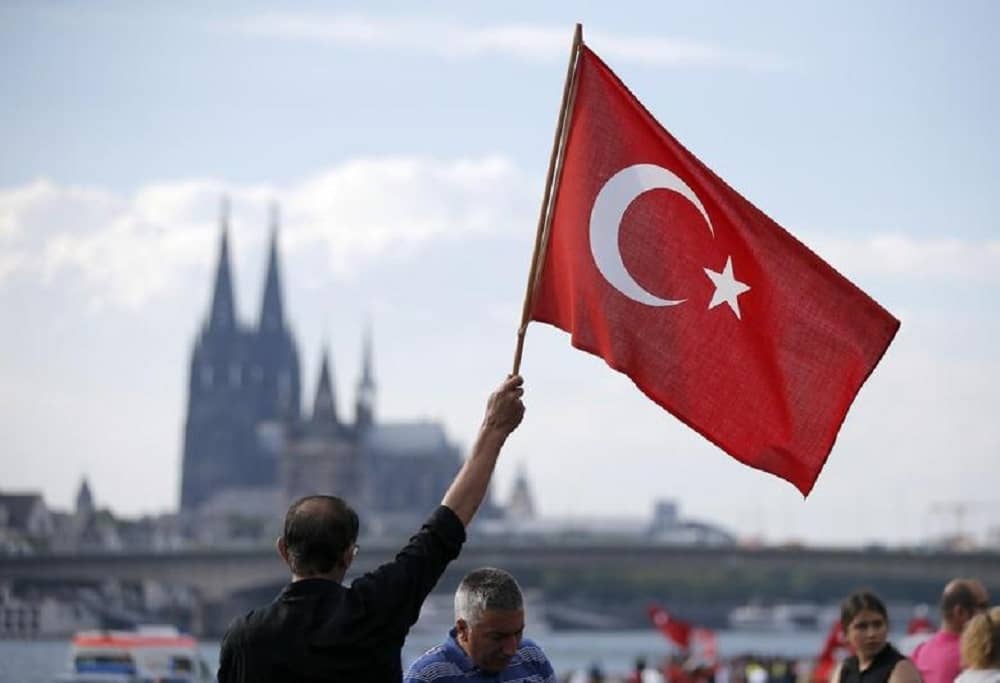

Phar Kim Beng's Warning on Anti-Turkiye Rhetoric
Phar Kim Beng, a prominent commentator, has issued a significant public warning concerning the escalating nature of political discourse directed towards both modern Turkiye and its historical predecessor, the Ottoman Empire. He has unequivocally characterized such language as inherently hazardous. In a commentary that appeared on July 1, Beng articulated a clear stance, asserting that any form of rhetoric expressing opposition to Turkiye or undermining the Ottoman legacy is not merely problematic but profoundly dangerous. He stressed that this issue demands immediate and concerted attention from the international community, underscoring its potential for widespread instability.
Writing for the esteemed Malay Mail, within its dedicated "What You Think" section—a platform for opinion and analysis—Beng did not mince words regarding the urgency of his message. He specifically emphasized that the global community must "sit up and pay attention" to these particular forms of political expression, indicating a perceived lack of adequate awareness or concern among international observers. The commentary's publication date was noted as July 1; however, an intriguing detail emerged from the URL structure, which indicated the year 2026, suggesting a forward-looking or perhaps a specific contextual placement for this critical warning. This call to action from Beng highlights a growing concern over how historical narratives and contemporary political criticisms are being framed and disseminated, particularly when they target a nation and its profound historical roots.
Shifting Geopolitics and Historical Echoes
Iran's Past Centrality in Regional Strategy
Beng’s pointed commentary is strategically positioned against a complex and rapidly evolving backdrop of geopolitical alignments across the Middle East. The source material indicates a significant historical precedent: for a substantial period spanning the last two decades, Iran consistently held the central position in Israel’s strategic imagination. This enduring focus on Iran has, for approximately twenty years, been the primary determinant and defining characteristic of regional security frameworks, shaping alliances, rivalries, and defense postures throughout the area.
The very existence of Beng's warning suggests a critical need to re-evaluate and potentially recalibrate current diplomatic and political narratives, especially as the region navigates new power dynamics. By drawing attention to the inherent dangers embedded within anti-Turkiye and anti-Ottoman rhetoric, Beng implicitly argues that the traditional, Iran-centric lens through which regional security has been viewed may no longer be sufficient or entirely accurate. His intervention underscores the persistent and undeniable relevance of historical empires in shaping contemporary international relations.
Turkiye's Ottoman Legacy in Modern Discourse
The comprehensive warning articulated by Beng delves deeply into the intricate and often fraught relationship between modern state identities and their foundational historical legacies. Turkiye, by virtue of its direct succession to a significant portion of the Ottoman territorial and cultural domain, frequently occupies a pivotal position at the nexus of these intense rhetorical debates. Its contemporary identity is inextricably linked to its imperial past, making it a natural focal point for discussions that blend historical interpretation with current political agendas.
By explicitly categorizing anti-Ottoman rhetoric as dangerous, in parallel with anti-Turkiye sentiment, Beng establishes a crucial link: he suggests that contemporary political criticism, when aimed at the Ottoman past, is not merely historical revisionism but can be interpreted as a form of historical erasure or antagonism designed to undermine modern Turkiye. This deliberate pairing highlights the profound continuity between the historical empire and the modern nation-state. The commentary strongly implies that any attempts to dismiss, denigrate, or outright attack these intertwined historical and modern identities carry substantial risks, potentially jeopardizing not only regional stability but also the delicate fabric of diplomatic relations. The Ottoman Empire, a vast and influential entity that directly preceded the establishment of the modern Republic of Turkiye, continues to serve as an exceptionally significant and often contentious reference point within regional political discourse, influencing national identities, territorial claims, and strategic considerations to this day. This historical weight means that rhetoric targeting the Ottoman legacy is not merely an academic exercise but carries tangible geopolitical implications.
Commentary's Platform and Diplomatic Ramifications
Malay Mail as a Forum for International Analysis
Phar Kim Beng’s significant commentary found its publication home on the Malay Mail website, a prominent Malaysian news portal. The piece was specifically categorized under the section titled "What You Think," a designation that clearly indicates its nature as an opinion or analytical column rather than a straight news report. This placement underscores Beng's role as a commentator offering a particular perspective on international affairs, designed to stimulate thought and discussion among the publication's readership.
The Malay Mail platform itself is characterized by a broad and diverse range of news items and analyses. Alongside Beng's international relations piece, the website regularly features reports on pressing domestic and global issues. Recent examples of its extensive coverage include detailed accounts of Malaysia’s strategic approach to navigating the complexities of the global fuel crisis through a policy of neutrality, as well as timely updates on significant local political developments within Malaysia. Furthermore, the site has provided coverage on various other topics, such as ongoing disputes involving former auditor-generals, reports from major international sports events like the Bahrain F1 Grand Prix, and insightful diplomatic notes concerning the evolving ties between Malaysia and China. This wide array of subjects effectively illustrates the comprehensive breadth of the publication’s journalistic scope. Within this diverse editorial landscape, Beng’s commentary stands out for its specific and focused attention on the critical interplay between international relations and the enduring power of historical rhetoric, particularly as it pertains to Turkiye and its Ottoman heritage.
Global Actors Urged to Reassess Narratives
Phar Kim Beng’s emphatic assertion that the world must actively "pay attention" to this specific brand of rhetoric carries profound implications for diplomatic discourse. His warning strongly suggests that anti-Turkiye and anti-Ottoman sentiments may not only be gaining undesirable traction within various political and media circles but could also be actively contributing to significant diplomatic friction and exacerbating existing tensions on the international stage. The urgency embedded in his call for heightened awareness implies a critical assessment: that current political narratives and discussions concerning Turkiye and its foundational historical predecessor, the Ottoman Empire, are not being approached or evaluated with the necessary degree of caution and foresight by a range of global actors, including policymakers, academics, and media outlets.
Beng’s commentary thus emerges as a distinct and authoritative voice amidst the broader, ongoing discussion regarding the multifaceted ways in which historical empires continue to exert influence over modern geopolitical strategies and national identities. By unequivocally framing anti-Turkiye and anti-Ottoman rhetoric as inherently dangerous, Beng effectively elevates these sentiments from mere political opinion to tangible threats. He positions them as forces that demand rigorous monitoring and, crucially, proactive correction by the international community, emphasizing that their unchecked proliferation could have destabilizing effects far beyond mere verbal sparring. This perspective underscores the idea that historical narratives are not static but are actively weaponized in contemporary politics, necessitating a careful and considered global response. While the article refrains from providing specific examples of the rhetoric being condemned, or detailing the precise consequences that might emanate from such discourse, its purpose is clear. It functions as a broad, overarching statement, urgently appealing to international observers and policymakers alike to fully grasp and acknowledge the profound potential harms inherently associated with this particular and potent type of political language.