Full story
Consolidating a Unified Regulatory Framework
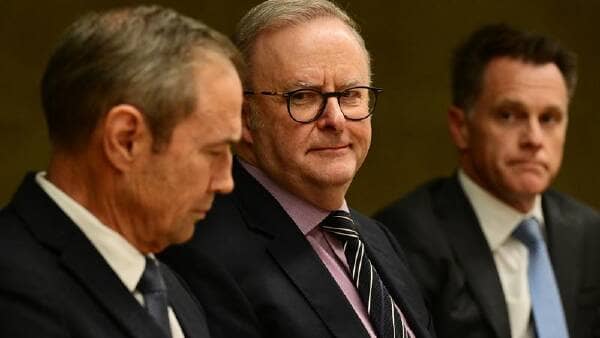
Prime Minister Anthony Albanese is pursuing a cohesive national strategy to regulate artificial intelligence data centres, aiming to establish a single set of guidelines that apply across all Australian jurisdictions. The push for uniformity follows recent discussions at a national cabinet meeting held in Sydney on Wednesday, where leaders deliberated on the structure of these emerging regulations.
Albanese emphasized the necessity of avoiding a fragmented landscape of rules. He stated that implementing eight different regulatory systems across the country would be inefficient and detrimental to the industry's development. Instead, the government is working toward a common position that acknowledges the unique challenges faced by individual states while maintaining a consistent national standard.
"We have buy-in on Australia's national AI laws," Albanese told reporters during the event. He expressed confidence that all jurisdictions would contribute to the framework, ensuring that every state and territory makes a difference in the implementation process. The Prime Minister noted that the goal is to prevent disparate systems from operating simultaneously, which could create compliance hurdles for developers.
Energy Mandates and Regional Opposition
A central component of the proposed national agreement involves specific requirements for the energy sources powering these facilities. The draft regulations include a mandate requiring AI data centre developers to provide renewable energy for their operations. This provision has been identified as a contentious point in the negotiations, drawing sharp criticism from certain regional governments.
Queensland and the Northern Territory have voiced strong opposition to the renewable energy requirement. Both jurisdictions are advocating for a different approach, arguing that data centres should be supported by coal and gas reserves rather than being restricted to renewable sources. This stance highlights a divergence in economic priorities between states with significant fossil fuel industries and those prioritizing green energy transitions.
Despite this backlash, Albanese maintained that a unified approach remains essential. He acknowledged that while states have different issues at play, the collective benefit of a standardized national policy outweighs the benefits of localized regulatory freedom. The Prime Minister indicated that the government is committed to moving forward with every single jurisdiction making a difference in the rollout of these laws.
Progress Toward National Agreement
The trajectory toward a national agreement on guidelines for AI data centres appears to be advancing, even as political disagreements persist. Following the national cabinet discussions, confidence is growing among national leaders that a consensus can be reached on the looming regulations. The Prime Minister described the current state of negotiations as having broad support, suggesting that the core framework is nearing completion.
Albanese stated that he is very confident that the government will move forward with the national AI laws. This optimism stems from the belief that the benefits of a unified regulatory environment justify the compromises required to secure agreement from all parties. The government's position is that recognizing the diversity of state challenges does not preclude the need for a common position.
The proposed regulations aim to balance the rapid growth of the AI sector with environmental and economic considerations. By requiring renewable energy, the guidelines seek to align the expansion of data infrastructure with Australia's broader climate goals. However, the resistance from Queensland and the Northern Territory underscores the complexity of achieving national unity on issues that directly impact local economies.
As the negotiations continue, the focus remains on securing buy-in from all jurisdictions. The Prime Minister’s assertion that there is sufficient support to proceed suggests that the government believes it can bridge the gap between those advocating for renewable mandates and those favoring traditional energy sources. The outcome of these talks will determine whether Australia adopts a single, cohesive regulatory framework or allows regional variations to persist.
The national cabinet meeting served as a critical forum for aligning these diverse perspectives. Leaders used the platform to discuss not only the technical aspects of regulation but also the economic implications of energy choices. The resulting dialogue has clarified the positions of opposing parties while reinforcing the government's commitment to a unified approach.
With the agreement edging closer, stakeholders are watching closely to see how the final guidelines will address the concerns of both renewable energy proponents and fossil fuel-dependent regions. The Prime Minister’s confidence in achieving broad consensus indicates that the government views this national unity as achievable and necessary for the future of Australia's AI industry.