


President Ruto Addresses Scrutiny Over Official Travels
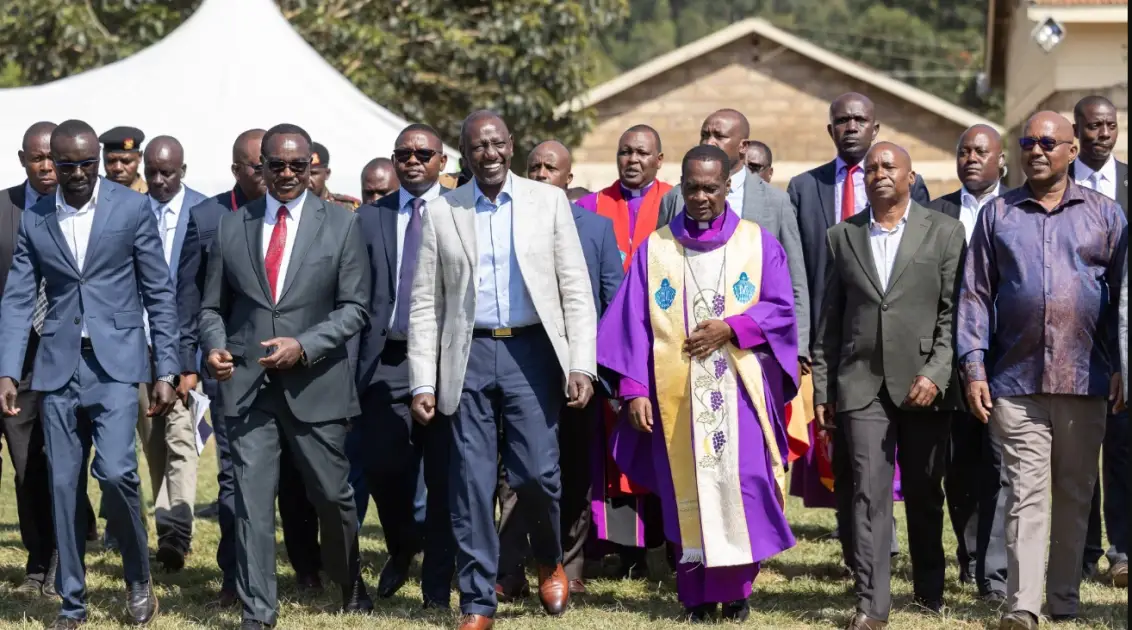
President William Ruto convened a significant gathering of his supporters in Meru town on Sunday, utilizing the public forum to directly address and counter persistent scrutiny surrounding his administrative conduct and the stance of his political opposition. The President specifically used the rally as a platform to robustly defend his recent schedule of official travels, which he characterized as being subjected to unwarranted criticism from political opponents.
During his comprehensive address, President Ruto directly engaged with detractors who have publicly questioned both the frequency and the stated purpose of his official trips. He meticulously framed these criticisms not as legitimate administrative oversight or concerns, but rather as an integral part of a broader, politically motivated narrative. While emphasizing his commitment to national duties, the President did not, however, delve into specific details concerning the destinations or precise dates of the contested trips during this particular segment of his speech, choosing instead to focus on the political motivations behind the critiques.
President Issues Firm Warnings on Student Unrest and Parental Duty
A central and emphatic component of President Ruto’s address in Meru involved a stern warning directed at students who have been implicated in recent disruptions affecting learning institutions across Kenya. Acknowledging the widespread nature of the unrest that has impacted schools nationwide, the President unequivocally stated that "choices have consequences" for all individuals involved in such disruptive activities, underscoring the serious repercussions that students could face.
Beyond the direct warning to students, President Ruto also directed specific and pointed advice to parents. He urged them to assume a greater and more proactive responsibility for their children’s moral and social development, highlighting that this crucial role extends beyond the capabilities of educational institutions alone. The President asserted that "a school can educate a child but it cannot raise one," thereby delineating the distinct roles of parents and educators. He passionately called upon parents to maintain a strong and present involvement in their children's lives, positing that such engagement is fundamental to preventing future instances of school unrest and fostering a stable learning environment.
Government Commits to Massive Teacher Recruitment
In conjunction with his comments on the critical importance of school stability and effective learning environments, President Ruto announced significant financial commitments aimed squarely at addressing persistent staffing shortages within the nation's education sector. He confirmed that the government has specifically allocated funds within the current national budget for the immediate recruitment of 24,000 new teachers.
The President described this ambitious recruitment drive as an absolutely necessary and strategic step designed to alleviate the long-standing and persistent shortfalls in the teaching workforce across various educational levels. This initiative is expected to bolster the capacity of schools to deliver quality education and manage student populations more effectively. However, during the rally, no specific timeline for the comprehensive completion of these substantial hires was provided, leaving the exact implementation schedule open.
New Accountability Framework for Local Administrators Takes Shape
President Ruto further introduced significant and far-reaching changes to both the compensation structure and the accountability framework governing local government administrators. This new framework specifically targets chiefs, assistant chiefs, and village elders, aiming to enhance their effectiveness and responsibility at the grassroots level. A key announcement was that village elders, who play a crucial role in community governance, would begin receiving government stipends, marking a formal recognition and financial commitment to their services. This new remuneration is set to commence on July 1.
The President explicitly linked these new financial benefits directly to stringent performance metrics and clearly defined administrative duties. He stated with emphasis that these local leaders would be held directly responsible for ensuring that government projects initiated within their respective areas function precisely as intended. This includes oversight of development initiatives and public services. Failure to maintain the proper functionality of these projects or to adequately address specific community issues could directly result in the loss of these newly introduced stipends, thereby creating a strong incentive for diligent performance.
Ensuring Student Attendance Becomes a Local Administrative Duty
Expanding on the new accountability measures, President Ruto specified a particularly novel metric for local administrators: the presence of idle, school-going children at home would now be considered a direct failure of duty for chiefs, assistant chiefs, and village elders. This directive positions the active monitoring and encouragement of student attendance as a crucial responsibility for these local leaders, integrating educational outcomes into their performance evaluations.
This metric was introduced as a key performance indicator within the broader new accountability framework, signaling a governmental push to ensure that all eligible children are actively participating in their education. While the President underscored the importance of this measure, he did not, however, outline the specific mechanisms by which this failure would be systematically measured or verified at the local level. Furthermore, potential challenges inherent in effectively monitoring individual student attendance across diverse village settings were not addressed during his remarks.
Government Development Initiatives Highlighted in Meru
Beyond the critical announcements on education and local governance, the rally in Meru town also served as a vital platform for President Ruto to highlight broader government efforts in infrastructure and regional development. While specific project details were less prominent than the political and educational pronouncements, the President used the opportunity to underscore his administration's commitment to improving living standards and economic opportunities across the country.
These development initiatives were directly tied to the overarching theme of effective local administration, reinforcing the idea that the success of national projects relies heavily on the diligent oversight and engagement of chiefs, assistant chiefs, and village elders. Supporters gathered at the rally responded positively to the President’s comprehensive statements, often with applause, indicating a degree of public reception to his agenda. Concurrently, critics operating outside the immediate event continued to voice questions regarding the timing and specific focus of his address, particularly concerning his travel schedule. The President, however, did not engage further with these specific opposition points beyond his general defense of his official travel schedule earlier in his speech.