


Statement on Missile Production Authorization
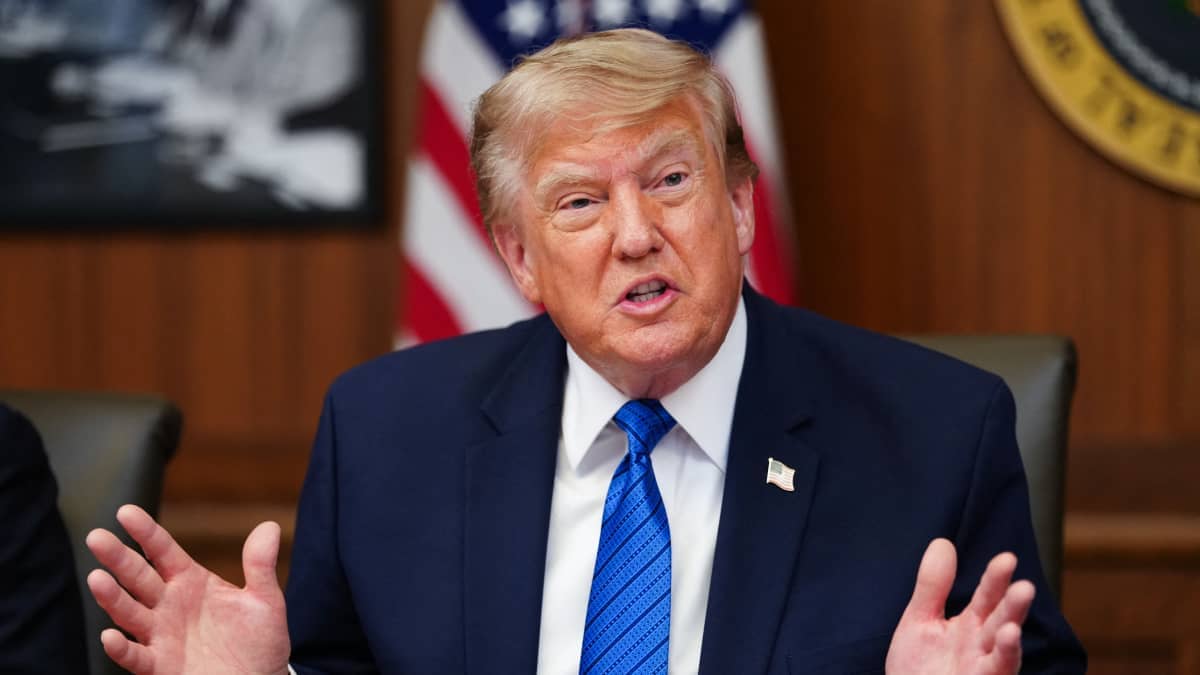
President Donald Trump recently addressed questions regarding the scope of defense cooperation between the United States and Ukraine. Speaking during an appearance focused on international security policy, the President explicitly stated that the United States has not agreed to grant licenses for the production of Patriot missile systems within Ukrainian territory or by Ukrainian industry. This declaration carries significant weight, as the Patriot system is a sophisticated, long-range, all-weather air defense system known for its capability to intercept tactical ballistic missiles, cruise missiles, and advanced aircraft. Authorizing its domestic production would represent a substantial transfer of advanced military technology and manufacturing capability, bolstering Ukraine's long-term defense self-sufficiency.
This declaration represents a specific position taken by Mr. Trump at this time, distinguishing it from earlier comments he made regarding the same topic. In previous remarks reported in public forums, the former President had indicated that the United States would provide these manufacturing licenses to Ukraine as part of ongoing defense discussions. Such a commitment would have been perceived as a major step towards enhancing Ukraine's defense industrial base, reducing its reliance on foreign military aid for critical air defense assets, and potentially creating a more robust deterrent against future aggression.
The current statement from President Trump clarifies the status of those specific agreements according to his office. The distinction between past indications and present assertions forms a central element of the recent communications from the White House regarding this matter, prompting close scrutiny from international observers, defense analysts, and stakeholders in both nations. The implications of such a decision extend beyond immediate military assistance, touching upon industrial policy, technology transfer, and long-term strategic alliances.
Presidential Engagements and Policy Shifts
Prior to making these comments, President Donald Trump met with Ukrainian President Volodymyr Zelenskyy at the White House. The high-profile meeting took place in Washington and involved discussions on various topics related to bilateral relations and the broader regional security architecture in Eastern Europe. Such direct engagement between the leaders of the two nations typically serves as a platform for reaffirming alliances, discussing strategic priorities, and, at times, signaling shifts in policy direction.
The timing of Mr. Trump's statement regarding missile licenses follows this high-level engagement between the two leaders. While the specific outcomes of their private discussions were not immediately detailed in all public reports, the subsequent announcement by President Trump suggests that the topic of defense manufacturing and technology transfer was a significant point of discussion, or at least a subject on which the U.S. administration wished to clarify its current stance. Reports indicate that President Zelenskyy was present during these exchanges, though specific details from his side were not fully elaborated in all available summaries at the time of publication.
Evolving Stance on Defense Manufacturing
The shift in rhetoric regarding missile production licenses has drawn attention to a notable change in stance since earlier statements. Mr. Trump previously suggested that America would move forward with granting such permissions, implying an intent to support Ukraine's defense manufacturing capabilities through this specific mechanism. This earlier position aligned with a broader strategy of empowering allies to produce their own defense equipment, thereby reducing the burden on U.S. stockpiles and enhancing collective security through distributed production capabilities.
That previous position is now contrasted against the latest assertion from President Trump himself regarding the lack of agreement on these licenses. The evolution of these statements occurred within a broader context of diplomatic engagement and policy formulation involving both nations, as well as ongoing geopolitical considerations. For Ukraine, the ability to domestically produce advanced air defense systems like the Patriot would be a game-changer, offering greater operational security, reducing logistical vulnerabilities, and fostering economic growth within its defense sector.
Diplomatic Language and Market Reactions
The language used by Mr. Trump in his recent comments was notably precise, stating specifically that the U.S. has 'not agreed to' grant the licenses, rather than claiming an absolute prohibition or a final decision on all aspects of defense cooperation. This careful phrasing is often employed in diplomatic communications to convey a current status without necessarily closing the door on future negotiations or alternative arrangements. It allows for potential future discussions and policy adjustments while maintaining clarity about the present lack of formal approval for these specific licensing agreements.
The statement serves as a factual report from Mr. Trump's perspective regarding the status of specific licensing agreements, without necessarily precluding other forms of military assistance that may be under separate consideration by U.S. officials. The United States has provided extensive military aid to Ukraine through various channels, including direct transfers of equipment, training, and financial assistance. This particular statement focuses narrowly on the industrial licensing aspect of defense cooperation.
Global Market and Industry Implications
The announcement was reported alongside broader coverage of financial markets on Friday, July 31, 2026. The timing suggests a coordinated effort to communicate policy positions while market conditions were being monitored by analysts across major indices, including U.S., European, Chinese, Asian, and global benchmarks. Decisions concerning major defense contracts and technology transfers can have significant ripple effects across global economies, particularly within the defense industrial sector.
Financial commentators noted the relevance of defense procurement decisions for various sectors ranging from aerospace contractors to raw material suppliers involved in missile system manufacturing. Companies specializing in advanced electronics, precision engineering, and specialized alloys, which are crucial components of Patriot missile systems, could be directly affected by such policy pronouncements. The statement provided a clear data point regarding government licensing status, which could influence investor expectations related to potential contracts with Ukrainian or American defense firms involved in such high-value projects.
Sustained Diplomatic Dialogue
The interaction between President Trump and President Zelenskyy at the White House remains a focal point for understanding current U.S.-Ukraine relations. While specific outcomes of their discussions were not entirely detailed in all reports, the setting itself underscores the continued diplomatic channel open between Washington and Kyiv. This ongoing dialogue is crucial for coordinating international efforts, addressing security challenges, and managing expectations regarding military and economic support.
President Zelenskyy has been quoted as discussing various aspects of cooperation during these exchanges, often emphasizing Ukraine's need for comprehensive support to defend its sovereignty and territorial integrity. His responses to questions regarding missile systems and other defense needs have varied depending on the forum and the specific nature of inquiries directed at him by media outlets or government officials, reflecting the complex and evolving nature of international diplomacy in times of conflict.