

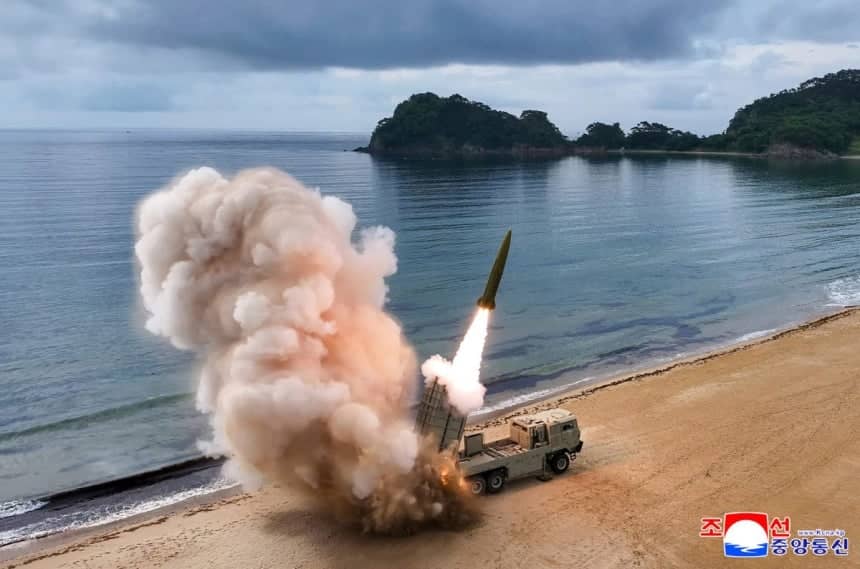

Pyongyang's Eleventh Missile Test This Year
North Korea conducted its eleventh ballistic missile launch of the year on the 12th of the month, firing a projectile toward the East Sea. The launch was swiftly detected by South Korea's Joint Chiefs of Staff (JCS), which reported the missile originated from the Wonsan area on North Korea's eastern coast. The detection occurred at approximately 6 a.m. local time, prompting immediate alerts across the region.
The JCS, responsible for monitoring and responding to military threats against South Korea, confirmed the trajectory and precise origin of the launch in a public statement issued shortly after the event. This rapid confirmation underscores the advanced surveillance capabilities deployed by the South Korean military to track North Korean missile activities and ensure timely situational awareness.
Immediate Response and Enhanced Vigilance
In the wake of this latest launch, the South Korean military has significantly intensified its surveillance and vigilance measures. These heightened protocols are specifically designed to monitor for any potential additional launches or provocative actions from Pyongyang. The objective is to ensure a robust defensive posture and the ability to respond effectively to any further developments in real-time, thereby safeguarding national security.
Beyond immediate national responses, the incident triggered a coordinated reaction among key regional allies. South Korea, the United States, and Japan immediately began sharing critical information regarding the North Korean ballistic missile. This trilateral intelligence-sharing mechanism is a cornerstone of regional security, ensuring that all three nations are fully informed and prepared. Together, they are maintaining a state of full readiness as they continue to track the evolving situation and assess the implications of North Korea's repeated missile tests, which contribute to regional instability.
Launch Precedes Major Allied Military Drills
The timing of North Korea's 12th-of-the-month missile launch is particularly notable as it occurred just days before the scheduled commencement of Ulchi Freedom Shield (UFS). The UFS is a significant theater-level combined military exercise involving both South Korean and United States forces. These extensive joint drills are set to begin on the 17th of the month and will continue through to the 27th, encompassing a period of heightened military readiness and operational testing across the peninsula.
The Ulchi Freedom Shield exercises are designed to enhance the combined defense posture and interoperability of the allied forces. They typically involve various scenarios, including command post training and field maneuvers, aimed at strengthening the ability of South Korea and the U.S. to respond to diverse threats, from conventional warfare to complex contingencies. Pyongyang has historically viewed such joint military exercises as rehearsals for invasion, often responding with its own military demonstrations, including missile tests, to express its disapproval and assert its capabilities.
A Pattern of Pre-Exercise Activity
This latest ballistic missile test on the 12th is not an isolated incident but rather part of a discernible pattern of activity observed in the days leading up to the UFS drills. Just six days prior, on the afternoon of the 6th, North Korea had also fired a single short-range ballistic missile (SRBM). That earlier launch, like the most recent one, originated from the Wonsan area and was directed toward the East Sea. The recurrence of launches from the same region, in close succession, suggests a deliberate and calculated series of actions by Pyongyang, likely intended to send a message ahead of the allied exercises.
The consistent timing of these missile tests, preceding major allied exercises, draws significant attention to Pyongyang's intentions. Analysts often interpret such actions as a form of protest or a demonstration of military capabilities, intended to project strength and deter perceived threats from the combined forces of South Korea and the United States. The recent launches underscore the ongoing tensions on the Korean Peninsula and the complex security environment surrounding the upcoming Ulchi Freedom Shield exercises, highlighting the cycle of provocation and response in the region.
Trilateral Alliance Strengthens Information Sharing
In response to the escalating frequency of North Korean missile tests, the collaborative defense posture among South Korea, the United States, and Japan has become increasingly vital. The Joint Chiefs of Staff (JCS) explicitly highlighted this collaborative nature in its public statements following the latest launch. The JCS affirmed, "Our military has strengthened surveillance and vigilance in preparation for additional launches, while South Korea, the United States and Japan are closely sharing information on North Korean ballistic missiles and maintaining full readiness." This statement underscores the unified approach taken by the three allies to address regional security challenges and maintain stability.
The sharing of real-time intelligence and analysis on North Korean ballistic missile activities is crucial for enhancing early warning systems and improving the collective response capabilities of the allied nations. This trilateral framework ensures that all parties possess the most current and accurate data, enabling them to make informed decisions and coordinate defensive measures effectively. Such cooperation is particularly critical given the unpredictable nature of Pyongyang's military provocations and its continued development of advanced missile technologies.
Maintaining Readiness Amidst Heightened Tensions
The ongoing commitment to maintaining full readiness by South Korea, the United States, and Japan reflects the persistent security challenges posed by North Korea's weapons programs. The repeated missile launches, especially those timed to coincide with or precede joint military exercises, contribute to a volatile security environment on the Korean Peninsula and in Northeast Asia. The Ulchi Freedom Shield exercise itself, designed to test and improve the combined capabilities of South Korean and U.S. forces, is taking place against this backdrop of increased North Korean military activity, necessitating a robust and vigilant response.
The readiness posture extends beyond immediate detection and tracking; it encompasses the continuous refinement of defense strategies, the deployment of advanced interceptor systems, and the regular training of personnel to ensure optimal preparedness. By presenting a united front and demonstrating robust defensive capabilities, the allies aim to deter further aggression and ensure regional stability. The shared commitment to vigilance and information exchange serves as a critical component in managing the complex security landscape shaped by Pyongyang's evolving missile capabilities and its impact on international security.