

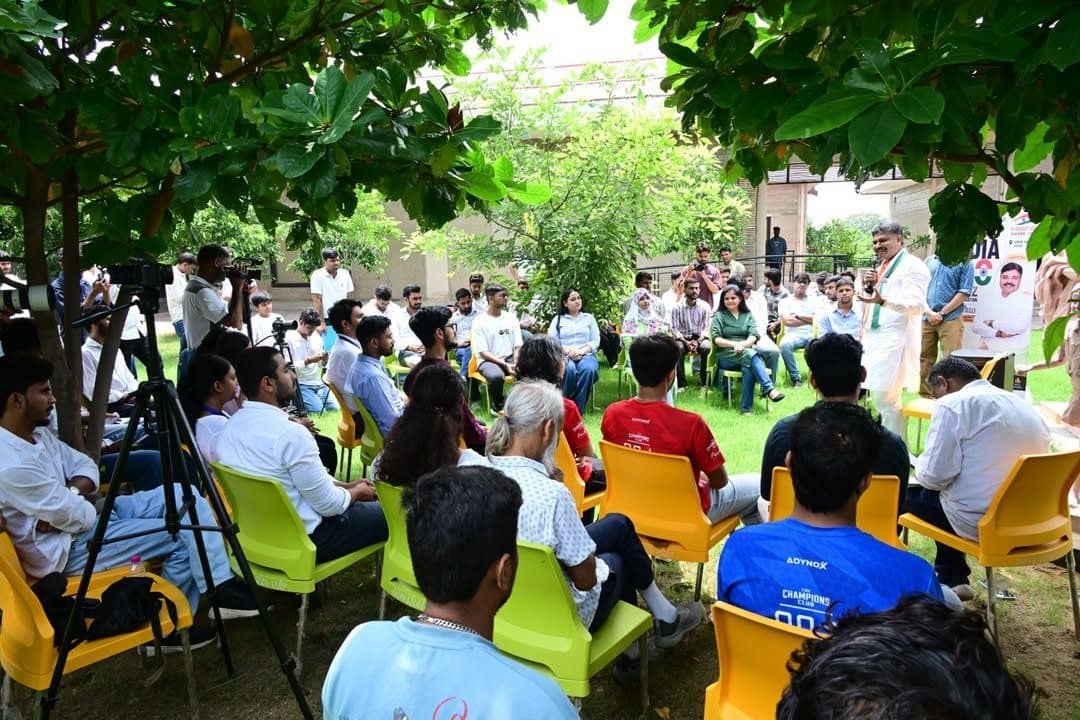

Independence Day Dialogue at Gandhi Vatika
Rajasthan Leader of Opposition (LoP) Tika Ram Jully engaged in a significant dialogue with approximately 50 Gen Z students in Jaipur on Saturday, August 15, coinciding with India's Independence Day. The interaction, held at the historically resonant Gandhi Vatika, served as a platform for young people to voice their concerns directly to a prominent political figure.
The event was meticulously organized by the non-governmental organization People for Democracy, aiming to bridge the gap between youth aspirations and political action. During the extensive session, the students and LoP Jully delved into a broad spectrum of issues that are particularly pertinent to the younger generation in Rajasthan. These discussions encompassed critical areas such as the state of education, the pervasive challenge of unemployment, the emerging impact of artificial intelligence, the avenues for political participation, the quality of infrastructure, the persistent issue of corruption, and the vital need for skill development.
Youth Concerns Shape Political Agenda
The dialogue was not merely a general discussion but a focused exchange where students articulated specific grievances and inquiries. They raised pointed questions regarding the integrity of the examination system, particularly concerning paper leaks, which have become a significant concern for students aspiring to public service or higher education. Access to artificial intelligence tools was another key point, reflecting the Gen Z demographic's keen awareness of technological advancements and their potential impact on future careers and learning.
Furthermore, the condition of school infrastructure across the state was brought to the forefront, highlighting concerns about the learning environment and resources available to students. The perennial issue of job opportunities also featured prominently, with students seeking clarity and solutions regarding their future employment prospects. This direct engagement provided a crucial opportunity for these pressing concerns to be formally documented and acknowledged by the opposition leadership, setting the stage for their potential inclusion in legislative discussions.
Addressing Systemic Challenges for Rajasthan's Youth
The discussions at Gandhi Vatika went beyond immediate concerns, touching upon deeper systemic challenges that impact the youth's future and their trust in governance. The students' focus on issues like corruption and skill development underscored a desire for transparent and efficient systems that foster genuine meritocracy and prepare them for a competitive global landscape.
Educational Integrity and Economic Future
The specific mention of 'paper leaks' by the students reflects a profound concern over the fairness and transparency of recruitment and examination processes. Such incidents not only undermine the hard work of countless students but also erode faith in public institutions. For Gen Z, who are at a critical juncture of their academic and professional lives, the integrity of these systems is paramount to ensuring equitable opportunities and a level playing field.
Similarly, the emphasis on 'job opportunities' is intrinsically linked to the educational system and the broader economic health of Rajasthan. Students are increasingly seeking pathways from education to meaningful employment, and their inquiries signify a demand for policies that create sustainable jobs and align educational outcomes with market needs. This includes robust skill development programs that can equip them with the competencies required for emerging industries, including those influenced by artificial intelligence.
Navigating the Digital Frontier: Artificial Intelligence
The discussion around 'access to artificial intelligence tools' highlights the forward-looking perspective of the Gen Z participants. They recognize AI not just as a technological trend but as a transformative force that will reshape industries, job markets, and daily life. Their concern about access suggests an awareness of the potential digital divide and the importance of ensuring that all students have the opportunity to engage with and benefit from these advanced technologies, rather than being left behind.
Coupled with concerns about 'school infrastructure,' this indicates a holistic view of education that encompasses both foundational learning environments and access to cutting-edge tools. Students understand that modern education requires not only adequate physical facilities but also integration with digital advancements to prepare them for the challenges and opportunities of the 21st century.
Pledges for the August Assembly Session
Following the comprehensive discussion, LoP Jully provided a firm assurance to the participants that their collective concerns would be brought to the floor of the upcoming Rajasthan Assembly session. This legislative session is officially scheduled to commence on August 20, providing an immediate opportunity for these youth-centric issues to be debated at the highest level of state governance.
The opposition leader's commitment to addressing the diverse range of issues highlighted by the students, spanning from the critical need for educational integrity to ensuring technological access, signifies a strategic move to integrate youth grievances into the formal political discourse. By pledging to raise these matters in the assembly, Jully underscored the importance of youth voice in policy-making and indicated that the concerns articulated at Gandhi Vatika would not be overlooked but would form a part of the legislative agenda in the state capital.
The Opposition's Role in Highlighting Public Issues
The LoP's pledge is a demonstration of the opposition's crucial role in a democratic system: to articulate public grievances, hold the government accountable, and ensure that diverse voices are heard in the legislative process. By bringing the specific concerns of Gen Z students to the assembly, Jully aims to compel the ruling party to acknowledge and potentially address these issues. This action transforms a public dialogue into a formal political demand, elevating the status of youth issues within the state's political landscape.
People for Democracy Facilitates Youth Engagement
The successful orchestration of this significant gathering was attributed to People for Democracy, a non-governmental organization dedicated to fostering civic participation. The organization played a pivotal role in bringing together nearly 50 young participants, effectively serving as a vital conduit between the youth demographic and the state's political leadership. Their efforts ensured that the specific grievances and aspirations of the students were not only heard but also communicated directly and coherently to the Leader of Opposition.
The selection of Gandhi Vatika as the venue for this Independence Day dialogue was particularly symbolic. It provided a public space steeped in historical significance, aligning the act of civic engagement with the spirit of national freedom and democratic ideals. The event underscored the opposition party's strategic focus on actively engaging with younger voters and directly addressing their immediate concerns, particularly in anticipation of the impending legislative session. This proactive outreach highlights a broader recognition of the growing influence and importance of the youth vote in shaping the political future of Rajasthan.