



Monsoon Threat and Economic Slowdown Converge at Critical Juncture
The latest Moneycontrol Pro Panorama edition brings into sharp focus a specific and challenging convergence impacting India's economic landscape. The nation is currently grappling with a discernible slowing economic trajectory, a trend that is now colliding with the significant threat posed by a potentially weak monsoon season. This confluence of factors is creating conditions described by analysts as occurring at the worst possible time for current market dynamics and overall economic stability.
According to the detailed source context provided by Moneycontrol, these two distinct pressures are far from merely coexisting; they are actively merging into a singular, amplified point of vulnerability for the Indian economy. The report indicates that this collision represents a critical juncture, implying a period where the nation's traditional economic buffers and policy tools may prove insufficient to absorb the combined impact of external shocks and internal stagnation simultaneously. A slowing economy typically manifests through reduced consumer demand, dampened investment sentiment, and potentially lower industrial output, making it inherently less resilient to external pressures.
Economic Trajectory Faces Dual Headwinds
The phenomenon of a slowing economy, a concern already on the radar of policymakers, finds itself exacerbated by the looming uncertainty of agricultural performance. The threat of a weak monsoon is particularly critical for India, given the significant portion of its population dependent on agriculture and the sector's broad linkages to the wider economy. A deficient monsoon directly impacts crop yields, leading to potential agricultural distress, reduced rural incomes, and an upward pressure on food prices. This, in turn, can dampen overall consumer spending, especially in rural areas, which constitute a substantial part of India's domestic market.
The convergence of these two challenges means that efforts to stimulate economic activity through conventional means could be undermined by supply-side disruptions stemming from agricultural shortfalls. Conversely, managing inflationary pressures arising from food price hikes becomes more complex when the underlying economic growth is already sluggish. This intricate interplay underscores the severity of the current juncture, demanding a nuanced and potentially multi-faceted response from economic authorities.
Liquidity Constraints Persist Despite Potential Rate Cuts
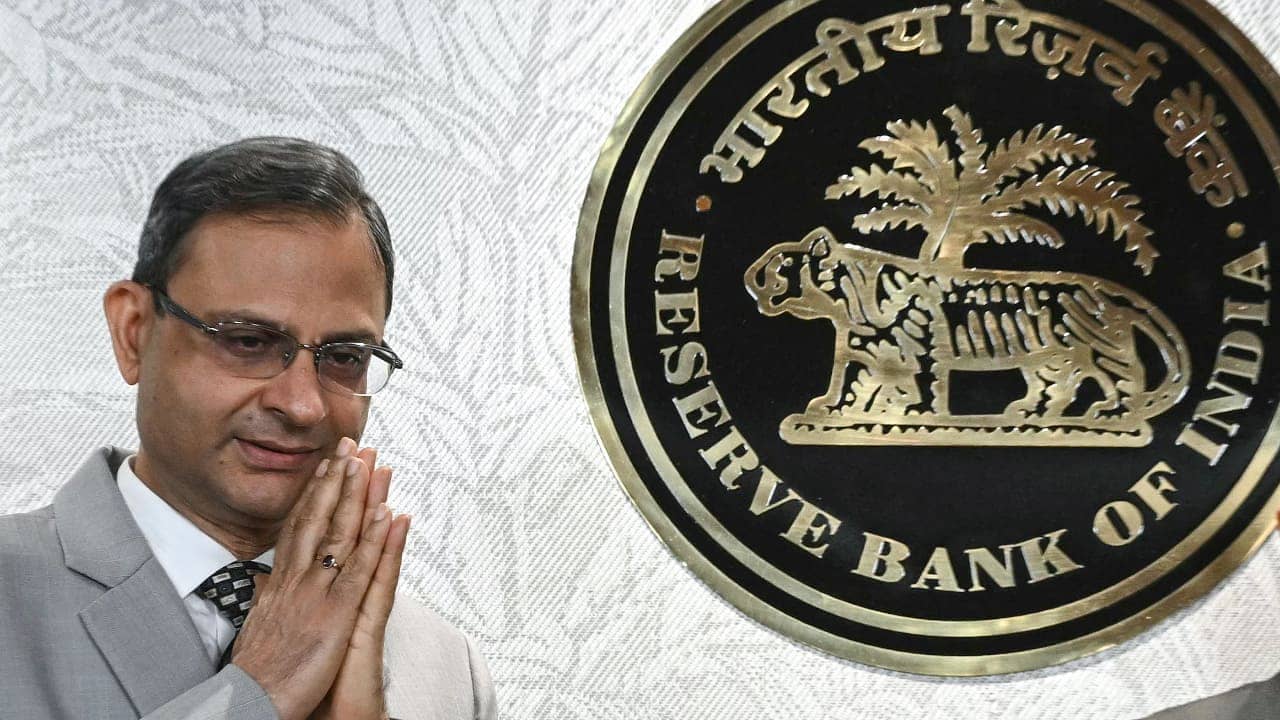
Despite the ongoing discussions and the possibility for policy intervention, specific and persistent constraints remain firmly in place within India's financial architecture. The Reserve Bank of India (RBI) finds itself in a position where it may consider lowering interest rates, a conventional measure often employed to stimulate economic growth or to manage evolving inflationary pressures. This potential move comes amidst the broader economic slowdown identified by Moneycontrol Pro Panorama.
However, the source explicitly states that while such rate cuts are certainly on the table as a policy option, they will not automatically resolve the underlying and systemic liquidity issues currently observed in the financial system. Moneycontrol Pro Panorama underscores this critical distinction with specific clarity, noting: "The RBI can cut rates, but can't make it rain." This vivid phrasing powerfully highlights the fundamental difference between nominal interest rate adjustments, which influence the cost of borrowing, and the actual availability of funds, or liquidity, within the banking system.
Analysts cited within the broader context of the report suggest that monetary policy tools, while potent, possess inherent limitations when structural liquidity deficits are prevalent. The report indicates that merely lowering benchmark rates does not guarantee an immediate or sufficient injection of capital into commercial banks, nor does it automatically translate into easier access to credit for small businesses or corporations. Instead, the financial environment is expected to continue exhibiting signs of tightness, characterized by a scarcity of readily available funds, even as headline interest figures may decline.
Understanding the Tightness in Financial System Liquidity
The expectation that liquidity in the financial system will remain tight is a critical component of the current economic outlook. Tight liquidity implies that banks have less surplus cash to lend, leading to higher interbank borrowing rates and a general reluctance to extend credit. This condition can arise from various factors, including higher government borrowing, capital outflows, or a mismatch between deposit growth and credit demand. Even if the RBI reduces its policy rates, the actual cost of funds for banks and, consequently, for borrowers, may not fall commensurately if the underlying supply of money remains constrained.
This situation creates a challenging environment where the central bank's dovish stance on interest rates might not fully translate into the desired credit impulse for the real economy. The effectiveness of monetary policy in stimulating investment and consumption is thus partially hampered by these persistent liquidity challenges, presenting a complex dilemma for the RBI.
Implications for Financial Markets and Corporate Borrowing
The divergence between expectations of potential rate cuts and the persistent reality of tight liquidity creates a particularly complex and challenging landscape for market participants across the board. Corporations seeking fresh loans for expansion, working capital, or new projects may find that their effective borrowing costs do not accurately reflect the official policy stance of the central bank. This can occur if commercial banks, facing depleted cash reserves and higher funding costs in the interbank market, are compelled to maintain higher lending rates or tighten their credit criteria, irrespective of the RBI's benchmark rate.
Financial institutions, in turn, are tasked with managing their balance sheets in an environment where deposit mobilization may not keep pace with the demand for loans. This imbalance persists regardless of the cost of funds set by the central bank. The Moneycontrol analysis points out with precision that liquidity tightness is an independent variable from interest rate levels. This suggests that central bank actions focused solely on adjusting policy rates cannot alone dictate the fluidity or availability of money within the broader market.
This critical separation between policy rates and the actual conditions of money supply necessitates careful and continuous monitoring by investors, corporate treasurers, and financial analysts alike. Reports indicate that banks may indeed continue to tighten their lending standards, prioritizing asset quality and liquidity management, even if the RBI signals a more dovish stance through its rate adjustments. This cautious approach by banks could further impede credit flow to productive sectors of the economy, adding another layer of complexity to India's economic recovery path.
The Monsoon's Outsized Influence on Domestic Economic Stability
Beyond the realm of monetary policy and financial liquidity, external factors, most notably weather patterns, exert an outsized and often unpredictable influence on domestic economic planning, particularly in agrarian economies like India. The looming threat of a weak monsoon season serves as a primary and potent example of how environmental variables can profoundly disrupt critical supply chains, significantly impact agricultural output, and ripple through the entire economic fabric.
The source material from Moneycontrol Pro Panorama emphasizes that these external threats are far from abstract concepts; they represent tangible and immediate risks. A deficient monsoon directly affects core economic indicators such as food prices, the crucial rural incomes that underpin a vast segment of the population, and consequently, overall consumer spending power. A poor harvest season, characterized by reduced yields and potential crop damage, directly diminishes the purchasing capacity of millions of individuals and families who depend on agriculture for their livelihoods, creating a significant drag on demand.
Inflationary Pressures and Rural Demand Erosion
The direct consequence of a weak monsoon is often an increase in food inflation, as supply shortages push up prices for essential commodities. This rise in food prices disproportionately affects lower-income households, eroding their disposable income and forcing them to cut back on other expenditures. Simultaneously, reduced agricultural earnings in rural areas translate into a contraction of rural demand, which is a vital engine for various industries, from consumer goods to automobiles. This dual impact of higher inflation and lower demand presents a formidable challenge to economic stability, making the overall environment more susceptible to shocks.
The interconnectedness means that the monsoon's performance is not just an agricultural concern but a macroeconomic one, influencing everything from the central bank's inflation targeting to the government's fiscal planning. Its impact extends to industrial production, services, and even the financial sector through non-performing assets in agricultural loans.
Policy Responses to Confluent Pressures
The convergence of a slowing economy with the profound uncertainty introduced by monsoon performance necessitates a truly multi-pronged and coordinated policy approach. While monetary easing through interest rate cuts, as considered by the RBI, primarily addresses cost-of-borrowing concerns and aims to stimulate demand, it inherently does not directly address the fundamental supply-side shocks caused by adverse weather events. Lowering rates might encourage borrowing, but if there's less to produce due to drought, the impact on real economic activity is limited.
Moneycontrol Pro Panorama suggests that the central bank faces an exceptionally difficult balancing act. On one hand, stimulating demand via lower rates is a conventional response to a slowing economy. On the other hand, this effort might be significantly offset by reduced production capacity and inflationary pressures directly attributable to drought conditions or a weak monsoon. The report implies that policymakers must meticulously consider these deeply intersecting and often contradictory variables when formulating their next set of directives, moving beyond single-instrument solutions.
The article notes with clarity that no single policy instrument can effectively solve all these complex problems simultaneously. Therefore, a holistic strategy is paramount. This would likely involve a combination of fiscal measures, such as targeted agricultural support programs, subsidies for irrigation, and crop insurance schemes, alongside crucial infrastructure investments aimed at improving water management and rural connectivity. These governmental actions would need to complement monetary policy actions to achieve the desired economic outcomes during this challenging period of convergence, ensuring both demand stimulation and supply-side resilience.