


Minister Clarifies Opposition Meeting Amid Speculation
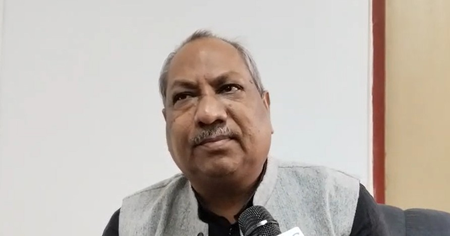
Lucknow, Sep 15 (SocialNews.XYZ) — Uttar Pradesh Minister and Nishad Party chief Sanjay Nishad stated on Tuesday that "wrong meanings" were being drawn from his recent meeting with Mata Prasad Pandey, the Leader of Opposition in the Assembly. The clarification followed intensive discussions and media speculation regarding the nature of the encounter between the two senior political figures, particularly given their differing political affiliations within Uttar Pradesh's complex political landscape.
A Personal Visit with Political Undertones
Nishad emphasized that the gathering was primarily a personal visit to a respected elder rather than a strategic political alliance. He explained that Pandey is a senior leader who provided guidance during his youth, a relationship that predates current political alignments. Nishad noted that he visited Pandey at his private residence on Monday because the opposition leader was unwell, describing the visit as a duty rooted in respect for a mentor.
Despite the personal nature of the visit, Nishad acknowledged that political topics were inevitably discussed, a natural occurrence when two prominent figures from the state's political landscape meet. "Now, when two senior leaders meet, there will be discussions on politics," Nishad said in comments to IANS, confirming the political dimension of their conversation. He did not provide specific details about broader legislative strategies or potential coalition talks, choosing instead to focus on the immediate context of the meeting and his personal connection to Pandey. The meeting between a minister from the ruling alliance — the Nishad Party is an ally of the Bharatiya Janata Party (BJP) in Uttar Pradesh — and the Leader of Opposition from the main opposition Samajwadi Party (SP) naturally drew significant attention and prompted questions about its implications for state politics.
Caste Politics and Community Grievances Take Center Stage
According to Nishad, a primary subject of their conversation was the murder of Vinod Sahani, a member of the Nishad community. Nishad used the incident to highlight concerns regarding the safety and legal protection of marginalized groups, specifically within his community. He stated that the discussion centered on whether the crime might have been prevented had specific legal provisions remained in force, implying a perceived weakening of protective measures.
Calls for Justice After Nishad Community Murder
"We discussed Vinod Sahani, that if the SC/ST (Prevention of Atrocities) Act had not been taken away, perhaps such an incident would not have occurred," Nishad said. This remark indicates a direct link between the meeting's discourse and ongoing debates over the efficacy of existing laws protecting Scheduled Castes and Scheduled Tribes. Nishad's statement suggests a belief that the Act, designed to prevent atrocities against these communities and provide for their relief and rehabilitation, had been diluted or its enforcement compromised, leading to tragic consequences like Sahani's murder. By raising this critical issue with the Leader of Opposition, Nishad underscored its importance to his community and sought broader political engagement on the matter, emphasizing the need for robust legal protections.
Long-Standing Demand for Separate Quota
The conversation also touched upon Nishad’s longstanding political agenda: the demand for separate reservation for the Nishad community within the existing Scheduled Caste (SC) quota. This demand has been a central plank of the Nishad Party’s platform since its inception, distinguishing their stance from broader caste-based political movements that often advocate for existing quotas. Nishad argues that a separate classification would ensure more equitable representation and access to opportunities for the Nishad community, which he asserts has been historically overlooked despite its significant population in Uttar Pradesh. This specific reservation demand highlights the intricate dynamics of caste politics in the state, where various sub-castes within larger categories seek distinct recognition and benefits to address perceived historical injustices and ensure their socio-economic upliftment.
Uttar Pradesh Political Landscape and Nishad Party's Role
The meeting occurred against a backdrop of heightened sensitivity regarding representation and security for the Nishad community in Uttar Pradesh. Sanjay Nishad, as the chief of the Nishad Party and a minister in the state government, plays a crucial role in advocating for his community's interests. His decision to engage directly with the Leader of Opposition, Mata Prasad Pandey of the Samajwadi Party, on issues like the SC/ST Act and reservation demands, signals a strategic effort to garner cross-party attention and support for his community's grievances. This engagement also underscores the fluidity of political interactions in Uttar Pradesh, where leaders from opposing camps may still converge on issues of common concern or personal respect, especially when community-specific issues are at stake.
Neither Pandey nor his office has issued a separate statement detailing the specific outcomes or agreements reached during the private meeting. Nishad’s comments remain the primary public record of the interaction, framing it as a necessary dialogue between senior politicians addressing both personal respect and pressing community grievances. The absence of a counter-narrative from the opposition leader leaves Nishad's interpretation of the meeting as the dominant public account, shaping perceptions of the encounter's purpose and content within the broader political discourse of the state.