


Call for Collective Bargaining Power
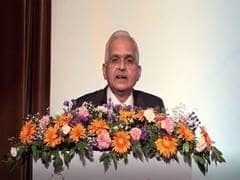
New Delhi, September 30: Principal Secretary-2 to the Prime Minister Shaktikanta Das stated that countries of the Global South must utilize their combined economic strength to safeguard their interests against unilateral actions by major global powers. Speaking at the launch of the India and Emerging Economic Order Forum (IEOF) on Tuesday, Das emphasized that developing nations need to secure greater influence in critical areas including trade, climate finance, and technology transfer.
The IEOF was jointly established by the Delhi School of Economics and the Research and Information System for Developing Countries (RIS). During his address, Das noted that while individual developing countries often possess limited influence in international economic negotiations, their collective voice has the potential to become a powerful force on global platforms.
Das argued that enhanced cooperation among Global South nations could significantly improve their bargaining power. He identified specific sectors where this collaboration is necessary, including trade, climate finance, technology transfer, supply chain integration, and the reform of global financial institutions.
Economic Shifts and Persistent Challenges
Highlighting the changing dynamics of the global economy, Das observed that the economic centre of gravity of the world is shifting eastwards. He noted that the Global South is steadily increasing its footprint in both the global economy and geopolitics.
Das provided data illustrating this expansion, stating that emerging market and developing economies increased their combined economic output from approximately USD 7.3 trillion in 2000 to over USD 48.8 trillion in 2025.
Despite this growth, the Principal Secretary flagged several continuing challenges for developing economies. These include poverty, debt vulnerabilities, infrastructure gaps, climate change, food and energy insecurity, and limited access to technology. He also pointed to rising protectionism and growing difficulties in accessing major consumer markets and technologies.
Strategies for Job Creation and Trade Diversification
To address these structural issues, Das proposed a three-pronged approach to job creation. This strategy comprises investment in physical infrastructure and human capital, establishing a transparent and business-friendly regulatory and legal environment, and mobilising private investment for innovation, industrialisation, and employment.
On the trade front, Das called for greater trade diversification and deeper participation in global supply chains. He noted that developing countries are increasingly facing tariff and trade barriers, making such diversification essential for economic stability.
Energy Security and Domestic Resilience
Regarding energy security, Das said the recent conflict in the Middle East had highlighted the vulnerability of energy-importing developing economies to price shocks. He suggested that diversification towards renewable energy and biofuels, along with greater technology and knowledge sharing, could strengthen energy security.
Das also highlighted India's domestic resilience, stating that the economy remains supported by domestic demand, industrial and services activity, and improving labour market conditions. To reduce dependence on imported oil and gas, he pointed to the government's National Offshore Exploration in Deep Waters programme, which aims to boost domestic hydrocarbon exploration.
Financial Infrastructure and Global Context
Das advocated for deeper local-currency financing through bond markets, stronger financial infrastructure, and regulatory reforms to improve economic resilience and reduce external vulnerability. He cited India's government securities market and growing corporate bond market as areas from which other developing economies could draw lessons.
His remarks came weeks after India hosted the 18th BRICS Summit in New Delhi on September 12-13, where strengthening the voice of the Global South and reforming global governance were among the central themes. The New Delhi Declaration adopted at the summit called for a more representative and fairer international order and a reformed multilateral system, while BRICS leaders committed to strengthening economic, financial, and development cooperation.