

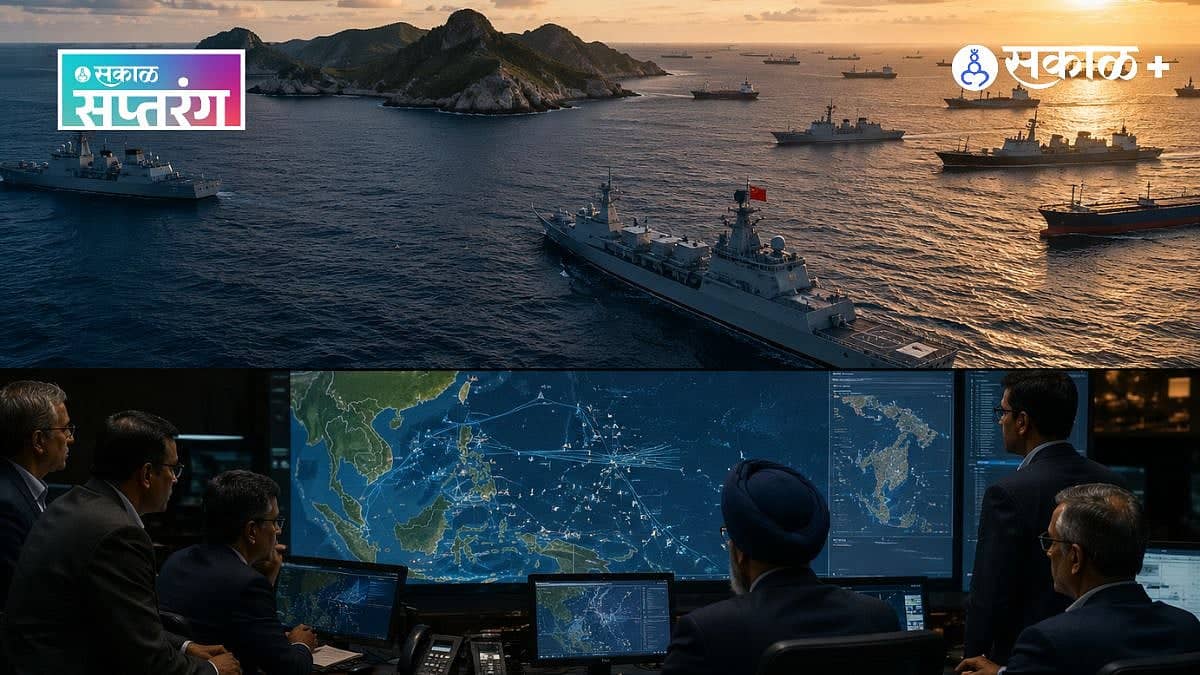

Maritime Strategy and International Law Concerns
A report published by Sakal on June 21, 2026, at 7:44 am IST examines the geopolitical dynamics of the South China Sea. The article states that China's maritime push in the region has raised questions regarding international law and naval balance.
According to the source text, this development is viewed as significant for India from a long-term strategic and economic perspective. Sakal notes that while India has not opposed China's actions in the South China Sea directly, it maintains a specific stance on the implications of major power behavior.
India's Strategic Stance
The article reports an assertion by Indian officials or analysts cited within the text: if major powers establish a "new normal" where international laws are undermined for their own convenience, this poses future risks to India. The source clarifies that while immediate opposition has not been voiced regarding China's specific actions in the South China Sea, there is concern over the precedent set by such behavior.
Historical Context of Naval Power
The report attributes policy differences partly to geography and historical military focus. According to the source text, any country's policy is inevitably influenced by its geography. The article notes a historical pattern in China where land power was prioritized over naval strength for centuries due to invasions from northern tribes.
However, the source identifies an exception during the period between 1405 and 1433. During this timeframe, Admiral Zheng led naval expeditions under Ming Emperor Yongle. The report claims that outside of this specific historical window, China historically neglected its navy while focusing on increasing the strength of its army.
Regional Implications
The article frames these developments within a broader context of Indo-Pacific security. It suggests that India's approach involves navigating between opposing forces without directly challenging current actions in the South China Sea at this stage, yet remaining vigilant about the erosion of international legal frameworks.